Need help with booking? Send us a message.
Experience the ultimate adventure with the Everest base Camp Trek via Gokyo and Cho La Pass. Explore the stunning Gokyo lakes, cross the challenging Cho La Pass and reach the iconic Everest Base Camp with the stunning breathtaking views of the Mt.Everest, Mt.Makalu, Ama Dablam and surrounding peaks.
4*** Hotel in Kathmandu and Tea House / Lodge during the trek
Kathmandu-Manthali-Lukla-Phakding-Khumjung-Dole-Gokyo-Thangnak-Cho La Pass-Dzongla-Lobuche-Gorak Shep-Everest Base Camp-Kala Patthar-Pheriche-Namche-Lukla-Manthali-Kathmandu
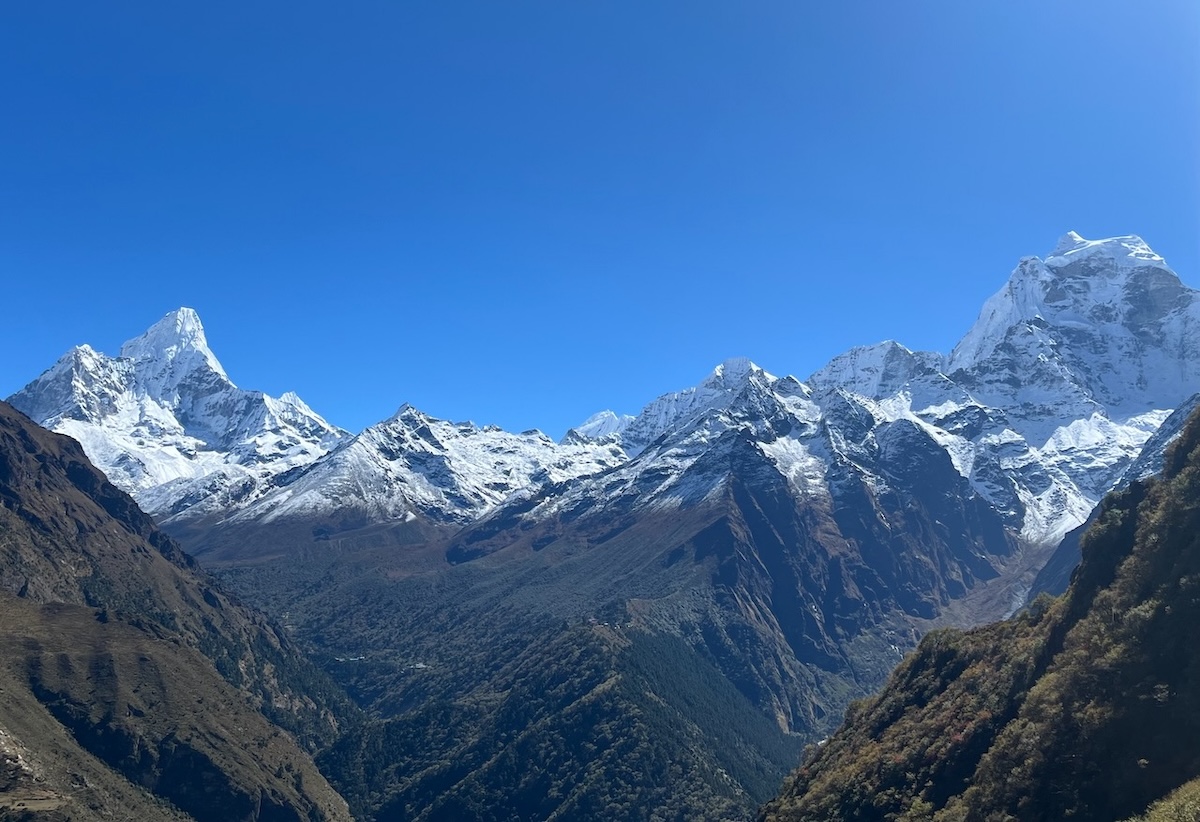
The Everest Base Camp Trek via Gokyo Lakes and Cho La Pass represents one of the most spectacular and comprehensive trekking experiences in the Himalayan region. This extended adventure takes you through diverse landscapes, from lush valleys to glacial lakes, culminating at the foot of the world's highest mountain. Unlike the standard Everest Base Camp route, this combined journey offers trekkers a unique opportunity to witness both the iconic base camp and the stunning turquoise lakes of the Gokyo Valley.
The Everest Base Camp with Gokyo Lakes and Cho La Pass trek typically spans 16-19 days, depending on your acclimatization needs and pace. This duration allows for proper altitude adjustment, which is crucial for enjoying the experience and avoiding altitude-related issues. The trek reaches a maximum elevation of 5,640 meters at Kala Patthar, though you'll also cross the challenging Cho La Pass at 5,420 meters.
What distinguishes this trek from others in the region is its diversity. You'll experience the bustling atmosphere of Namche Bazaar, the spiritual serenity of Tengboche Monastery, the isolated beauty of Gokyo Valley, and the raw mountaineering environment of Everest Base Camp. Each section of the journey offers something unique, ensuring that monotony never sets in.
For Everest Base Camp Trek via Gokyo and Cho La Pass trekkers need two different permits:
Higher Path Treks and Expedition arranges these both permits.
The Everest Base Camp with Gokyo Lakes trek is possible during most months, but certain seasons offer distinct advantages. Spring (March to May) is considered peak season, with stable weather, warmer temperatures, and rhododendron blooms decorating the lower valleys. Visibility is generally excellent, though occasional afternoon clouds can obscure mountain views.
Autumn (September to November) is the other prime season, offering the clearest skies of the year. Post-monsoon, the air is crystal clear, making it ideal for photography and mountain viewing. Temperatures are cooler than spring but still manageable with proper gear.
Winter (December to February) brings extreme cold, especially at higher elevations, and some passes might be impassable due to snow. However, winter trekking offers solitude, as fewer trekkers brave these conditions. The views can be stunning on clear days, and tea house owners appreciate the off-season business.
Monsoon season (June to August) sees the heaviest rainfall, making trails muddy and leeches common in lower elevations. Cloud cover often obscures mountain views, and flights to Lukla become unreliable. However, the Everest region lies in a rain shadow, receiving less monsoon precipitation than other parts of Nepal, making it more feasible than trekking in regions like Annapurna during this season.
Everest Base Camp Trek via Gokyo and Cho La Pass is considered as moderate to challenging adventure. Success on this trek depends significantly on your physical preparation. While you don't need technical climbing skills, you should be comfortable hiking for 5-7 hours daily for consecutive days, often at high altitude. A training program starting 1-2 months before your trek should include cardiovascular exercise, strength training, and ideally some hiking with a loaded backpack.
Cardiovascular fitness is crucial. Activities like running, cycling, swimming, or stair climbing build the aerobic capacity needed for high-altitude trekking. Aim for at least 4-5 cardio sessions weekly, gradually increasing intensity and duration.
Altitude is the most significant challenge of this trek. As you ascend above 3,000 meters, the air contains less oxygen, and your body must adjust to function effectively. Proper acclimatization is not just important—it's essential for both enjoyment and safety.
Acute Mountain Sickness (AMS) can affect anyone, regardless of age, fitness level, or previous high-altitude experience. Symptoms include headache, nausea, dizziness, and fatigue. More serious conditions—High Altitude Pulmonary Edema (HAPE) and High Altitude Cerebral Edema (HACE)—are potentially fatal and require immediate descent.
The key to preventing altitude sickness is a gradual ascent, which is why this trek includes built-in acclimatization days. Following the mountaineering adage "climb high, sleep low" helps your body adjust. Staying well-hydrated, eating adequately despite reduced appetite, and avoiding alcohol at high altitudes all contribute to successful acclimatization.
Listen to your body and communicate openly with your guide about any symptoms. There's no shame in descending if altitude affects you—even experienced mountaineers sometimes need to retreat and try again.
The Everest region's tea house system provides accommodation throughout the trek. These lodges range from basic to surprisingly comfortable, with the more developed areas offering amenities like hot showers (for a fee), WiFi, and charging stations.
Rooms are simple, typically featuring two single beds with mattresses and pillows. Blankets are provided, though you'll likely want your sleeping bag for extra warmth at higher elevations. Shared bathroom facilities are standard, with western-style toilets becoming rarer as you gain altitude.
The heart of any tea house is its communal dining room, usually featuring a central stove where trekkers gather for warmth and conversation. This social aspect of tea house trekking adds a special dimension to the experience, as you meet fellow adventurers from around the world.
Food in tea houses is surprisingly diverse. Dal bhat—rice with lentil soup and vegetables—is the staple Nepali meal and provides excellent energy for trekking. Menus also offer Sherpa stew, momos (dumplings), pasta, pizza, and various Western dishes. At higher altitudes, menus become more limited and cooking times increase due to lower boiling temperatures.
Staying hydrated is crucial. Bottled water creates environmental problems, so most trekkers use water purification tablets or filters to treat water from taps or streams. Many tea houses now offer boiled water for refilling bottles, which supports both your health and environmental sustainability.
Higher Path Treks & Expeditions brings over a decade of experience in organizing Himalayan adventures, with a reputation built on professionalism, safety, and customer satisfaction.
Our approach prioritizes three essential goals: helping you reach your destination, ensuring your safe return, and making sure you enjoy every step of the journey. While these might sound like basic expectations, delivering on all three consistently requires expertise, planning, and commitment that not every operator provides.
Safety forms the foundation of every expedition we organize. Our guides are extensively trained in high-altitude medicine, including recognition and treatment of altitude sickness. They carry comprehensive first aid supplies and maintain communication equipment for emergencies. Our itineraries include appropriate acclimatization schedules, and we never pressure clients to continue if they're experiencing altitude-related difficulties.
Experience matters in the mountains. Our guide team includes Sherpas who have climbed Everest and other 8,000-meter peaks, bringing invaluable mountain knowledge to your trek. They know the trails intimately, understand weather patterns, maintain relationships with tea house owners, and can handle unexpected situations with calm competence.
We ensure personalized attention and flexibility. Your guide can adapt to your pace, answer your questions thoroughly, and ensure no one gets left behind.
Transparency defines our business practices. Our pricing is clear and comprehensive, with no hidden fees appearing after you've committed. We specify exactly what's included in your trek cost and what additional expenses you should budget for. This honesty extends to our assessment of trek difficulty—we provide realistic descriptions so you can prepare appropriately.
The Everest Base Camp via Gokyo Lakes and Cho La Pass trek represents an achievement that stays with you forever. The physical challenge, cultural immersion, and natural beauty combine to create an experience that transcends ordinary adventure travel.
Be realistic about the challenge while remaining optimistic about your capabilities. This trek is demanding but achievable for people with good fitness and determination. Thousands of trekkers successfully complete it every year, returning home with memories, photographs, and stories that last a lifetime.
The journey to Everest Base Camp via Gokyo Lakes is more than just a trek—it's a transformational experience that tests your limits, expands your perspective, and connects you with one of Earth's most spectacular landscapes. Whether you're drawn by the challenge, the scenery, the culture, or simply the desire to stand at the foot of the world's highest mountain, this trek delivers on every promise.
Start planning your adventure today, and contact Higher Path Treks and Expeditions Nepal.
Uncover the helpful blogs about trekking in the Everest region, featuring expert advice, detailed itineraries, personal experiences, and essential tips for adventurers looking to explore the Himalayas.
Photography Guide: Capturing the Himalayas Without Expensive Gear
Everest Luxury Trek: An Unforgettable Himalayan Experience
Nepal Peak Climbing 2026: Routes, Tips, and Top Summits
Solo Trekking to Everest Base Camp: Is It Possible?
Top 10 Highlights of the Everest Base Camp Trek
Successfully Trekking to Everest Base Camp and Kala Patthar
Why Famous Trekkers Choose Everest Base Camp?
Autumn Season to Everest Base Camp Trek
The Best Hiking Adventures: Famous Peak Climbs in 2025
Top Himalayan Peaks for Beginner Climbers: A Comprehensive Guide
Everest Three Peaks: A Beginner’s Guide to the Ultimate Himalayan Challenge
Is Peak Climbing in Nepal Easy for Beginners?
Must-Know Facts About Everest Base Camp Trekking
Why Gokyo Ri is a Must-Visit for Everest Trek Lovers
The Roof of the World: Peak Climbing Journeys through Nepal’s High Country
What to Expect on an Island Peak Climbing Expedition
Mera Peak Climbing Guide for Beginners: Tips, Difficulty & Preparation
Four Peaks, One Journey: Mera, Island, Lobuche & Amphu Lapcha Expedition
Top Best Expedition Packages in Nepal 2025
Which is Easier: Mera Peak or Island Peak?
Why Choose Island Peak Climbing with Everest Base Camp Trek for Beginners
Best Trekking Peaks in Everest Region for Beginners
Notes
Alternative Transportation Option
In case of flight cancellation, an alternative overland route is available:
This option is commonly used during bad weather or peak trekking seasons when flights are disrupted.
Optional Helicopter Upgrade
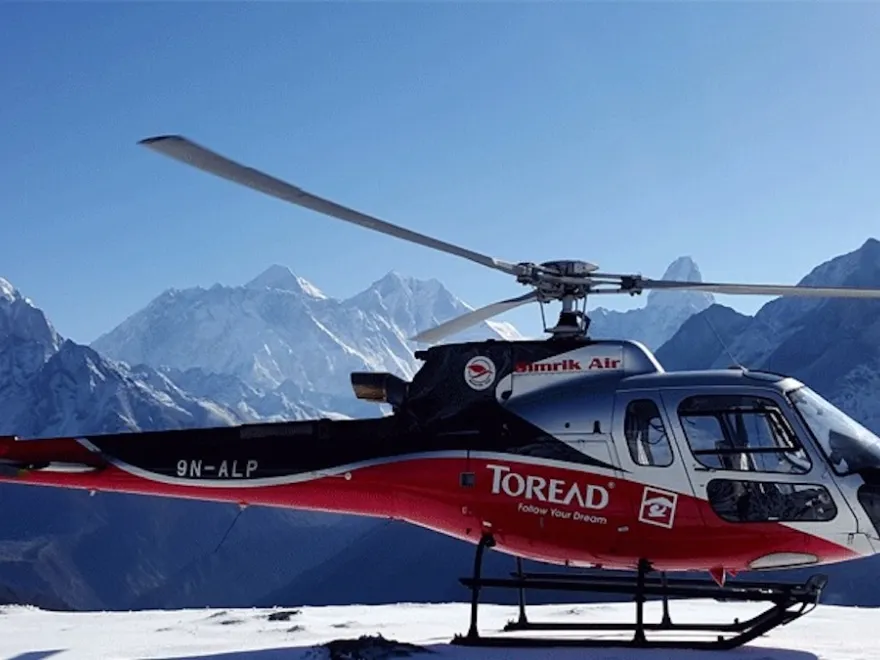
Kathmandu – Lukla – Kathmandu Helicopter Service
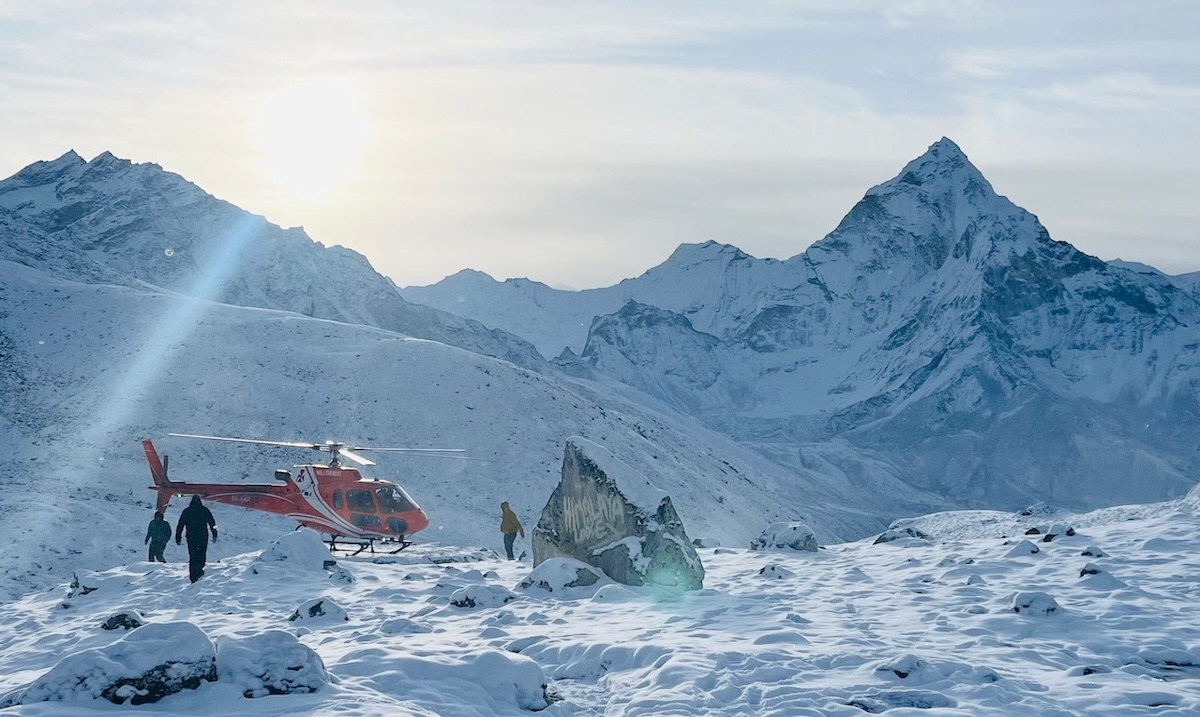
For greater comfort, flexibility, and to avoid possible flight delays, direct helicopter flights between Kathmandu and Lukla are available.
Helicopter flights are faster, more comfortable, and operate more reliably during unstable weather conditions compared to regular domestic flights.
Travel Recommendation
We strongly recommend keeping a few extra buffer days in your travel itinerary before international flights, especially during the busy spring and autumn trekking seasons, as weather-related delays in the Everest region are common.
Your Himalayan adventure begins the moment you step off the plane at Tribhuvan International Airport. Our team will be there to welcome you and transfer to your hotel in Thamel. Take this first day to shake off any jet lag by wandering through the ancient streets, perhaps visiting the nearby Garden of Dreams for some peaceful contemplation. As evening approaches, gather with your guide and fellow adventurers for a comprehensive pre-trek briefing. This is your chance to ask those burning questions, double-check your gear list, and start building the camaraderie that will carry you through the challenging days ahead. The excitement in the room is always palpable as everyone realizes their dream trek begins tomorrow.
 Accommodation Hotel
  Meals breakfast
  Max. altitude 1,400m / 4,593ft.
 The adventure truly starts as you leave Kathmandu's chaotic streets behind and head eastward toward Manthali. This 5-6 hours drive offers a fascinating window into rural Nepali life that most tourists never witness. The highway unwinds through terraced hillsides where farmers tend their crops using methods unchanged for centuries, past colorful villages where children wave enthusiastically at passing vehicles, and alongside rivers that carve deep gorges through the landscape. Keep your camera ready because the views become increasingly dramatic as you gain elevation. In the distance, when clouds permit, you'll catch tantalizing glimpses of snow-capped peaks beckoning you forward. Manthali itself is a quiet town, far removed from tourist trails, where you'll spend a peaceful evening preparing mentally for tomorrow's flight. The anticipation builds as you realize that within 24 hours, you'll be standing in Lukla, gateway to Everest, beginning your trek through some of the world's most spectacular mountain terrain.
Accommodation Lodge Meals Breakfast, Lunch, Dinner Max. altitude 500m / 1,640ft. Morning brings one of the most exhilarating experiences of the entire journey—the flight from Manthali to Lukla. Landing at Tenzing-Hillary Airport, perched dramatically on a mountainside, delivers an adrenaline rush that perfectly sets the tone for your trek.
After meeting your porter team and organizing gear, you'll take your first steps on the famous Everest trail. The path to Phakding descends gently through pine and rhododendron forests and across suspension bridge above the Dudh Koshi River. Small tea houses dot the route. The air feels crisp and clean, filled with the scent of juniper and pine.
Phakding sits nestled in the valley at a comfortable altitude, giving your body a gentle introduction to elevation. That first evening in a mountain lodge, surrounded by fellow trekkers sharing stories, marks your true entry into Himalayan trekking culture.
Accommodation Lodge Meals Breakfast, Lunch, Dinner Max. altitude 2,840m / 9,318ft. Today delivers your first real test as the trail climbs steadily toward Namche Bazaar. The morning starts pleasantly enough, following the Dudh Koshi through beautiful forested sections where sunlight filters through the canopy in golden shafts. Several suspension bridges provide photo opportunities and slight adrenaline spikes as they bounce beneath your feet. At Monjo, you'll pass through the Sagarmatha National Park checkpoint, officially entering the protected Everest region. Beyond Monjo, the character changes dramatically. The infamous Hillary Bridge spans a deep gorge, and from there begins the steep, lung-burning climb to Namche. Take it slowly, rest frequently, and remember there's no prize for speed. As you round the final bend, Namche Bazaar reveals itself like an amphitheater carved into the mountainside, colorful buildings stacked impossibly on steep slopes. Even better, if weather permits, you'll catch your first stunning glimpse of Everest. This bustling Sherpa town offers bakeries, pubs, providing comfortable lodging where you'll spend two nights.
Accommodation Lodge Meals Breakfast, Lunch, Dinner Max. altitude 3,440m / 11,286ft. Smart trekking means respecting altitude, and today's acclimatization day might save your entire expedition. The golden rule "climb high, sleep low" guides this rest day's activities. Most trekkers choose the classic hike to the Hotel Everest View, perched at 3,880 meters, where the terrace offers jaw-dropping panoramas of the world's highest peaks while you sip hot coffee then back to Namche, wander through the Saturday market if your timing aligns—locals from surrounding villages gather to trade everything from Nak cheese to Chinese electronics. Visit the Sherpa Culture Museum to understand the remarkable people who call these mountains home. Pay attention to how your body responds to the altitude today. Headaches, slight nausea, or unusual fatigue are your body's way of communicating. Listen carefully and hydrate constantly.
Accommodation Lodge Meals Breakfast, Lunch, Dinner Max. altitude 3,800m / 12,467ft. Leaving Namche behind, the trail climbs gently towards Khumjung via Hotel Everest View, along the way a spectacular traverse that many consider among the trek's most beautiful section of the Everest trek, Everest, Lhotse, Nuptse, and Ama Dablam dominate the northern horizon, creating a mountain panorama that never gets old no matter how many photos you take. The route gently undulates rather than climbing relentlessly, giving your cardiovascular system a welcome break while maintaining the altitude needed for proper for acclimatization.
As you settle into your lodge, the quieter atmosphere compared to bustling Namche becomes immediately apparent. Fewer trekkers choose this particular routing, meaning more authentic interactions with local families running the tea houses and genuinely peaceful evenings watching sunset paint the peaks in shades of pink and gold.
Accommodation Lodge Meals Breakfast, Lunch, Dinner Max. altitude 3,790m / 12,434ft. After breakfast, you continue toward Dole. Today offers an excellent chance to spot wildlife such as the musk deer, Himalayan Tahr and Pheasant along the way. This marks the day your route diverges from the standard Everest Base Camp trail, turning toward the mystical Gokyo Valley.
The trail ascends gradually through magnificent rhododendron forests that burst into spectacular bloom during spring months, creating tunnels of pink and red flowers. Juniper trees release their distinctive scent when brushed, a natural aromatherapy that seems to ease the effort of climbing. At Mong La pass, pause to absorb the spectacular mountain panorama—Ama Dablam looks particularly stunning from this angle, its perfect pyramid shape explaining why mountaineers call it the "Matterhorn of the Himalayas."
Dole village appears almost unexpectedly, a small collection of lodges situated on a hillside with commanding views up and down the valley. The quieter atmosphere here compared to the main trail becomes immediately noticeable. Fewer trekkers mean more personal attention from lodge owners and a stronger sense of remoteness. This is where your Gokyo Lakes adventure truly begins.
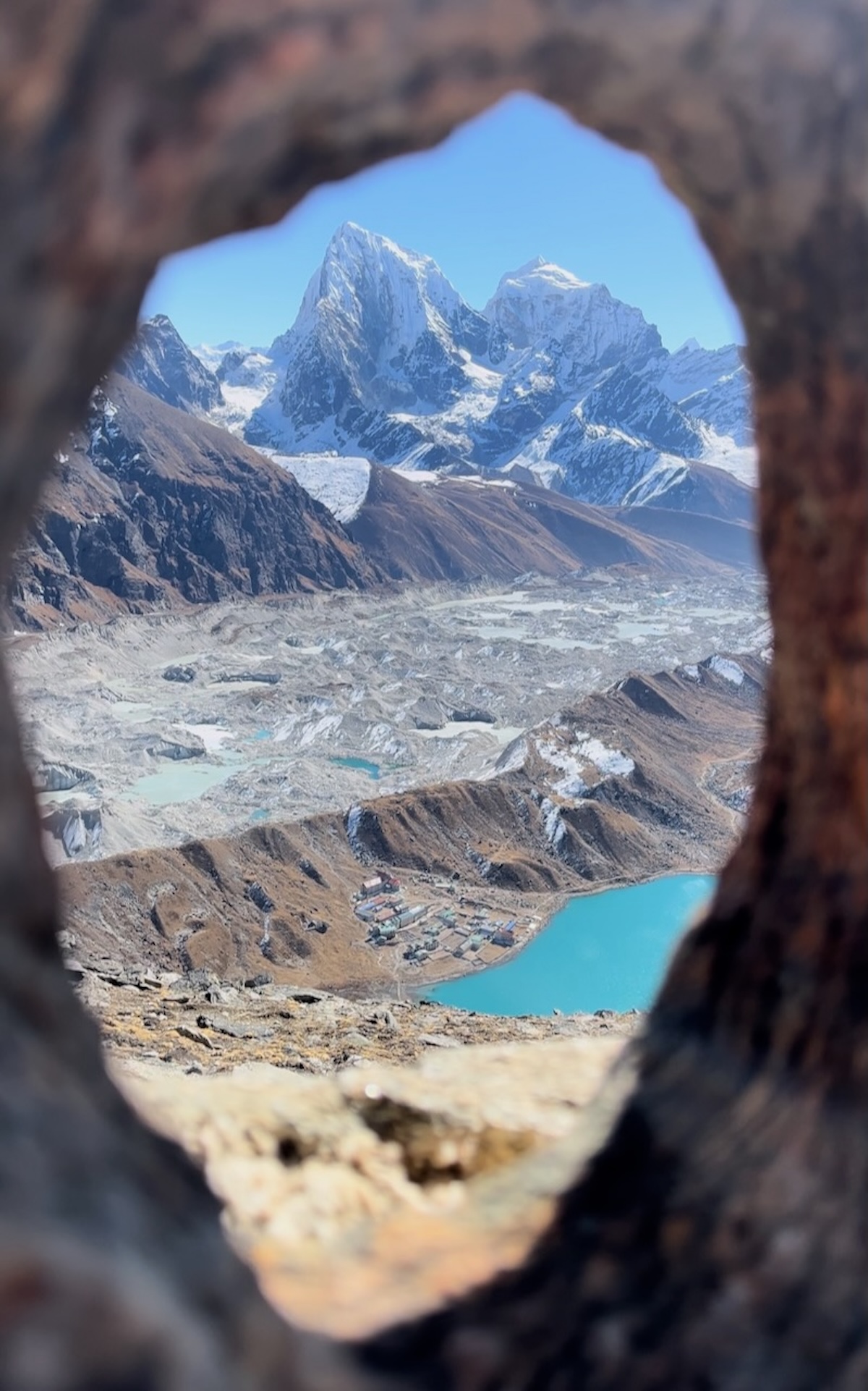
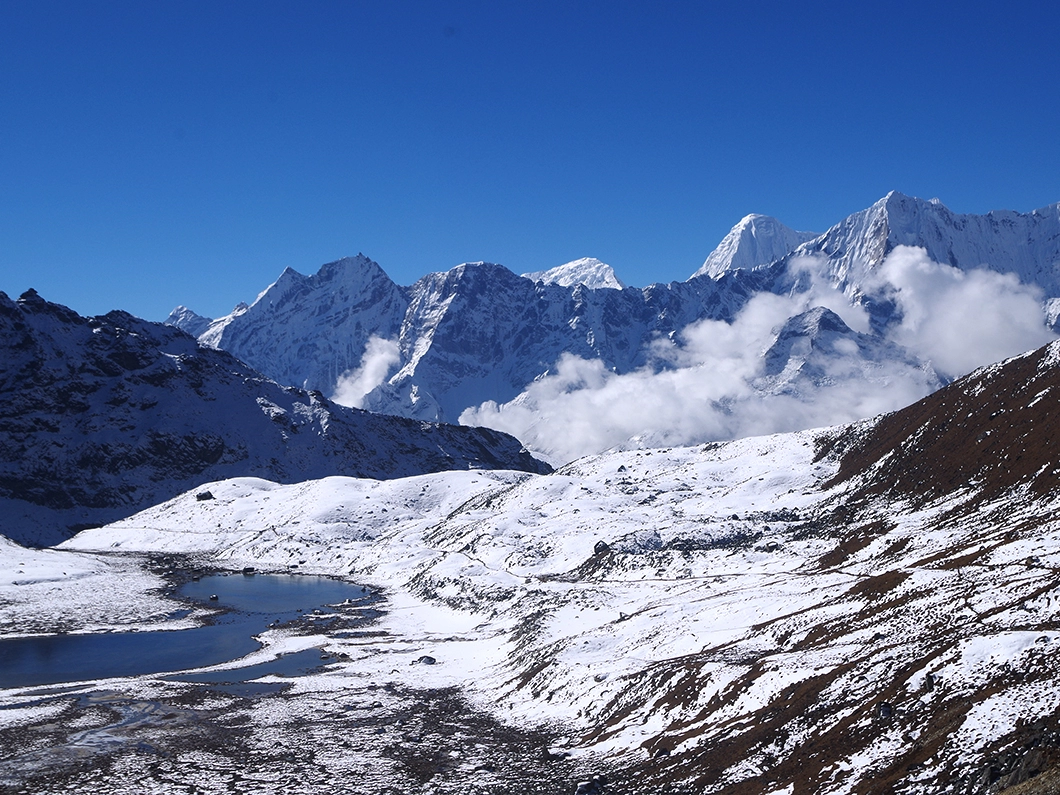
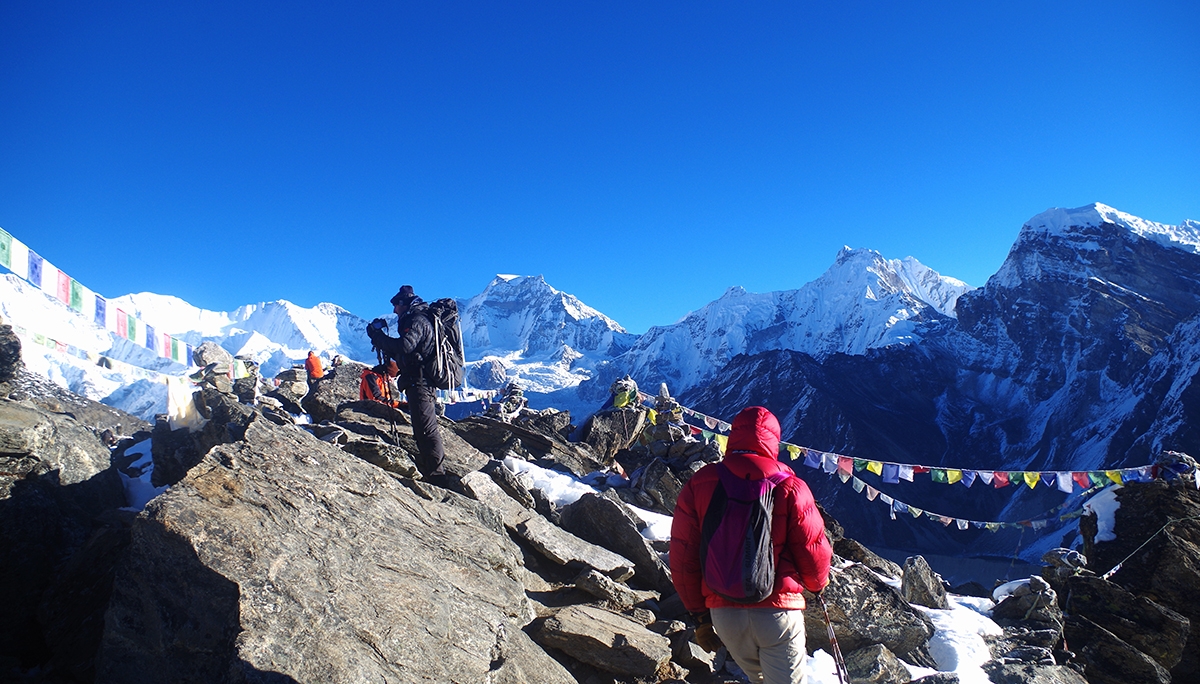
Accommodation Lodge Meals Breakfast, Lunch, Dinner Max. altitude 4,040m / 13,255ft. Accommodation Lodge Meals Breakfast, Lunch, Dinner Max. altitude 4,470m / 14,665ft. Today arrival at the stunning Gokyo. The trail follows the Dudh Koshi valley upward, climbing gradually over rocky terrain and sandy spurs. As you round a bend, the first glimpse of turquoise water ahead stops you in your tracks. Gokyo village clusters beside the main lake at 4,790 meters, a small collection of lodges that somehow thrive in this harsh environment. The setting is beyond spectacular. Snow-capped peaks surround the lake on all sides, their reflections creating perfect mirror images on calm days. Prayer flags flutter continuously in the mountain breeze, adding splashes of color to the stark landscape. After settling into your lodge, take time to walk along the lake shore, absorbing the profound silence broken only by wind and distant avalanche rumbles. Many trekkers describe Gokyo as a spiritual place, and after seeing it yourself, you'll understand why. This evening offers time to rest, recover, and prepare mentally for tomorrow's early morning climb.
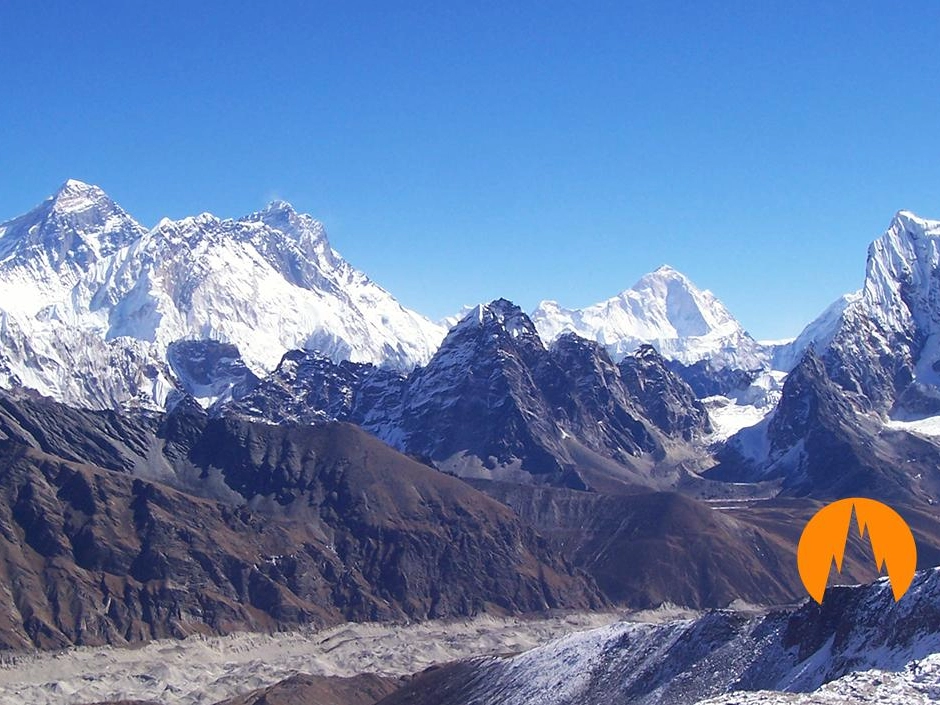
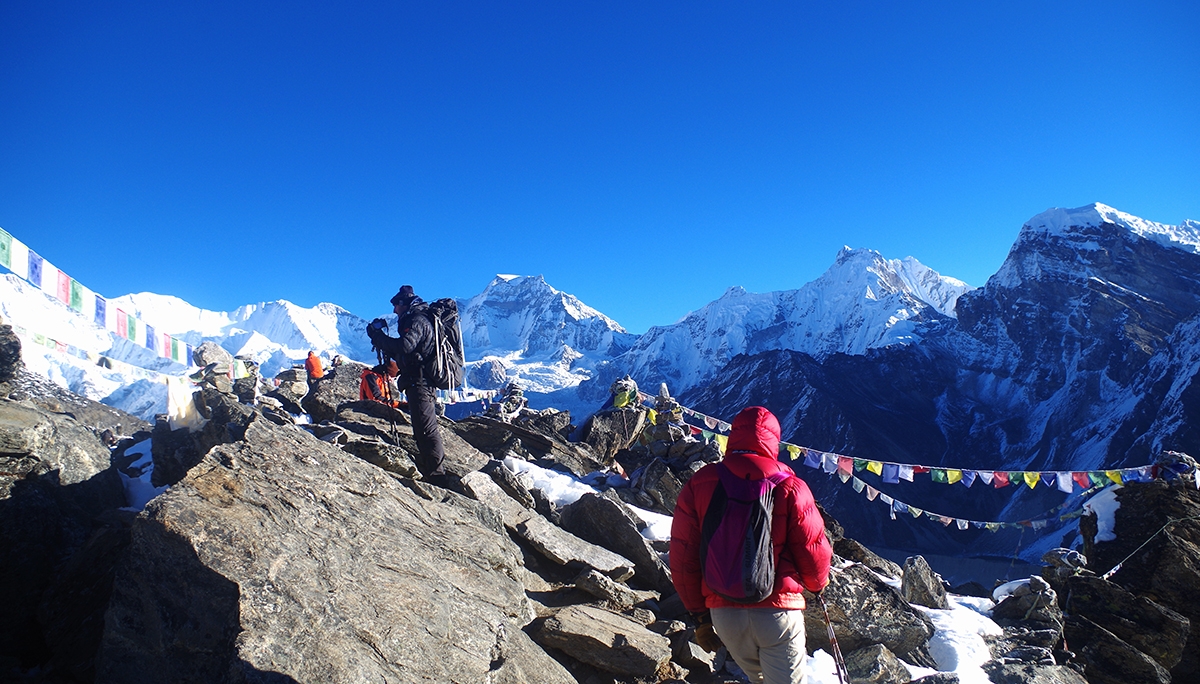
Accommodation Lodge Meals Breakfast, Lunch, Dinner Max. altitude 4,790m / 15,715ft. Waking before dawn challenges even the most enthusiastic trekkers, but what awaits makes any sacrifice worthwhile. The climb to Gokyo Ri begins in darkness, headlamps creating bobbing pools of light on the rocky trail. Despite the short distance, the 5,357-meter altitude makes every step an effort, your breath coming in gasps as your body struggles with thin air. But persevere, because the summit delivers arguably the finest mountain panorama in the entire Himalayas. As sunrise touches the peaks, Everest, Lhotse, Makalu, and Cho Oyu—four of the world's highest mountains—glow golden then brilliant white. The massive Ngozumpa Glacier spreads below like a frozen river, its surface crevassed and contorted by immense forces. Photos cannot capture the majesty, though everyone tries. After descending back to Gokyo for a well-earned breakfast, the afternoon offers options. Some trekkers hike to the Fifth Lake, gaining even higher for more spectacular views. Others simply relax beside the main lake, reading, journaling, or engaging in conversation with fellow adventurers. This rest day serves a crucial physiological purpose, helping your body manufacture more red blood cells for the challenging days ahead.
Accommodation Lodge Meals Breakfast, Lunch, Dinner Max. altitude 5,357m / 17,575ft. Accommodation Lodge Meals Breakfast, Lunch, Dinner Max. altitude 4,700m / 15,420ft. Accommodation Lodge Meals Breakfast, Lunch, Dinner Max. altitude 4,830m / 15,846ft. After yesterday's exertions, today's trek feels almost pleasant by comparison. The trail gradually ascends across rocky moraine. Lobuche sits at 4,940 meters, surrounded by incredible peaks. Lobuche East and West loom directly overhead, while Nuptse's massive south face dominates the eastern horizon. The lodges here are basic but functional, providing the essentials you need—bed, food, warmth. The altitude makes sleep challenging for many people; headaches, unusual dreams, and frequent waking are common. This is normal and temporary. Tomorrow brings the culmination of weeks of planning and days of trekking—Everest Base Camp itself. The anticipation makes relaxation difficult, but rest as much as possible. You'll need energy reserves for the final push
Accommodation Lodge Meals Breakfast, Lunch, Dinner Max. altitude 4,940m / 16,207ft. Accommodation Lodge Meals Breakfast, Lunch, Dinner Max. altitude 5,364m / 17,598ft. Your alarm sounds painfully early, perhaps 4:30 AM, but what awaits makes the sacrifice worthwhile. The climb to Kala Patthar in darkness tests your resolve, every step at this altitude requiring multiple breaths. Yet as you approach the 5,640-meter summit, the eastern horizon begins glowing, signaling approaching sunrise. When the first rays strike Everest's summit, the mountain ignites in shades of gold and pink that seem almost supernatural. Lhotse and Nuptse catch the light moments later, creating a mountain panorama that justifies every difficult moment of your journey. Many trekkers describe this sunrise as life-changing, and watching it unfold, you'll understand why. After descending back to Gorak Shep for breakfast, the long trek down to Pheriche begins. The descent covers significant distance, retracing the trail through Lobuche and pass the memorials at Dughla. Pheriche sits substantially lower at 4,371 meters, and the thicker air feels noticeably easier on your lungs. The village houses the Himalayan Rescue Association's aid post, staffed by volunteer doctors during peak season. This evening brings deep, satisfying sleep—you've accomplished your primary goals and now head homeward.
Accommodation Lodge Meals Breakfast, Lunch, Dinner Max. altitude 4,370m / 14,337ft. Accommodation Lodge Meals Breakfast, Lunch, Dinner Max. altitude 3,440m / 11,286ft. Accommodation Lodge Meals Breakfast, Lunch, Dinner Max. altitude 2,840m / 9,318ft. Accommodation Hotel Meals Breakfast Max. altitude 1,400m / 4,593ft. Accommodation N/A Meals N/A Max. altitude 1,400m / 4,593ft. Our Himalayan adventure concludes as airport transfers arrive at your hotel. Depending on departure timing, you might have final hours for last-minute shopping or one more walk through Kathmandu's vibrant streets. At Tribhuvan International Airport, saying goodbye to Nepal brings unexpected emotions—this country and these mountains have given you something profound and irreplaceable. The flight home provides hours to process your experiences, review thousands of photos, and begin contemplating how to explain this journey to friends and family who've never experienced mountains like these. The Everest Base Camp with Gokyo Lakes trek changes people in ways both obvious and subtle. You'll notice increased confidence in your physical capabilities, deeper appreciation for nature's power and beauty, and perhaps a shifted perspective on what constitutes genuine challenges versus everyday inconveniences. Most significantly, you'll carry memories of sunrise on Everest, turquoise lakes reflecting snowy peaks, prayer flags snapping in mountain winds, and friendly Sherpa faces welcoming you into their homes. These memories don't fade—they become part of who you are, permanent imprints from temporary time spent walking among the world's highest mountains.
Accommodation NA Meals N/A Max. altitude 1,400m / 4,593ft. 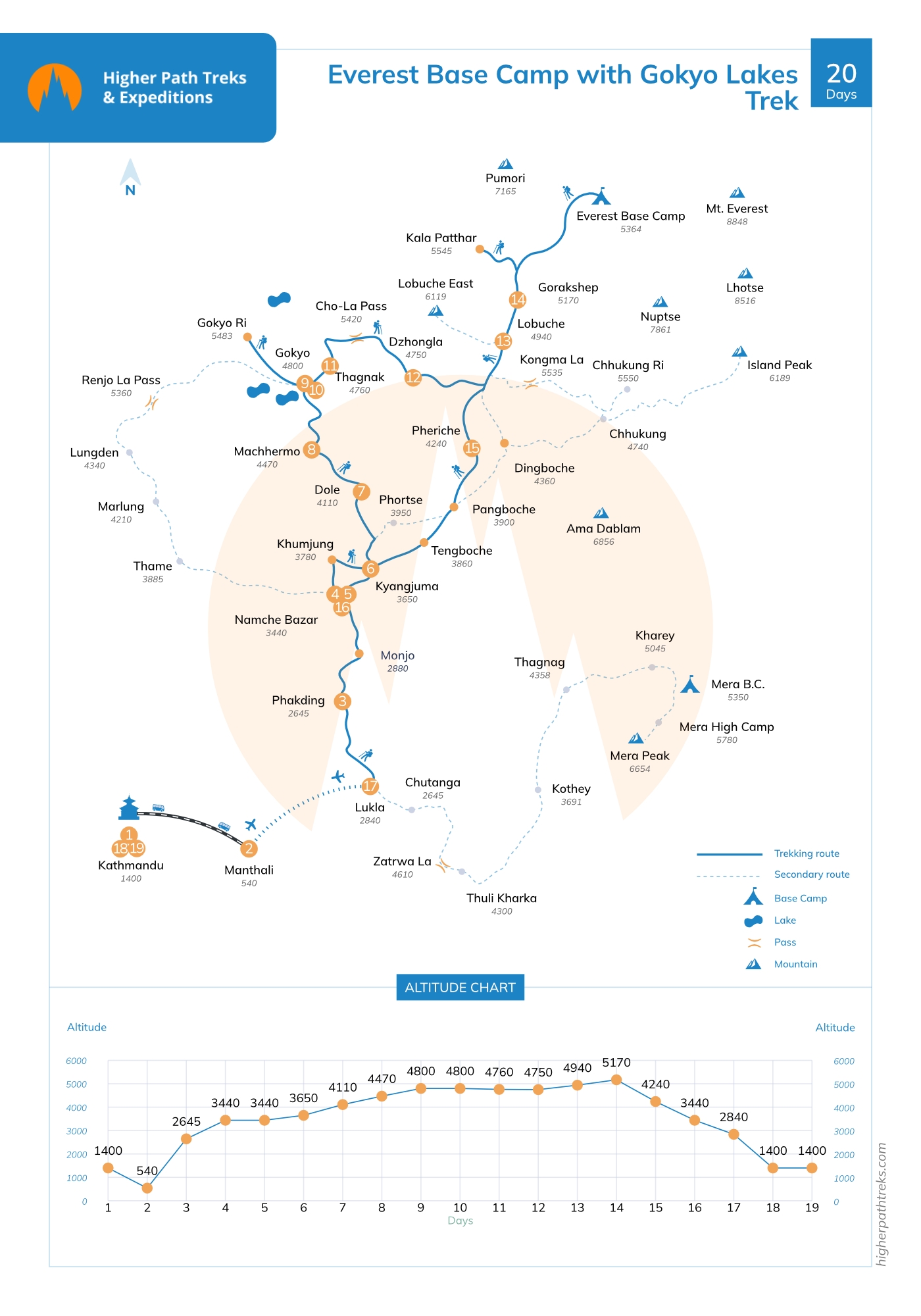
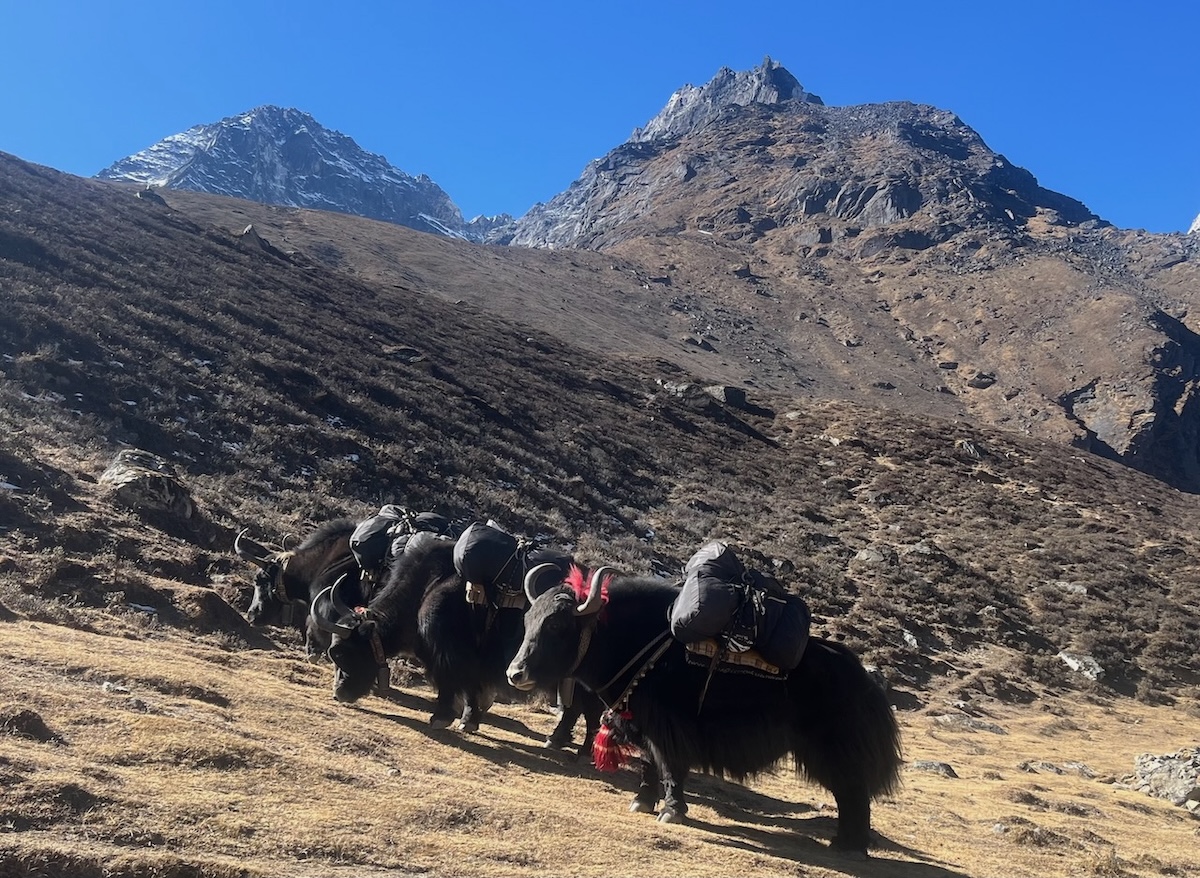
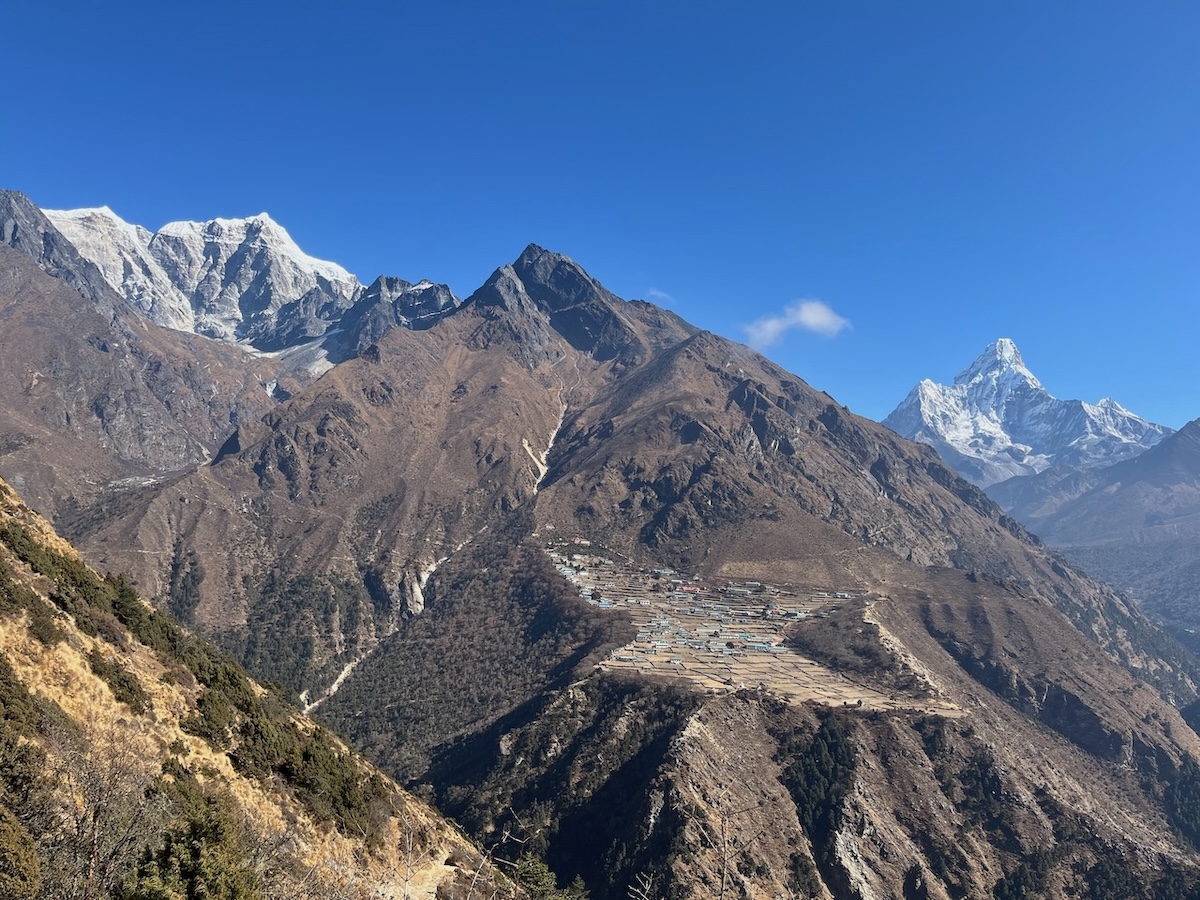
Your Start Date is the day you land in Nepal, and your End Date is when you fly home.
If the set Everest Base Camp Trek via Gokyo and Cho La Pass group dates don’t suit your schedule, we can offer alternative dates upon request.
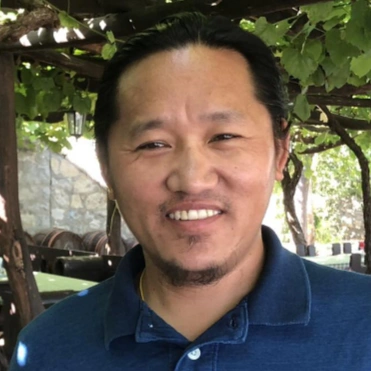
Karma Sherpa is the owner. He was raised in a small village in the Everest region. I use Higher Path every time I come to Nepal for trekking. He always provides me with excellent service and fantastic guides/porters for my trek. Most recently, i did the trek to Gokyo and had Sonam Sherpa as my guide. he was beyond excellent..very caring and a wonderful disposition and very focused on safely. I have used Karma now for probably 5 or 6 treks and always the guides and porters have been great. In addition, Karma plans the entire trip including time in KTM etc so you don't have to do anything except show up and then enjoy the amazing scenery. Karma is a certified mountain guide and climbing expert so he leads many mountain ascents. I HIGHLY recommend Karma and his company Higher Path.
The Everest Base Camp with Gokyo Lakes Trek was a once-in-a-lifetime adventure. Higher Path Treks & Expeditions delivered a perfectly organized 20-day experience filled with stunning scenery, from turquoise Gokyo Lakes to the towering Everest region. Karma’s guidance and support were outstanding, calm, knowledgeable, and always attentive to safety and comfort. A truly unforgettable Himalayan journey.
The Everest Base Camp with Gokyo Lakes Trek is a comprehensive journey through the Everest region that combines two iconic trekking routes. Starting from Lukla, the trek initially follows the classic Everest Base Camp route via Namche Bazaar, Kyangjuma, Dole, Machermo, and Lobuche. After reaching Everest Base Camp and Kala Patthar for stunning views of Everest, the trek diverges towards the pristine Gokyo Valley, renowned for its turquoise lakes nestled amidst towering peaks.
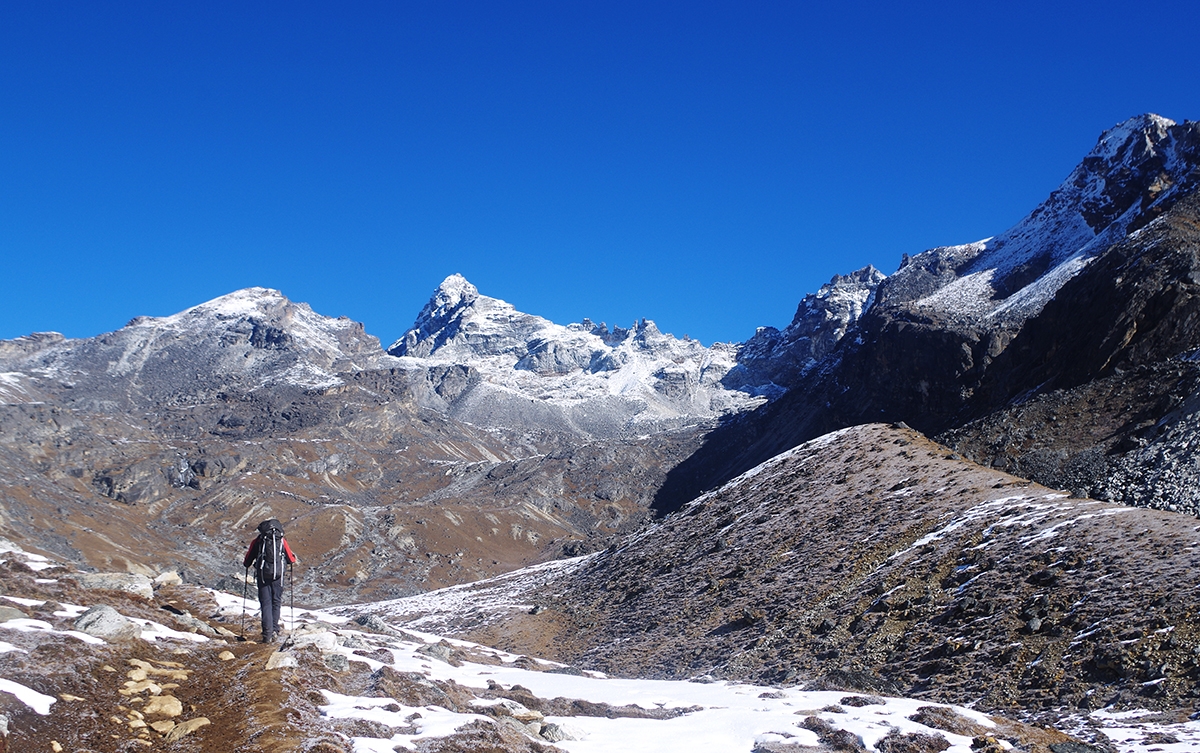
The trek typically extends over 18-20 days to accommodate both the Everest Base Camp and Gokyo Lakes routes. After reaching Everest Base Camp and Kala Patthar, trekkers descend to Dzongla and then cross the challenging Cho La Pass (5,420 meters) into the Gokyo Valley. The route continues through Gokyo Ri for panoramic views and descends via Machhermo and Namche Bazaar before returning to Lukla.
This trek offers a more diverse and immersive experience of the Everest region. In addition to visiting Everest Base Camp and Kala Patthar, trekkers explore the tranquil Gokyo Valley with its vibrant lakes and stunning Himalayan vistas. The trek provides a comprehensive perspective of the region's natural beauty and cultural richness.
The trek is suitable for adventurous trekkers who are physically fit and have some experience with high-altitude trekking. The itinerary involves long days of hiking, steep ascents and descents, and crossing a high mountain pass (Cho La Pass), which requires stamina and acclimatization to prevent altitude sickness.
Altitude sickness remains a concern due to the high altitudes reached during the trek, especially when crossing Cho La Pass (5,420 meters). The itinerary includes acclimatization days and gradual ascents to help mitigate risks. Trekkers are advised to stay hydrated, maintain a steady pace, and listen to their guide's instructions.
Highlights include breathtaking views of Mount Everest, Lhotse, Makalu, and Cho Oyu from Kala Patthar and Gokyo Ri, exploring the vibrant Gokyo Lakes with their stunning reflections of surrounding peaks, crossing the challenging Cho La Pass, and experiencing the unique culture of Sherpa villages along the way.
Similar to the standard Everest Base Camp Trek, you will need the Sagarmatha National Park entry permit and the TIMS (Trekkers' Information Management System) card. These permits are organized by your trekking agency and are necessary for entering the Everest region.
While independent trekking is possible with prior experience and thorough preparation, joining a guided tour with a reputable trekking agency is recommended. Guides provide essential support with navigation, acclimatization management, and safety measures, ensuring a more enjoyable and safer trekking experience.
| No of people | Price per person |
|---|---|
| 1 - 1 | $2,800 |
| 2 - 5 | $2,750 |
| 6 - 10 | $2,700 |
| 11 - 20 | $2,650 |
| No of people | Price per person |
|---|---|
| 1 - 4 | $1,690 |
| 5 - 8 | $1,650 |
| 8 - 14 | $1,600 |
| 15 | $1,550 |