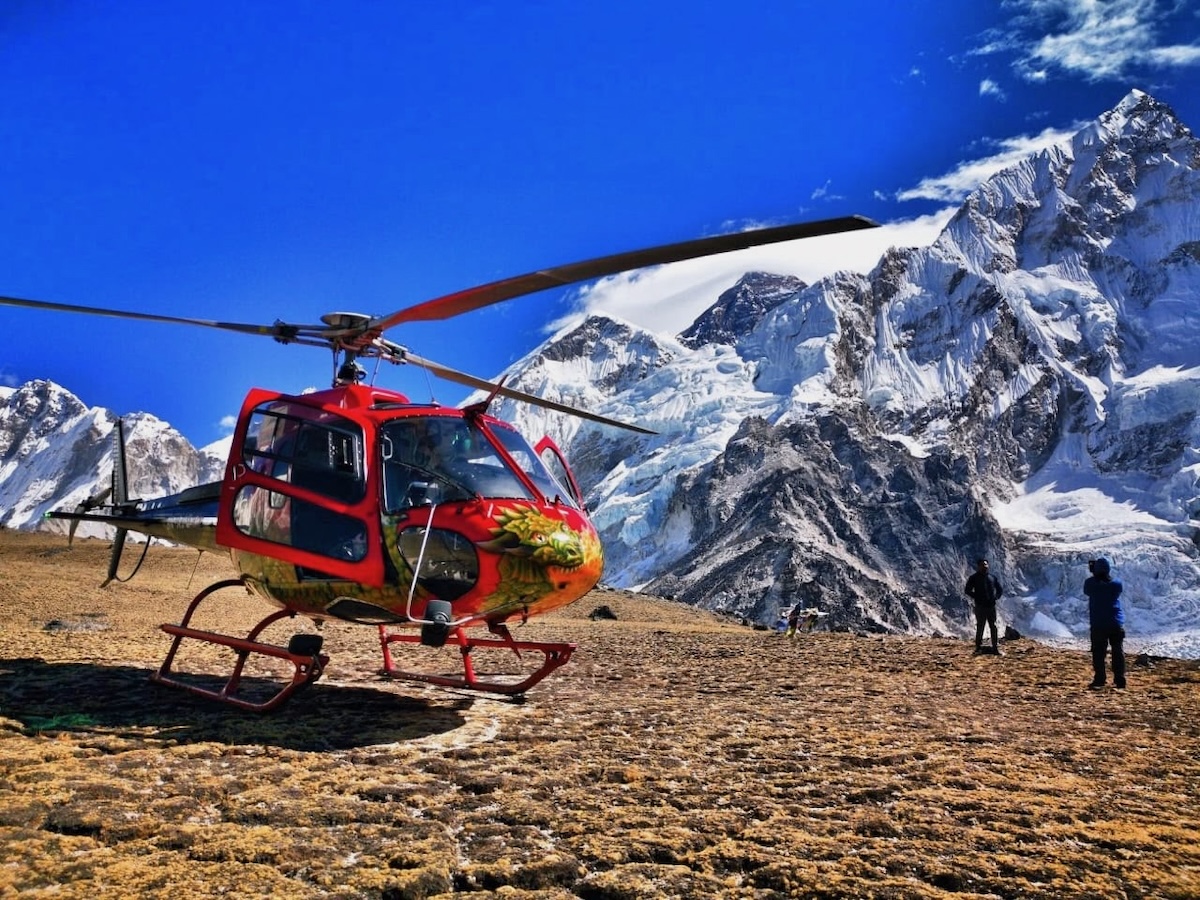
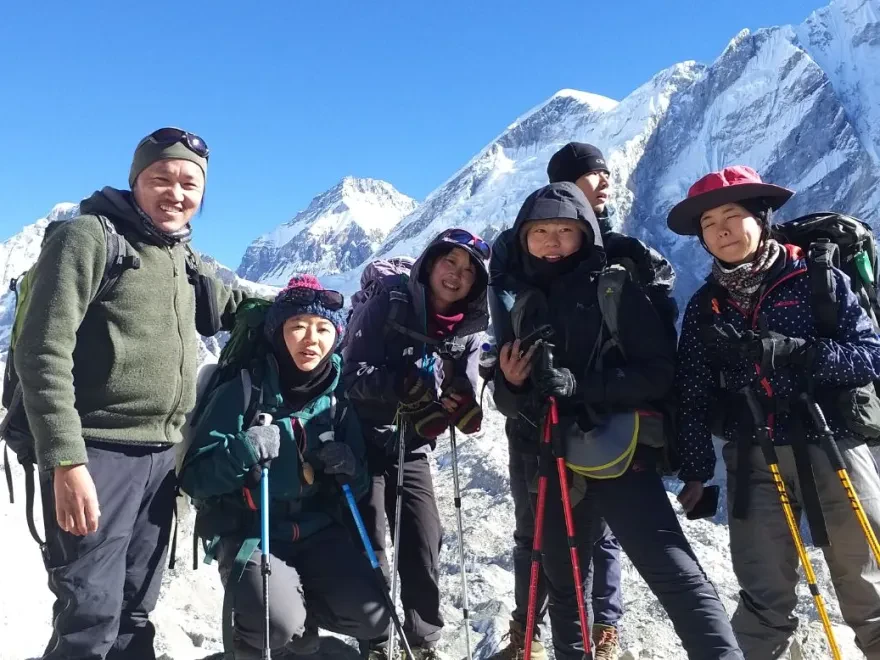
Experience the iconic Everest Base Camp Trek with Helicopter Return, combining the adventure of a classic Himalayan trek with a spectacular helicopter flight back to Lukla. Trek through the Khumbu region, visit traditional Sherpa villages, reach the iconic Everest Base Camp and Kala Patthar for stunning mountain views. Instead of re tracking the trail, enjoy the scenic flight of helicopter Pheriche to Lukla, saving time while experiencing spectacular views of Mount Everest and surrounding Himalayan peaks.
4*** Hotel in Kathmandu and Tea House / Lodge during the trek
Kathmandu - Manthali - Namche - Khumjung - Pangboche - Dingboche - Lobuche - Gorakshep - EBC - Kala Pather - Pheriche - Lukla - Kathmandu
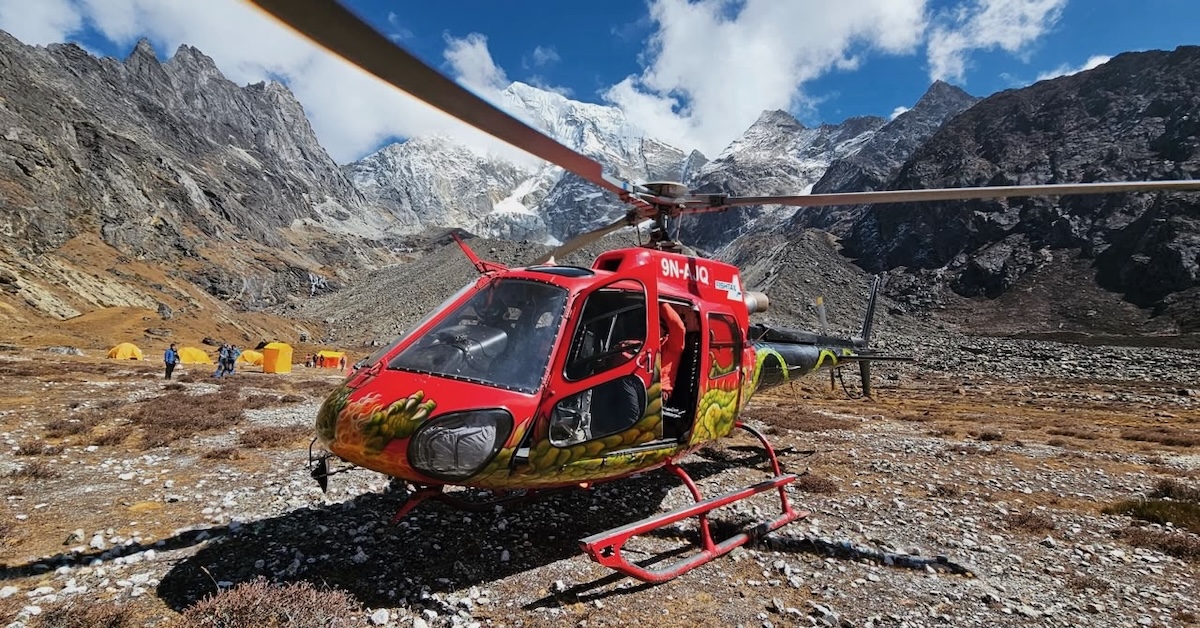
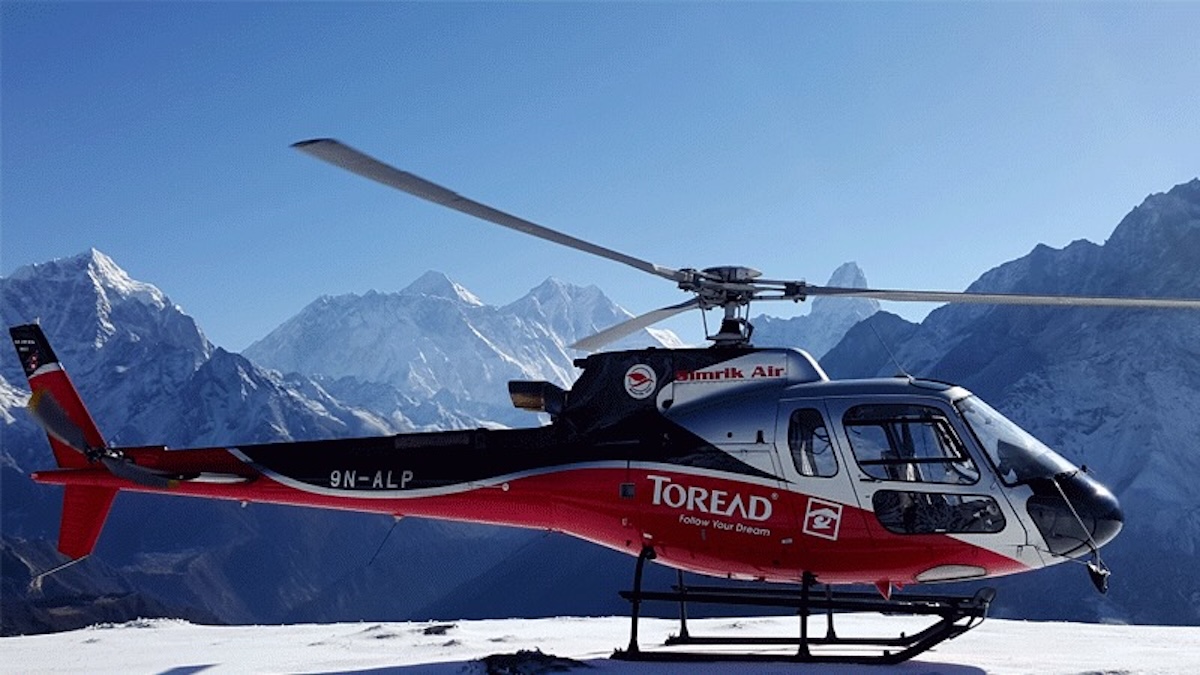
The Everest Base Camp Trek with helicopter return represents the perfect fusion of luxury adventure, offering trekkers an extraordinary way to experience the world's most iconic mountain while adding a spectacular aerial finale to their journey. This itinerary allows trekkers to follow the classic Everest route through the Khumbu region, visit Namche Bazaar and Tengboche monastery walk all the way to Everest Base Camp and Kala Pathhar before descending to Pheriche, where a helicopter picks them up for a scenic flight back to Lukla. This option reduces the overall trekking duration while providing unforgettable views of the Khumbu region.
Unlike the traditional Everest Base Camp Trek, which requires several days of descending of foot, the helicopter return option saves time by replacing the return walk with a breathtaking journey from Pheriche to Lukla. This trek is ideal for travelers who want the complete Everest adventure while reducing trekking time, avoiding a long downhill descent and adding a memorable helicopter flight over the Khumbu valley.
Trekkers fly from Manthali to Lukla and trek begins from Lukla, follows the Dudh Koshi River valley, a route that has carried mountaineering legends and everyday adventurers alike toward Everest for decades. Each day brings dramatic landscape changes as you gain altitude. The lower valleys feature lush vegetation—rhododendron forests that burst into spectacular bloom during spring, pine trees releasing their distinctive scent, and terraced fields where Sherpa farmers cultivate crops using traditional methods.
Suspension bridges become regular features. Each bridge crossing provides photo opportunities and slight adrenaline spikes, particularly when yak trains approach from the opposite direction, requiring trekkers to press against the bridge sides to let these powerful animals pass.
As you ascend, the character of the landscape evolves dramatically. Thick forests give way to alpine shrub lands, which eventually yield to stark, high-altitude terrain where only the hardiest plants survive. This transformation happens gradually enough that your body adjusts to the decreasing oxygen, yet dramatically enough that you notice profound changes in your surroundings.
Namche Bazaar stands as the commercial and cultural heart of the Khumbu region, a remarkable amphitheater-shaped settlement carved into the mountainside at 3,440 meters. This town defies expectations—instead of the simple mountain village you might anticipate, Namche offers bakeries producing fresh croissants, shops selling high-end trekking gear, and restaurants with menus featuring everything from traditional dal bhat to pizza and pasta.
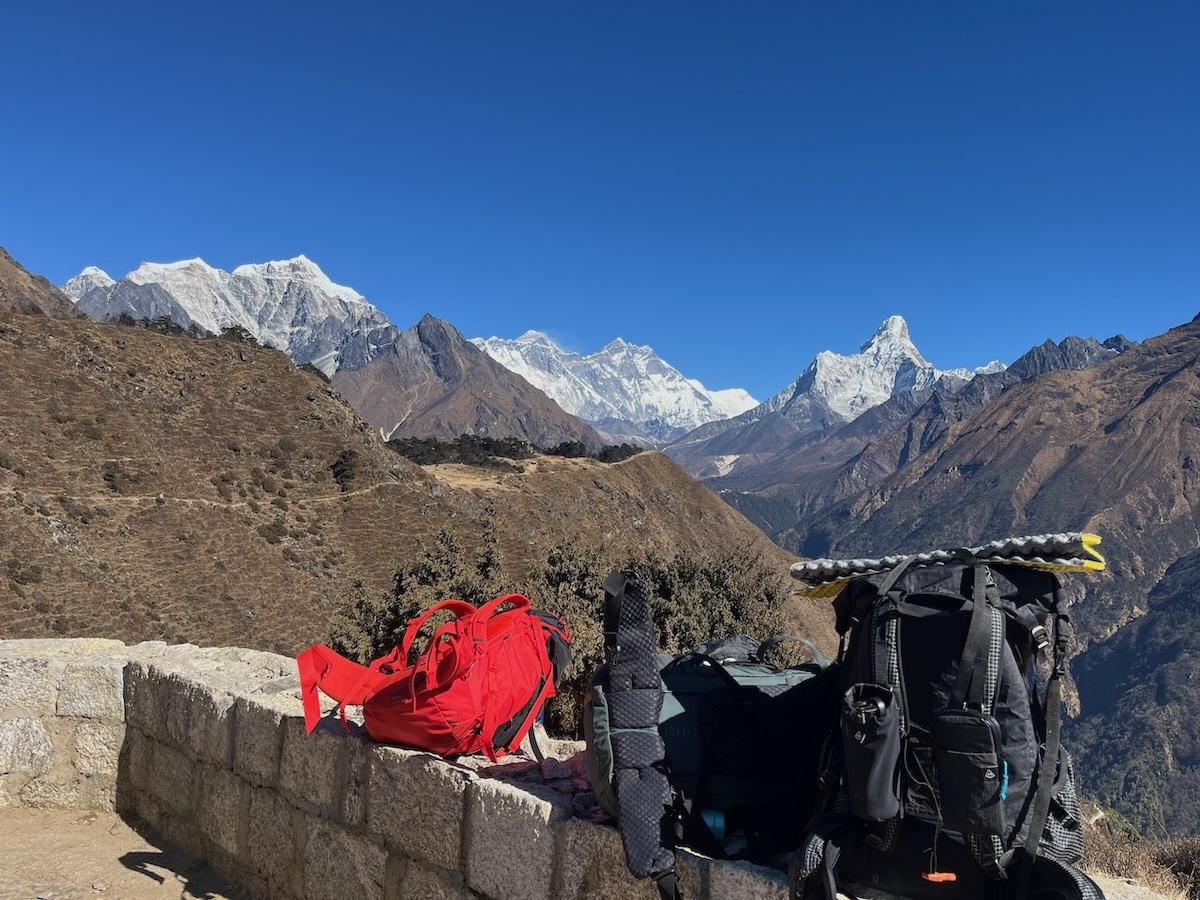
Spending two nights in Namche allows crucial acclimatization. The golden rule "climb high, sleep low" guides your rest day activities. Trekkers hike to the Everest View Point, where the terrace delivers stunning panoramas of Everest, Lhotse, and the distinctive pyramid of Ama Dablam. This acclimatization hike serves a dual purpose—helping your body adjust to altitude while providing some of the trek's most memorable views.
Tengboche Monastery, situated at 3,867 meters, represents the largest and most significant Buddhist monastery in the Khumbu region. Its position offers one of the Himalayan region's most iconic views. From the monastery courtyard, Everest, Lhotse, Nuptse, and Ama Dablam create an amphitheater of snow-capped peaks that seems almost too spectacular to be real. Photographers wait hours for perfect light conditions, while trekkers simply stand in awe, absorbing the profound beauty.
If your timing aligns with prayer sessions, witnessing the monks perform their evening rituals adds spiritual depth to the physical challenge of trekking. The deep resonance of ceremonial horns, the rhythmic chanting, and the monastery's ornate interior decorations create an atmosphere that transcends religious boundaries. Even those without Buddhist beliefs find these ceremonies moving and memorable.
The monastery suffered destruction in the 1934 earthquake and a devastating fire in 1989, but was rebuilt with support from the international community, symbolizing the global connection to this region. Today it stands as both an active religious center and a cultural landmark, welcoming trekkers who respectfully observe its customs while appreciating its architectural and spiritual significance.
Kala Patthar provides superior views of Everest's summit. This black rock peak, rising to 5,640 meters, offers unobstructed panoramas that base camp's valley position cannot match. Most trekkers climb Kala Patthar either the afternoon of their base camp day or the following morning for sunrise.
The sunrise climb begins in darkness, trekkers using headlamps to navigate the steep, rocky trail. When the first sunlight strikes Everest's summit, the mountain transforms before your eyes. The snow glows golden, then pink, then brilliant white as the sun climbs higher. You can see the South Col, the route climbers take toward the summit, and the massive cornices that crown the ridge lines. On exceptionally clear days, visibility extends for hundreds of kilometers in every direction.
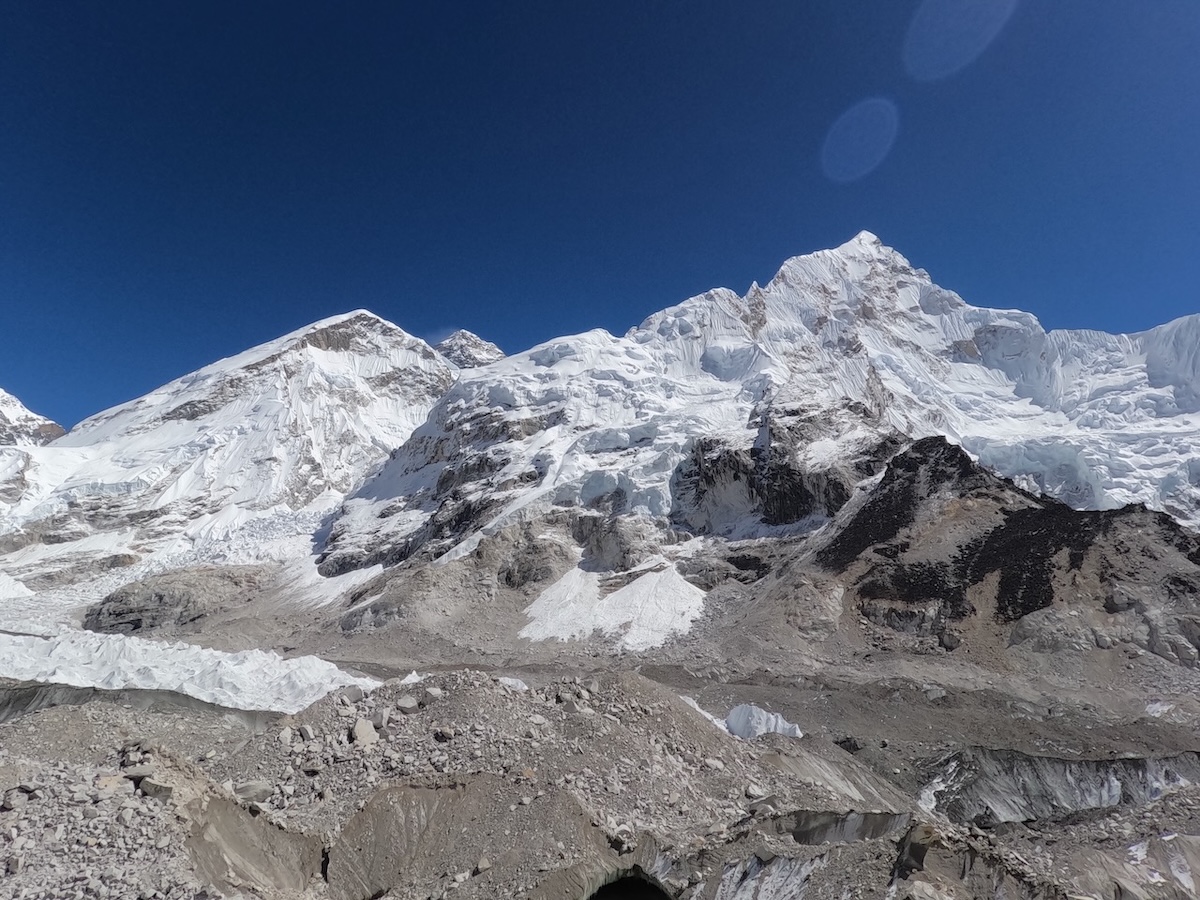
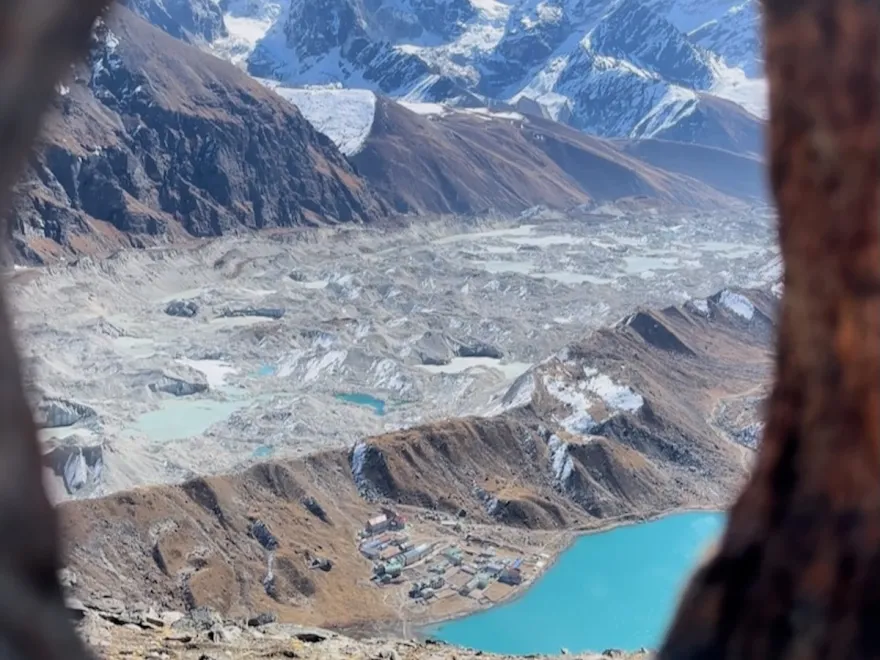
From Kala Patthar, Everest dominates the view, but you're also surrounded by other giants—Mt.Nuptse's massive wall, Mt.Pumori's elegant pyramid, and the entire amphitheater of peaks that defines this region. The Khumbu Glacier spreads below, its surface crevasses and contorted by the immense forces of moving ice. Prayer flags left by previous trekkers snap in the constant wind, adding color and movement to the frozen landscape.
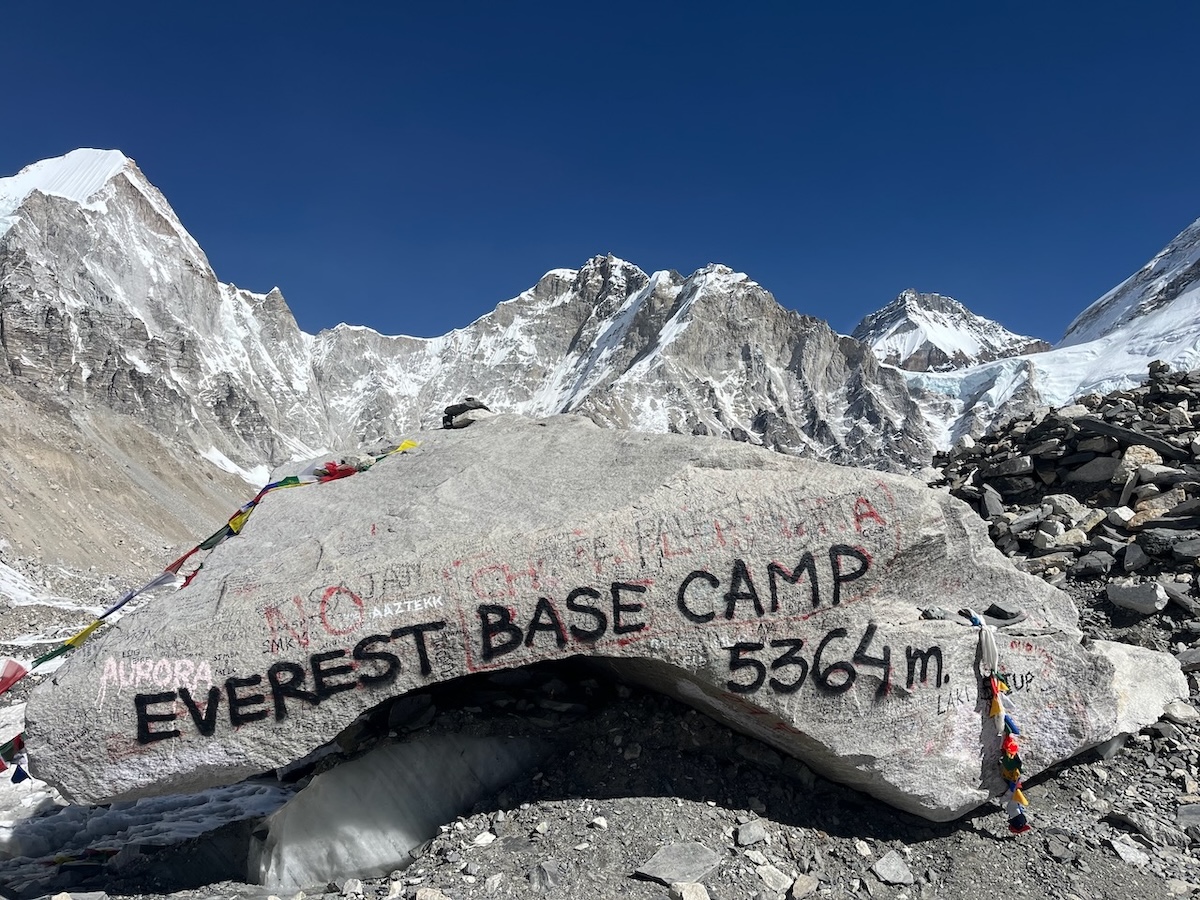
From Gorak Shep, the trail follows lateral moraine of the Khumbu Glacier to Everest Base Camp at an altitude of 5,364 meters. Although its exact location changes annually as the Glacier moves, reaching the Everest Base Camp remains the ultimate goal of the trek.
During climbing season (typically April and May), base camp transforms into a small settlement of colorful tents housing hundreds of climbers and support staff. The atmosphere buzzes with activity—teams organizing equipment, acclimatizing for higher camps, and preparing for summit attempts. Outside the climbing season, the area is much quieter, marked mainly by prayer flags, the occasional memorial and breathtaking views of surrounding Himalayan peaks.
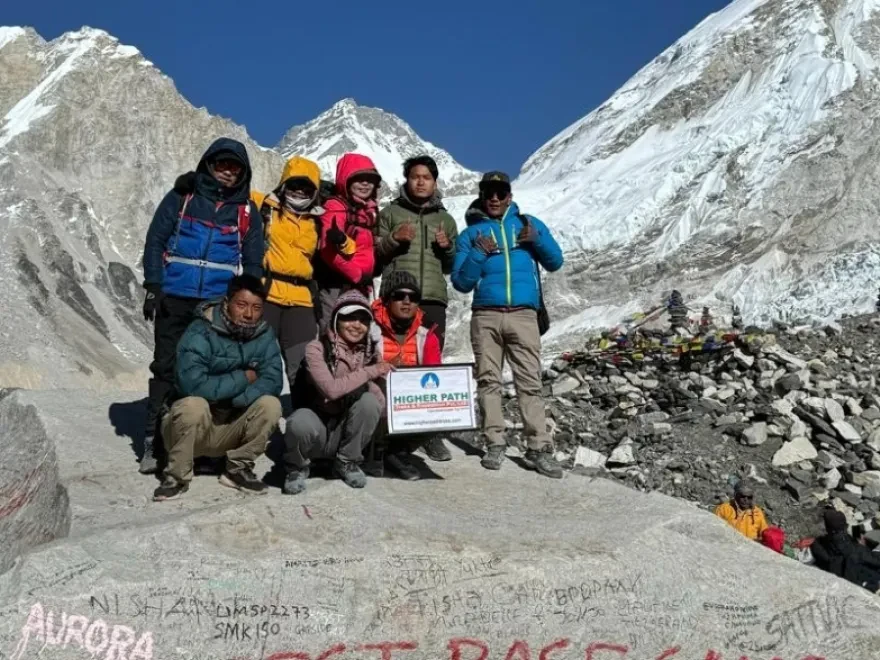
Trekkers usually spend time taking photos, celebrating and enjoying the unique atmosphere before returning back to Gorak Shep for the night. the following day, continue to climb Kala Patthar and descend to Pheriche for the Helicopter flight to Lukla.
Beyond the spectacular views, the helicopter return offers several practical advantages that make it appealing to many trekkers. The most obvious benefit is time savings—what would require 3-4 days of downhill trekking takes just 15-20 minutes by air. This time efficiency means you can complete the entire Everest Base Camp experience in 8-10 days rather than the traditional 12-17 days.
For professionals with limited vacation time, this compression makes a huge difference. Teachers might fit the trek into a school break. Business professionals might accomplish it within available leave. Parents might schedule it around family commitments. The helicopter return transforms Everest Base Camp from a three-week commitment into a realistic ten-day adventure.
Physical considerations also play a role. Descending thousands of vertical meters over multiple days puts enormous stress on knees and joints. Many trekkers find the downhill sections harder on their bodies than the uphill climbing. The helicopter return eliminates this wear and tear, allowing you to finish the trek at your peak of accomplishment rather than limping down tired trails.
There's also the freshness factor. By the time traditional trekkers descend, they're retracing familiar trails, seeing the same tea houses, and covering known ground. While there's value in that journey, the helicopter return replaces repetition with novelty—every moment of the flight offers new perspectives and experiences.
Organizing an Everest Base Camp trek with helicopter return requires careful planning and realistic expectations. Weather plays a crucial role in Himalayan helicopter operations. Flights require clear visibility and stable conditions, which aren't guaranteed even during peak trekking seasons.
Most trekkers schedule the helicopter flight with 1-2 buffer days built into their itinerary. This buffer allows for weather delays without jeopardizing international flight connections. If conditions prevent flying on your scheduled day, you can wait another day or, in worst-case scenarios, trek down part or all of the route traditionally.
The helicopter typically accommodates 4-5 passengers plus the pilot, depending the altitude considerations. Weight restrictions at high altitude mean less payload capacity than at sea level, so passenger numbers and luggage are carefully calculated. Most operators organize shared flights when possible, reducing per-person costs while maintaining the experience quality.
Regarding costs, the helicopter return represents a significant additional expense beyond standard trekking costs. However, when you consider what you're gaining—time savings, physical relief, spectacular views, and a unique experience—many trekkers find the investment worthwhile. The memories of flying past Everest at eye level, watching the Himalayas unfold beneath you, last far longer than the financial impact.
The Everest Base Camp trek with helicopter return follows the same seasonal patterns as traditional treks, with spring (March to May) and autumn (September to November) offering optimal conditions. However, the helicopter component adds an additional weather consideration—clear skies aren't just desirable for views but essential for flight safety.
Spring brings warmer temperatures, stable weather patterns, and rhododendron blooms that paint the lower valleys in spectacular colors.
Autumn provides the clearest skies of the year, with post-monsoon air scrubbed clean by weeks of rainfall. Mountain photography enthusiasts particularly favor autumn for its exceptional visibility and dramatic light. Temperatures are cooler as spring but still manageable with proper gear.
For Everest Base Camp Trekking trekkers need two different permits, Sagarmatha National Park Entry permit and Khumbu Pasang Lhamu Rural Municipality (local government) permit). Both permits can be obtained at Lukla.
Comfortable tea houses is provided as a accommodation during the trek. Rooms are simple and cozy. Attached bathroom are available in Phadking, Namche, Pangboche, Dingboche and Lukla, while shared bathrooms are in Lobuche, Gorakshep, Pheriche and Khumjung.
As a meal trekkers get breakfast, lunch and dinner. Every teahouse has their own food menu, trekkers can choose meals from menu as their own choice. They serve local and some international dishes as their menu. Vegetarian meals are highly recommended, especially at higher altitude. Vegetarian meals are fresh, nutritious and easy to digest.
Don't let the helicopter return component fool you into thinking this is an easy trek. You'll still walk for 7-8 days gaining significant altitude. The only difference is you won't walk back down—but you must still walk up. Proper physical preparation remains absolutely essential.
Begin training at least 1-2 months before your trek, focusing on cardiovascular endurance and leg strength. Cardiovascular fitness determines how well your body handles sustained effort at altitude. Activities like running, cycling, swimming, or stair climbing build the aerobic capacity necessary for consecutive days of mountain trekking. Aim for 4-5 cardio sessions weekly, gradually increasing intensity and duration.
If possible, incorporate training hikes with elevation gain and a loaded backpack. Even if you live nowhere near mountains, hiking stairs or using a stair machine with a weighted pack simulates trekking conditions. Work up to carrying 5-10 kilograms for several hours—this approximates your day pack weight on the actual trek.
Altitude remains the single biggest challenge of this trek, and the helicopter return doesn't change that fact. You'll still climb to over 5,600 meters at Kala Patthar, exposing you to all the physiological challenges of high-altitude trekking. Understanding and respecting altitude is essential for both safety and enjoyment.
Acute Mountain Sickness (AMS) can affect anyone regardless of age, fitness level, or previous altitude experience. Common symptoms include headache, nausea, dizziness, and fatigue. More serious conditions—High Altitude Pulmonary Edema (HAPE) and High Altitude Cerebral Edema (HACE)—are potentially fatal and require immediate descent.
The key to preventing altitude sickness is gradual ascent. Your itinerary includes built-in acclimatization days at Namche Bazaar and Dingboche, allowing your body time to adjust. Following the "climb high, sleep low" principle—taking day hikes to higher elevations before returning to sleep at lower altitudes—accelerates acclimatization while minimizing risk.
Staying well-hydrated helps significantly with altitude adjustment. Aim to drink 3-4 liters of water daily, even if you don't feel particularly thirsty. The dry mountain air and increased respiratory rate at altitude cause rapid fluid loss. Adequate hydration helps prevent AMS and improves overall performance.
Listen to your body and communicate honestly with your guide about any symptoms.
The Everest region faces significant environmental challenges from increasing tourism, and every trekker bears responsibility for minimizing their impact. The helicopter return actually offers some environmental advantages—less time on trails means reduced waste generation and resource consumption in tea houses. However, helicopter flights do create carbon emissions that trekking doesn't.
Plastic waste represents one of the region's biggest problems. Bring refillable water bottles and purification methods (tablets, filters, or UV sterilizers) rather than buying plastic bottled water. Most tea houses now offer boiled water for refilling bottles—while this costs a bit more than tap water, it's far better environmentally than plastic bottles that must be carried out of the region.
Practice "Leave No Trace" principles throughout your trek. Pack out all trash that can't be properly disposed of locally, including candy wrappers, batteries, and toiletries. Many tea houses now have organized waste collection systems, but personal responsibility remains crucial. If you generate it, you're responsible for it.
Be conscious of water and energy usage in tea houses. Water sources become increasingly scarce at higher altitudes, and the energy required to heat water is expensive and often comes from burned wood or yak dung. Skip daily showers in favor of occasional ones, and when you do shower, be quick. Even biodegradable soaps impact the environment when used excessively.
Deciding between the traditional round-trip trek and the helicopter return version requires honest assessment of your priorities, physical condition, time constraints, and budget. Neither option is inherently superior—they serve different needs and preferences.
The traditional trek offers complete immersion. Walking both up and down means experiencing every section of trail, watching the landscape transform from both perspectives, and having more time to absorb the environment. Some trekkers find the descent meditative—less physically demanding than climbing, allowing mental space to process the journey. The slower pace provides additional opportunities for cultural interactions, photography, and simply being present in the landscape.
However, the traditional descent has drawbacks. Those extra 3-4 days of downhill walking stress knees and joints significantly. By the time you're descending, you're retracing familiar ground—the same tea houses, bridges, and viewpoints. While there's beauty in seeing these places again, the sense of discovery inevitably diminishes.
The helicopter return sacrifices some of that immersive quality for different advantages. Time efficiency is obvious—cutting 3-4 days from your trek duration makes the experience accessible to people with tight schedules. The physical benefit matters too—eliminating thousands of vertical meters of descent saves your knees considerable wear. And the aerial perspective offers genuinely new experiences rather than repetition of known territory.
Cost represents the most significant difference. The helicopter return adds substantial expense to your trek—typically several hundred dollars per person depending on group size and specific operator. For budget-conscious trekkers, this additional cost might be prohibitive. For others, the value proposition—time saved, physical relief, unique aerial experience—justifies the investment.
Neither choice is wrong. Traditional trekkers experience the complete journey in its original form, earning their achievement through both ascent and descent. Helicopter return trekkers accomplish the same upward journey while adding an aerial dimension that creates different but equally valid memories.
Before leaving for your Everest Base Camp Trek with Helicopter Return from Pheriche, complete these final check.
Recheck your gear systematically, laying everything out and comparing against your packing list. This is your last chance to purchase forgotten items or replace gear that seems inadequate. Break in any new equipment if possible, though by this point, everything should already be well-tested.
Review your travel insurance policy carefully, confirming it covers high-altitude trekking and helicopter evacuation. Print copies of the policy document and emergency contact numbers, keeping these separate from digital versions in case electronic devices fail.
Organize important documents—passport, visas, permits, flight confirmations, hotel reservations, and emergency contacts—in accessible but secure locations. Many trekkers scan everything into cloud storage as backup, ensuring access even if physical documents are lost.
Inform your bank and credit card companies about your Nepal travel to prevent fraud alerts from blocking your cards when foreign transactions appear. Download offline maps of Kathmandu and trekking regions to your phone, providing navigation backup without requiring cellular connection.
Consider your mental preparation too. Visualize the journey ahead—the flight to Lukla, the trail to Namche, the climb to base camp, the helicopter return. This mental rehearsal helps manage anxiety while building positive anticipation. Remind yourself that nervousness is normal and healthy—it reflects appropriate respect for the challenge ahead.
Higher Path Treks & Expeditions has over a decade of experience of organizing Everest Base Camp Trek with Helicopter Return, Himalayan adventures. Our experienced guides, reliable logistics and strong commitment to safety ensure a smooth and memorable Himalayan adventure.
Experienced Guides: Our licensed trekking guides have extensive knowledge and training in high-altitude, including recognition and treatment of altitude sickness.
Safety: Your safety is our priority, Our guides are trained in First Aid and altitude sickness management. They carry comprehensive first aid supplies, maintain communication equipment for emergencies, and know the evacuation procedures if serious problems arise.
Transparent Pricing: Transparency defines our business practices. Our pricing clearly specifies what's included and what costs extra—no hidden fees suddenly appearing after you've committed.
Reliable Helicopter Coordination: From permit and accommodation to helicopter scheduling, we manage every details of your trip. If weather affects helicopter operations, we arrange suitable alternatives and keep you informed throughout the process.
The Everest Base Camp trek with helicopter return from Pheriche represents an extraordinary journey that combines traditional adventure with modern convenience, physical challenge with cultural immersion, and ground-level trekking with aerial spectacle. This unique combination creates experiences impossible through any other means—walking among the world's highest peaks before soaring past them at eye level.
This trek suits many different types of adventurers. Time-constrained professionals can accomplish it within limited vacation windows thanks to the helicopter return. Photographers gain both ground and aerial perspectives for comprehensive documentation. Couples or groups can share the achievement together, bonding through shared challenge. Solo travelers find ready companionship on popular trails while enjoying the independence of personal journey.
Your Himalayan adventure awaits. The trails are ready, the mountains stand eternal, and the experience of a lifetime is within reach. All that remains is taking that first step—contacting us, beginning preparations, and committing to the journey. Everything else flows from that initial decision to transform dreams into reality.
If your are planning for Everest Base Camp Trek with Helicopter Return, contact with Higher Path Treks and Expedition.
Helpful Blogs About Trekking in the Everest Region:
Uncover the best blogs about trekking in the Everest region, featuring expert advice, detailed itineraries, personal experiences, and essential tips for adventurers looking to explore the Himalayas.
Photography Guide: Capturing the Himalayas Without Expensive Gear
Everest Luxury Trek: An Unforgettable Himalayan Experience
Nepal Peak Climbing 2026: Routes, Tips, and Top Summits
Solo Trekking to Everest Base Camp: Is It Possible?
Top 10 Highlights of the Everest Base Camp Trek
Successfully Trekking to Everest Base Camp and Kala Patthar
Why Famous Trekkers Choose Everest Base Camp?
Autumn Season to Everest Base Camp Trek
The Best Hiking Adventures: Famous Peak Climbs in 2025
Top Himalayan Peaks for Beginner Climbers: A Comprehensive Guide
Everest Three Peaks: A Beginner’s Guide to the Ultimate Himalayan Challenge
Is Peak Climbing in Nepal Easy for Beginners?
Must-Know Facts About Everest Base Camp Trekking
Why Gokyo Ri is a Must-Visit for Everest Trek Lovers
The Roof of the World: Peak Climbing Journeys through Nepal’s High Country
What to Expect on an Island Peak Climbing Expedition
Mera Peak Climbing Guide for Beginners: Tips, Difficulty & Preparation
Four Peaks, One Journey: Mera, Island, Lobuche & Amphu Lapcha Expedition
Top Best Expedition Packages in Nepal 2025
Which is Easier: Mera Peak or Island Peak?
Why Choose Island Peak Climbing with Everest Base Camp Trek for Beginners
Best Trekking Peaks in Everest Region for Beginners
Experience Mountain View in Nepal
Essentials for Everest Base Camp
Notes
Alternative Transportation Option
In case of flight cancellation, an alternative overland route is available:
This option is commonly used during bad weather or peak trekking seasons when flights are disrupted.
Optional Helicopter Upgrade
Kathmandu – Lukla – Kathmandu Helicopter Service
For greater comfort, flexibility, and to avoid possible flight delays, direct helicopter flights between Kathmandu and Lukla are available.
Helicopter flights are faster, more comfortable, and operate more reliably during unstable weather conditions compared to regular domestic flights.
Travel Recommendation
We strongly recommend keeping a few extra buffer days in your travel itinerary before international flights, especially during the busy spring and autumn trekking seasons, as weather-related delays in the Everest region are common.
Touching down at Tribhuvan International Airport marks the beginning of your extraordinary Himalayan adventure. As you step into the arrivals hall, our representative will be waiting with a warm welcome and traditional khata scarf, immediately immersing you in Nepali hospitality. The drive to your hotel in Thamel. Thamel itself is a traveler's paradise, where narrow alleyways overflow with trekking shops, authentic restaurants. Depending on when you arrive, you might explore the nearby Garden of Dreams for peaceful contemplation, or simply rest and adjust to the new time zone. As evening descends, you'll gather with your trekking guide for a comprehensive briefing that covers the journey ahead—altitude considerations, daily schedules, and what to expect from tea house accommodation. This meeting builds anticipation while addressing any lingering questions, allowing you to sleep soundly knowing you're in capable hands.
 Accommodation Hotel
  Meals Welcome Dinner
  Max. altitude 1,400m / 4,593ft.
 After a breakfast in Kathmandu, the midday departure for Manthali allows time for any last-minute shopping or final preparations. As your vehicle leaves the capital's urban sprawl behind, the landscape transforms beautifully. The highway winds through terraced hillsides where farmers tend crops using methods unchanged for generations, past rushing rivers that carve deep valleys through the foothills, and alongside villages where children wave enthusiastically at passing vehicles. The Ramechhap District reveals a Nepal that most tourists never witness—authentic rural life continuing its timeless rhythm far from trekking trails and tourist circuits. Small roadside tea shops offer glimpses of daily life, while the increasingly mountainous terrain hints at the adventures awaiting you. The several-hour journey passes pleasantly as you watch the countryside unfold, perhaps catching distant glimpses of snow-capped peaks when clouds permit. Arriving in Manthali by late afternoon, you'll check into comfortable accommodation where the pace feels refreshingly slower than Kathmandu's intensity. This evening offers time to rest properly before tomorrow's early start, perhaps enjoying a quiet dinner while contemplating that within 24 hours, you'll be standing in Lukla, officially beginning your trek toward Everest.
Accommodation Lodge Meals Breakfast, Lunch, Dinner Max. altitude 500m / 1,640ft. Accommodation Lodge Meals Breakfast, Lunch, Dinner Max. altitude 2,600m / 8,530ft. Accommodation Lodge Meals Breakfast, Lunch, Dinner Max. altitude 3,440m / 11,286ft. Todat is the day of acclimatization. You take short hike to the Everest View Point, where you can enjoy panoramic views of Mt.Everest, Mt.Lhotse, Mt.Ama Dablam and other Himalayan peaks. Along the way, you can visit the Sherpa Culture museum, or the Sagarmatha National Park Visit Center to learn about the region's history, wildlife and mountaineering heritage. After returning back, spend the evening exploring the Namche Bazzar.
Accommodation Lodge Meals Breakfast, Lunch, Dinner Max. altitude 3m / 10ft. Leaving Namche's relative bustle behind, today's trek follows a spectacular contour along the hillside that many consider among the journey's most beautiful sections. The trail climbs gradually above Namche, offering breathtaking views of Mt. Everest, Lhotse, Nuptse, Thamserku and especially Ama Dablam dominate the northern horizon, creating a mountain panorama that never grows old no matter how many photographs you take. Along the way you will pass the famous Hotel Everest View.
Continue through the rhododendron and open alpine landscapes you will arrive Khumjung known as green valley of Khumbu region surrounded by wall stones and traditional home, the village offers an authentic glimpse in to Sherpa culture and daily life. with fewer trekkers choosing this particular routing toward the Everest Base Camp trail. Take time to visit Khumjung monastery, where you can see Yeti Skull and visit the Hillary school, established by sir Edmund Hillary.
Accommodation Lodge Meals Breakfast, Lunch, Dinner Max. altitude 3,790m / 12,434ft. After breakfast the trek continues from Khumjung to Pangboche. The trail follows through forest of juniper, pine and rhododendron down towards Phungi Thenga. From there the trail is steady uphill to Tengboche village, where you see the largest Buddhist monastery know as Tengboche monastery of the Khumbu region.
Time for lunch here then take time to visit the monastery, enjoy the breathtaking views of the mount Everest with Lhoste, AmaDablam, Thamserku and surrounding peaks. Then trek continues to Pangboche. As you approach Pangboche, terraced fields of barley and potatoes demonstrate the ingenuity required for high-altitude agriculture—these crops represent genetic selections made over generations to thrive in conditions where most plants simply cannot survive. Pangboche village clusters around its ancient monastery, whose origins stretch back over 300 years according to local tradition. The monastery supposedly houses a yeti scalp and hand bones, adding mystique to its spiritual significance. Whether you believe the yeti legends or not, the monastery's age and continued importance to the community deserve respect. Taking time to observe rather than simply photograph shows appropriate reverence. The village's position offers spectacular mountain views while maintaining a peaceful atmosphere that invites contemplation. Local Sherpa residents often welcome respectful interaction, sharing stories about village life, mountaineering adventures, and the challenges of living at such extreme altitudes.
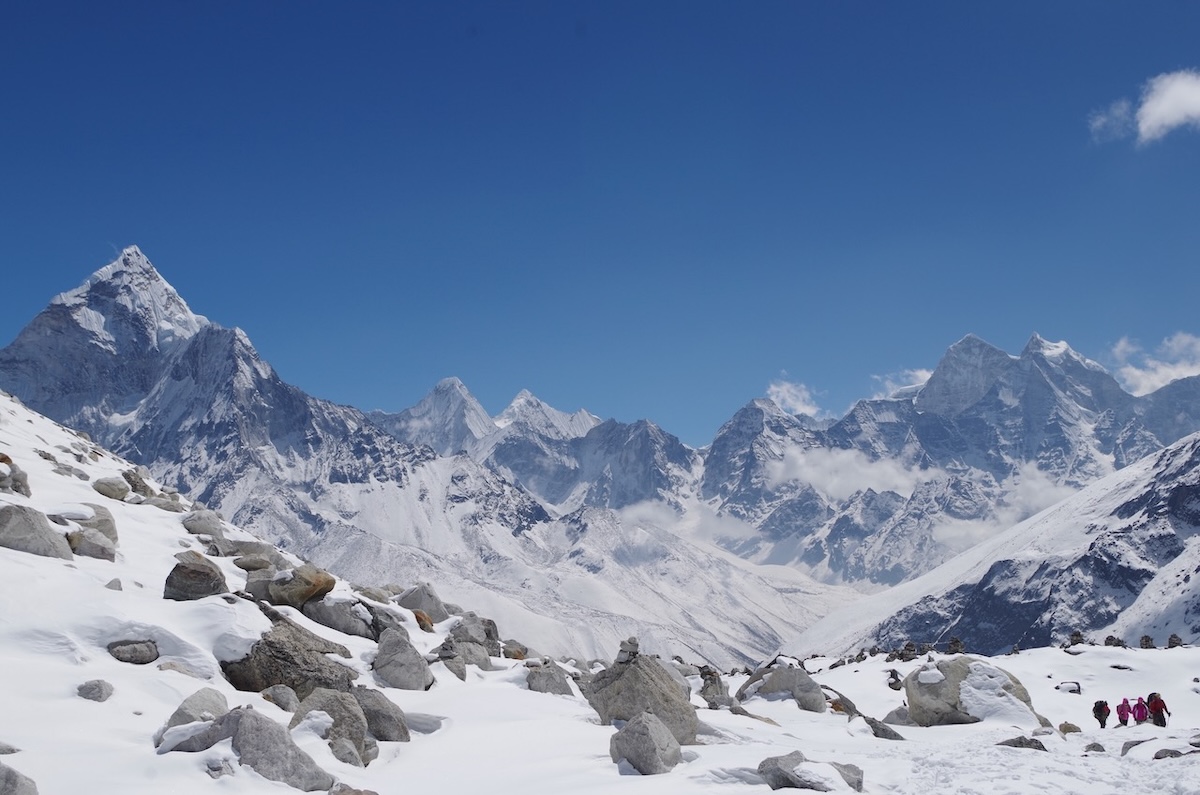
Accommodation Lodge Meals Breakfast, Lunch, Dinner Max. altitude 3,950m / 12,959ft. Today's trek brings noticeable altitude gain as you climb toward Dingboche at 4,300 meters, where the thinning air becomes increasingly apparent. The trail ascends through increasingly alpine landscapes where vegetation thins dramatically—trees disappear entirely, replaced by hardy shrubs and grasses adapted to extreme conditions. Mani walls and prayer flags mark the route, their Buddhist mantras carried on the wind across the valley. The views grow even more spectacular with elevation—Ama Dablam, Lhotse, and Island Peak create an amphitheater of snow-capped giants surrounding you. Dingboche itself is a summer grazing settlement that has evolved to accommodate trekkers year-round, its stone-walled fields creating distinctive patterns across the landscape. These walls, built without mortar over generations, protect crops from fierce winds while creating microclimates that extend the growing season slightly. The Imja Valley spreads below the village, its glacial origins evident in the U-shaped profile and rocky moraines. Settling into your lodge, you'll notice the altitude affecting simple tasks—climbing stairs leaves you breathless, and even conversation requires more effort than at lower elevations. This is completely normal and expected. Your body is working hard to adjust, manufacturing more red blood cells to carry oxygen more efficiently. Proper hydration and adequate rest tonight prepare you for tomorrow's crucial acclimatization activities that significantly improve your chances of reaching Everest Base Camp successfully.
Accommodation Lodge Meals Breakfast, Lunch, Dinner Max. altitude 4,300m / 14,108ft. Today embodies the mountaineering principle "climb high, sleep low" that forms the foundation of safe high-altitude trekking. Rather than resting completely, you'll take an acclimatization hike that gains altitude before returning to Dingboche to sleep. Most trekkers choose to climb Nagarjun Hill, a prominent viewpoint offering 360-degree panoramas that include Mt.Makalu, the world's fifth-highest mountain, along with Lhotse, Island Peak, and countless other peaks creating an overwhelming display of Himalayan grandeur. The climb feels challenging at this altitude—your breathing comes in gasps, legs feel heavy, and frequent rest breaks become necessary. But reaching the summit delivers rewards far beyond the effort invested. The views stretch endlessly in every direction, and the sense of accomplishment builds confidence for the challenging days ahead. Alternative activities include exploring Dingboche village more thoroughly, visiting the small health post operated during peak season, or hiking toward Chhukung for different perspectives on the surrounding peaks. The key is spending several hours at higher elevation before descending back to your lodge. Afternoons in Dingboche allow time for personal maintenance—washing clothes, organizing gear, writing in journals, or simply resting while your body continues its invisible work of altitude adaptation. Evening meals become increasingly important as appetite often decreases at altitude, yet your body needs fuel for the demanding trek ahead.
Accommodation Lodge Meals Breakfast, Lunch, Dinner Max. altitude 4,300m / 14,108ft. Leaving Dingboche, the landscape transforms into something increasingly stark and otherworldly. The trail ascends along the Khumbu Glacier's lateral moraine, a rocky ridge pushed aside by the glacier's immense grinding force over millennia. Vegetation disappears almost entirely, replaced by rock, ice, and the occasional hardy lichen clinging to protected spots. The views of Tawache and Cholatse peaks demonstrate the extreme terrain that technical climbers seek out—nearly vertical faces, knife-edge ridges, and cornices hanging precariously from summits. The trail passes through Duglha (also called Thukla), where you'll stop for lunch before tackling the steep climb to the memorial area. This section, while not technically difficult, challenges your cardiovascular system significantly at this altitude. Above Duglha, you'll encounter memorials to mountaineers who lost their lives on Everest and surrounding peaks—stone Chortens adorned with photos, prayer flags, and climbing equipment left as tributes. These monuments create a somber, reflective atmosphere, reminding everyone that while the trekking route to base camp is relatively safe, the mountains command respect and sometimes exact ultimate prices. Lobuche appears almost suddenly, a small collection of lodges at 4,950 meters surrounded by rugged terrain and dominated by views of Mt.Pumori, Lingtren, and Khumbutse. The thin air makes even simple tasks exhausting—organizing your belongings, climbing to the dining room, or walking to the toilet leaves you breathless. This is normal at this extreme altitude.
Accommodation Lodge Meals Breakfast, Lunch, Dinner Max. altitude 4,950m / 16,240ft. Accommodation Lodge Meals Breakfast, Lunch, Dinner Max. altitude 5,164m / 16,942ft. Your alarm sounds painfully early, perhaps 4:30 AM, beginning what many consider the trek's most spectacular day. The climb to Kala Patthar in darkness tests your resolve—every step at 5,500+ meters requires multiple breaths, and the cold penetrates even the best gear. Headlamps create bobbing pools of light as trekkers slowly ascend the steep, rocky trail. Yet as you approach the 5,640-meter summit, the eastern horizon begins glowing, signaling the approaching sunrise that makes every difficult step worthwhile. When the first rays strike Everest's summit, the mountain ignites in shades of gold and pink that seem almost supernatural. Mt.Lhotse and Nuptse catch the light moments later, creating a mountain panorama that justifies every challenging moment of your journey. The South Col becomes visible, along with the climbing route toward the summit—you can see where mountaineers establish their high camps and the final push they make toward the top. Nuptse's enormous south face dominates another direction, while Pumori's elegant pyramid rises nearby. Many trekkers describe this sunrise as life-changing, a moment when natural beauty overwhelms any capacity to adequately describe or even fully comprehend it. After soaking in the views and capturing photographs that will never quite capture what your eyes witnessed, the descent back to Gorak Shep for breakfast. From there, the long trek down to Pheriche covers significant distance, retracing your steps through Lobuche and past the memorials. Pheriche sits substantially lower at 4,370 meters, and the thicker air feels noticeably easier on your lungs, allowing deeper, more restful sleep tonight.
Accommodation Lodge Meals Breakfast, Lunch, Dinner Max. altitude 4,370m / 14,337ft. Today brings the dramatic transformation that distinguishes this trek from traditional routes—instead of walking for days back down the valley, you'll board a helicopter for a spectacular aerial return. After breakfast in Pheriche, you'll prepare for the helicopter pickup, ensuring your gear is organized and ready. The helicopter typically arrives mid-morning, weather permitting, its distinctive sound echoing across the valley as it approaches. As the rotors accelerate to takeoff speed, the noise builds to a crescendo before you lift off, leaving the ground behind in a way that feels almost magical after days of foot travel. Within seconds, you're climbing above terrain that took hours to traverse on foot, gaining a completely new perspective on the landscape you've walked through. The flight path usually follows the valley you trekked, but from this aerial vantage point, everything looks utterly different. Villages that seemed significant when you walked through them appear as tiny clusters of buildings dwarfed by the surrounding peaks. Rivers that roared beneath suspension bridges look like silver threads winding through the landscape. The scale shift is both dramatic and disorienting in the best possible way. As the helicopter climbs and maneuvers, you'll pass remarkably close to some of the world's highest peaks—Ama Dablam at eye level reveals its technical climbing routes with stunning clarity, while Lhotse's massive south face demonstrates the extreme terrain expedition climbers tackle. Landing in Lukla marks your return to the start point, but you've changed dramatically from the person who began walking from here days ago. The village feels almost cosmopolitan after the austere landscapes of high altitude, and that evening's celebratory meal at a local teahouse tastes especially satisfying.
Accommodation Lodge Meals Breakfast, Lunch, Dinner Max. altitude 2,860m / 9,383ft. Accommodation Hotel Meals Breakfast, Dinner Max. altitude 1,400m / 4,593ft. Accommodation NA Meals Breakfast Max. altitude 1,400m / 4,593ft. 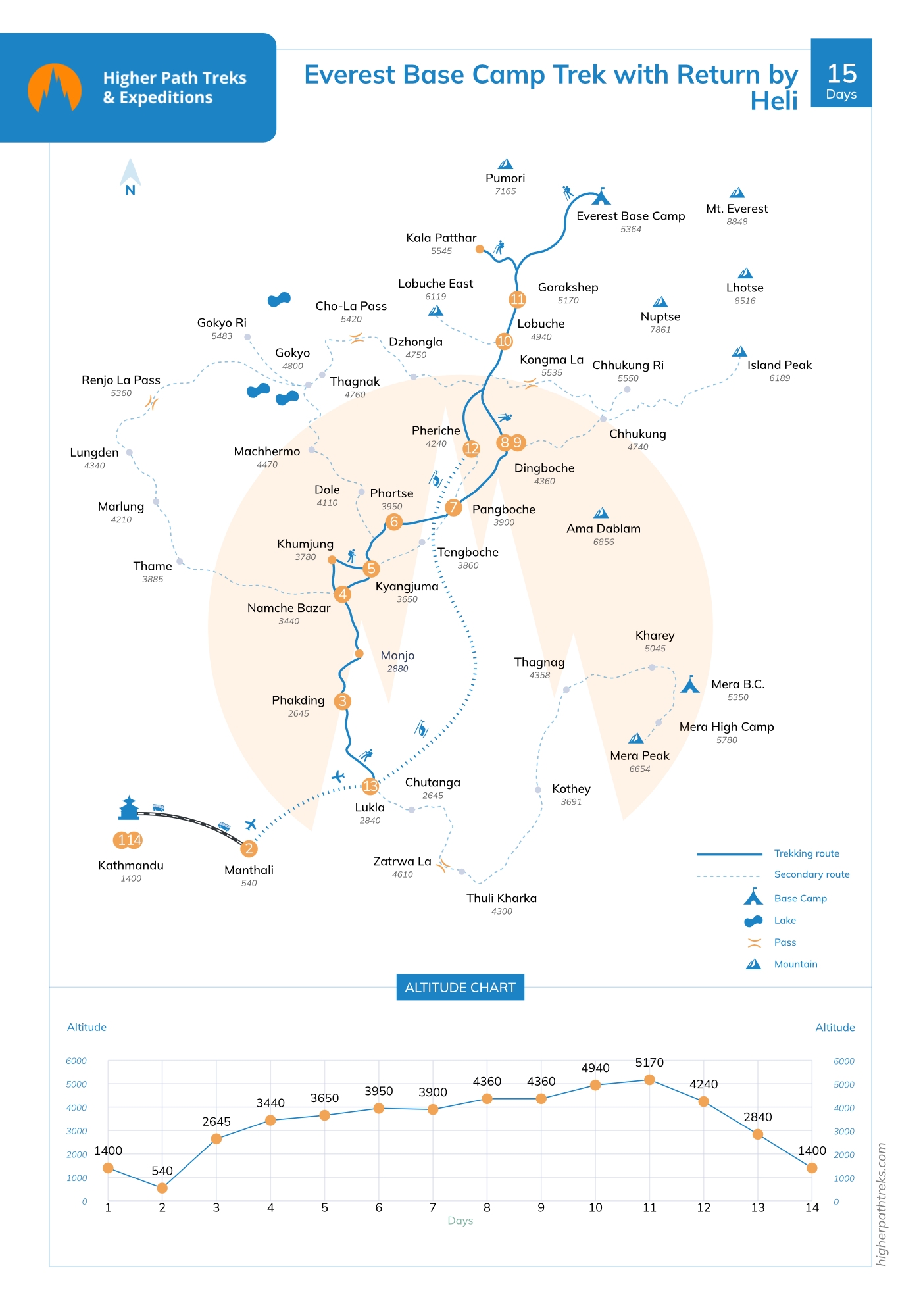
Your Start Date is the day you land in Nepal, and your End Date is when you fly home.
If the set Everest Base Camp Trek with Helicopter Return group dates don’t suit your schedule, we can offer alternative dates upon request.
A fabulous experience! Karma Sherpa did a great job with every aspect of the trip. He is an excellent guide and a genuinely nice person. Everything went very smoothly and the experience exceeded my expectations. Nepal is a gorgeous place for trekking, all the people were very friendly and, while some of the tea houses were a bit rustic, they were safe and the food was tasty and plentiful. I recommend Higher Path Treks without hesitation.
An unforgettable journey with Higher Path Treks & Expeditions, expertly led by Karma. The Everest Base Camp trek was challenging yet deeply rewarding, and the helicopter return added a breathtaking final perspective of the Himalayas. Everything was well organized, safe, and personal from start to finish. Karma’s leadership and care made the whole experience feel both professional and truly authentic.
The Everest Base Camp Trek with return by helicopter offers an alternative way to experience the iconic trek while adding a touch of luxury and convenience. After trekking to Everest Base Camp, instead of retracing your steps back to Lukla, you board a helicopter for a scenic flight back to lukla and then to kathmandu or directly from Gorak Shep, near Everest Base Camp.
The trek typically follows the traditional route from Lukla, passing through Namche Bazaar, Pangboche, Dingboche, Lobuche, and Gorak Shep. After reaching Everest Base Camp, instead of returning on foot, trekkers take a helicopter either directly from Gorak Shep or from a suitable location nearby, depending on weather conditions and helicopter availability.
The main advantages include saving time and energy on the return journey, especially after completing the challenging trek to Everest Base Camp. The helicopter ride also offers breathtaking aerial views of the Himalayas, providing a unique perspective of the region's towering peaks and glaciers.
While the helicopter option adds comfort and convenience, it is important to note that trekking to Everest Base Camp still requires physical fitness and acclimatization to high altitudes. The helicopter ride itself is subject to weather conditions and helicopter availability, which can affect scheduling.
Altitude sickness remains a concern during the trek portion of the journey. The itinerary includes acclimatization days to help mitigate risks, and trekkers are advised to stay hydrated, maintain a steady pace, and heed their guide's advice. The helicopter option alleviates some of the physical strain of the return journey.
Highlights include trekking through picturesque Sherpa villages, visiting Buddhist monasteries like Dingboche Monastery, standing at Everest Base Camp, and experiencing the thrill of a helicopter ride amidst the towering Himalayan peaks. This option combines adventure with luxury, offering a memorable journey through the heart of the Everest region.
The same permits are required as for the standard Everest Base Camp Trek: the Sagarmatha National Park entry permit and Khumbu Pasang Lhamu Rural Municipality (local government) permit. These permits are arranged by your trekking agency and are necessary to enter the Everest region.
Packing essentials are similar to the standard trek and should include sturdy trekking boots, warm clothing layers (including a down jacket), a sleeping bag suitable for cold temperatures, sunscreen, sunglasses with UV protection, a first aid kit, personal medications, and toiletries. A headlamp or flashlight with extra batteries is also recommended.
While it's possible to arrange a helicopter return independently, joining a guided tour with a reputable trekking agency is recommended for safety, logistical support, and to ensure a smooth coordination of the helicopter transfer. Experienced guides and porters enhance the overall trekking experience and provide assistance in emergencies.
| No of people | Price per person |
|---|---|
| 1 - 1 | $2,800 |
| 2 - 5 | $2,750 |
| 6 - 10 | $2,700 |
| 11 - 20 | $2,650 |
| No of people | Price per person |
|---|---|
| 1 - 4 | $1,690 |
| 5 - 8 | $1,650 |
| 8 - 14 | $1,600 |
| 15 | $1,550 |
| No of people | Price per person |
|---|---|
| 1 - 1 | $1,950 |
| 2 - 5 | $1,900 |
| 6 - 10 | $1,850 |
| 11 - 20 | $1,800 |