Standing at the foot of towering Himalayan giants has never been more achievable. The Annapurna Base Camp Short Trek condenses one of Nepal's most spectacular journeys into a week-long adventure that fits into tight schedules without compromising on the breathtaking mountain views and authentic cultural experiences that make trekking in the Annapurna region so special.
Unlike longer routes that demand weeks away from responsibilities, this condensed version brings you face-to-face with the eighth-highest mountain in the world while respecting your time constraints. Whether you're squeezing adventure between work commitments or simply prefer a more focused trekking experience, this route delivers the essence of Himalayan trekking without the extended commitment.
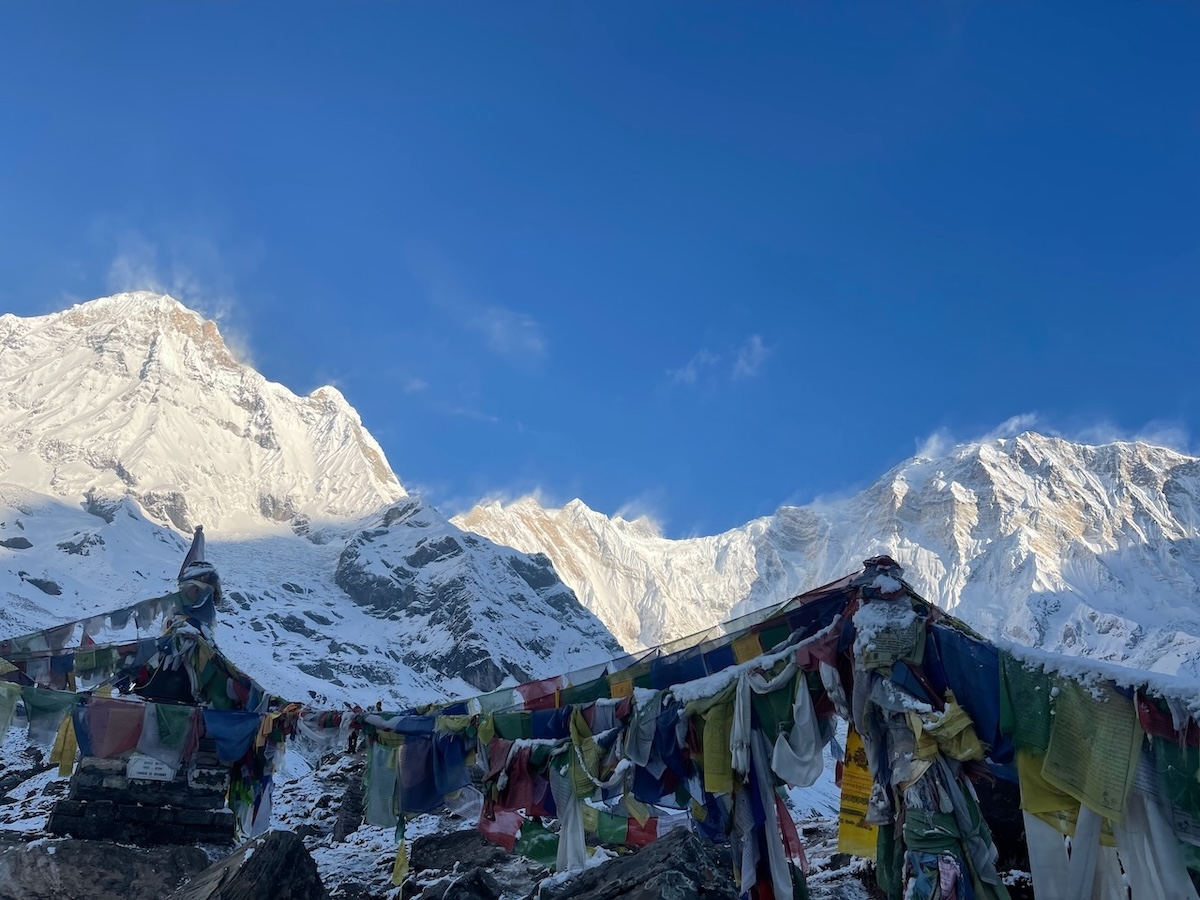
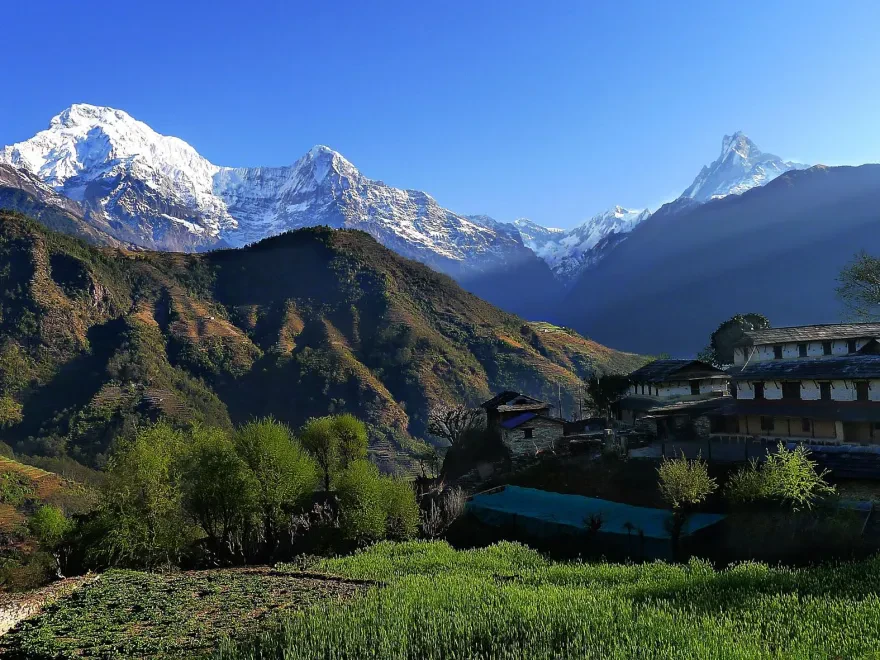
The Annapurna massif creates one of nature's most impressive amphitheaters. When you wake up at base camp and step outside your teahouse, you're surrounded by a 360-degree panorama of snow-capped peaks that seems almost unreal. Annapurna I towers at 8,091 meters, while the sacred peak of Machhapuchhre—locally known as "Fishtail Mountain"—stands guard with its distinctive twin summits that have never been climbed due to religious significance.
This trek takes you through an extraordinary range of ecosystems. You'll start in subtropical forests filled with rhododendrons that explode with color during spring months, gradually ascending through bamboo groves and alpine meadows before reaching the rocky, glacial landscape of the base camp itself. The biodiversity here rivals anywhere on earth, and lucky trekkers might spot Himalayan tahr, musk deer, or even the elusive snow leopard's prints.
What sets this route apart from similar adventures like the Mardi Himal Trek is the classic teahouse experience combined with shorter trekking days. The infrastructure along this well-established trail means comfortable lodging and hot meals await at the end of each day's walk, making it ideal for first-time Himalayan trekkers who want proper facilities without sacrificing the adventure.
Your journey typically begins in Pokhara, Nepal's adventure capital, where the Annapurna range serves as a stunning backdrop to this lakeside city. From here, a scenic drive takes you to the trailhead, where your trek officially begins. Unlike the Everest Base Camp Trek, which requires a dramatic flight to Lukla, the Annapurna Base Camp route offers road access that makes logistics simpler and more flexible.
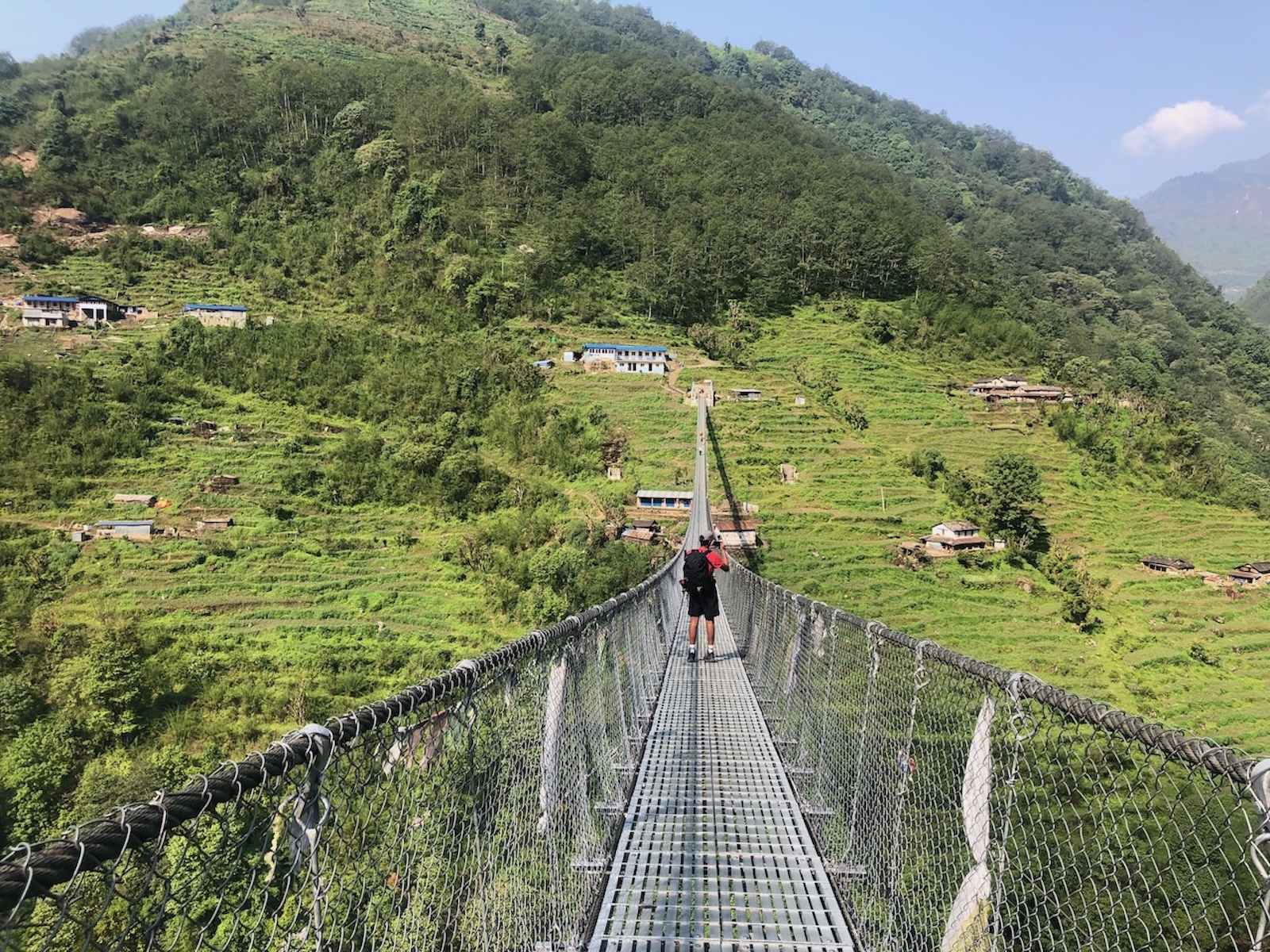
The trail follows the Modi Khola river valley, passing through traditional Gurung villages where life continues much as it has for centuries. Stone houses with slate roofs cluster on hillsides, prayer flags flutter in the mountain breeze, and locals greet passing trekkers with warm smiles and the traditional "Namaste." These cultural interactions add depth to the trekking experience that purely wilderness routes cannot match.
As you ascend, the landscape transforms dramatically. Dense forests give way to high-altitude terrain where vegetation becomes sparse and the air noticeably thinner. Each day brings new perspectives on the mountains, with different peaks dominating the skyline as you move deeper into the sanctuary. The gradual elevation gain helps your body acclimatize naturally, reducing the risk of altitude-related issues that can affect trekkers on more aggressive itineraries.
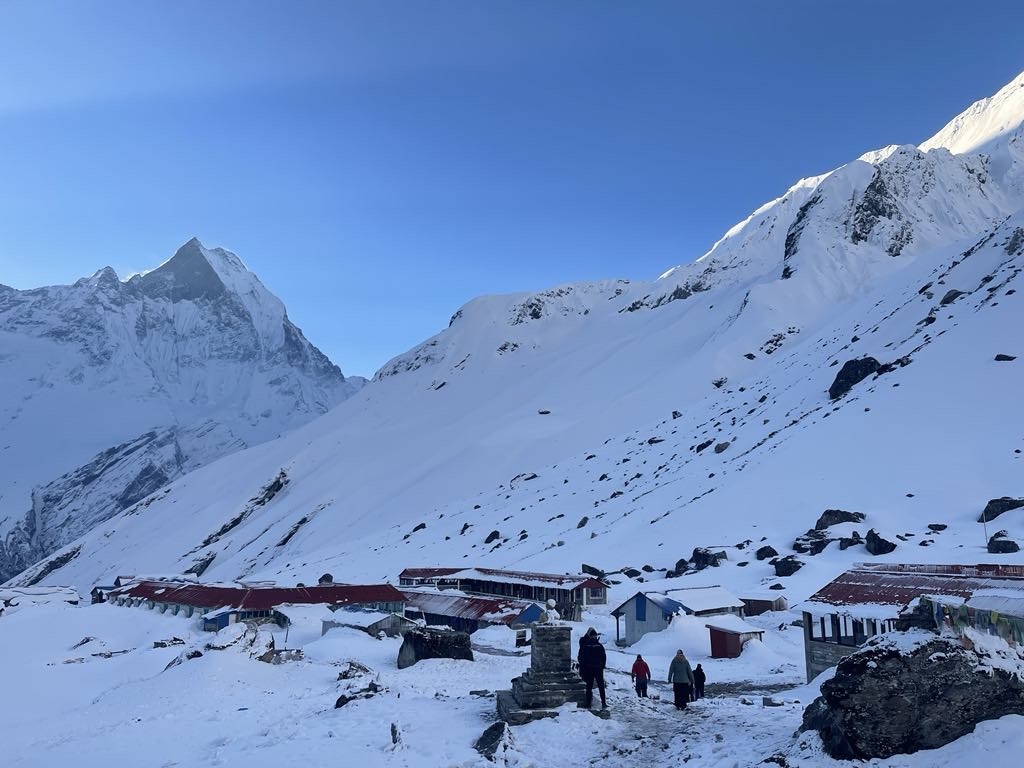
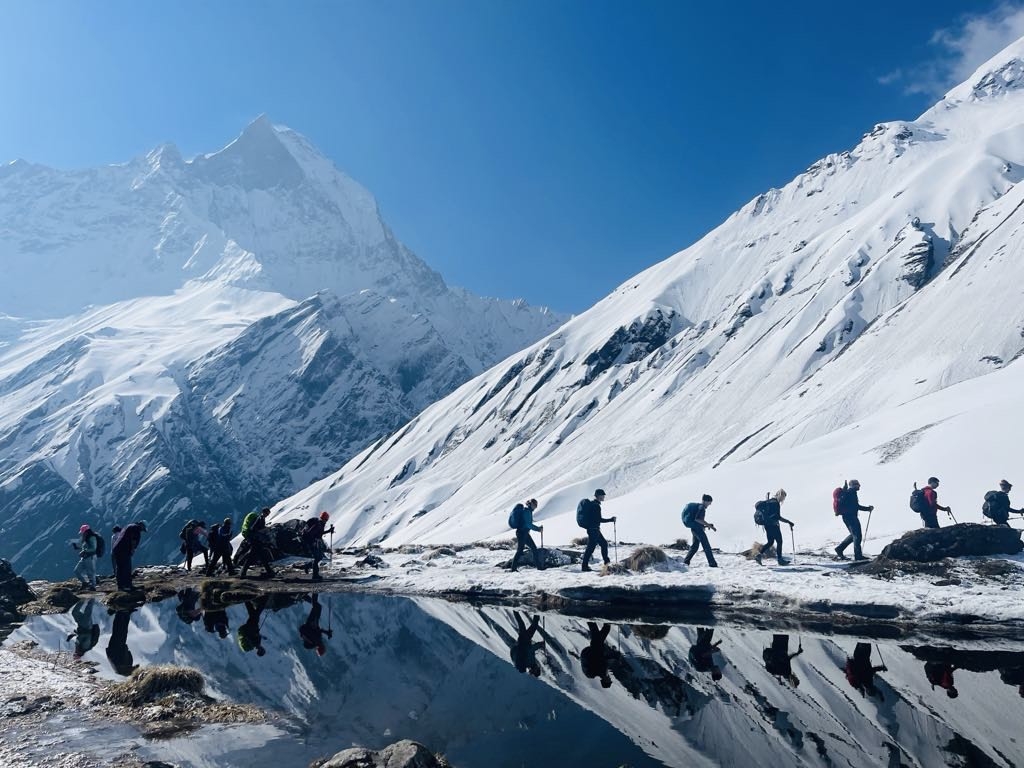
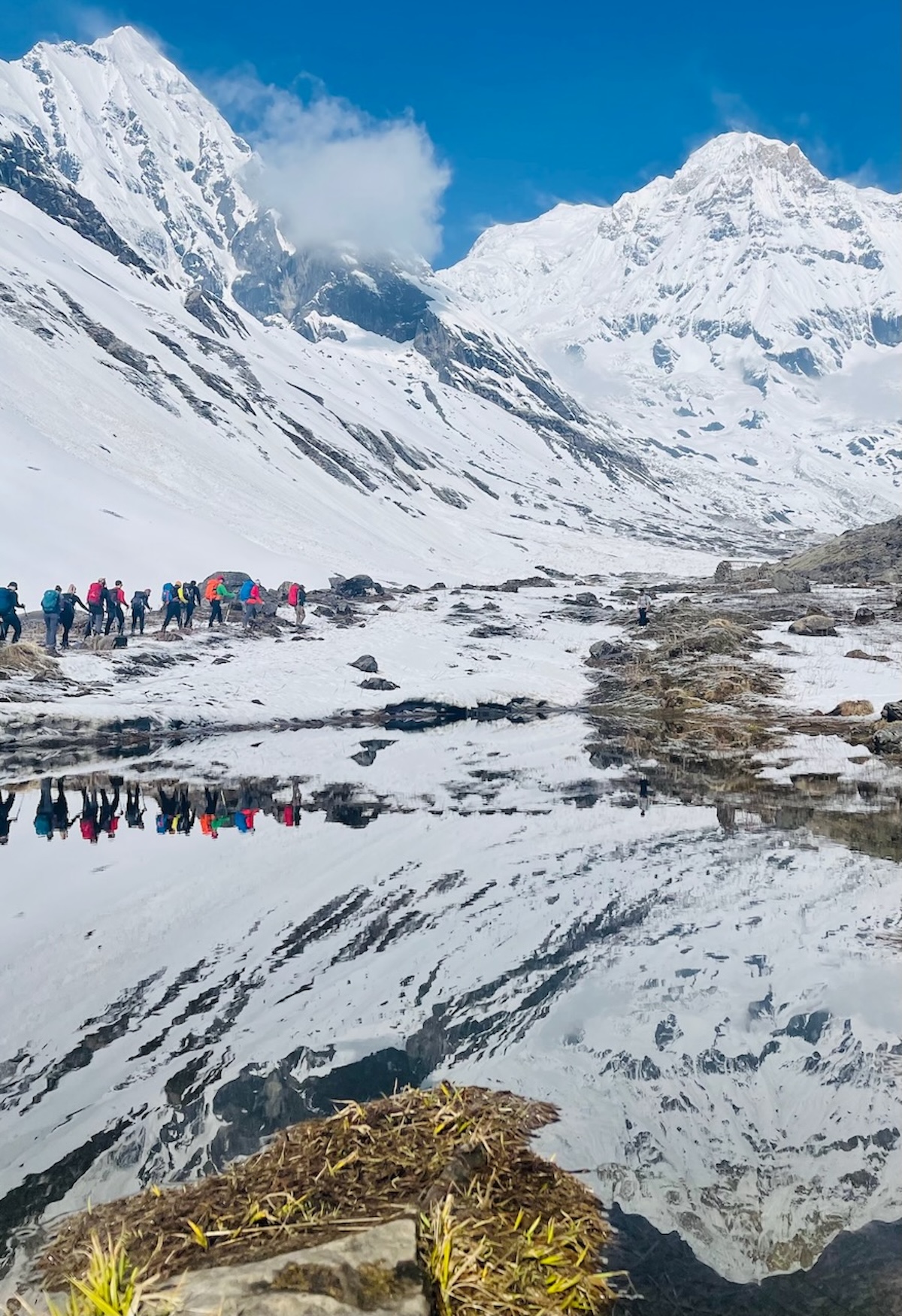
At 3,700 meters, Machhapuchhre Base Camp serves as both an acclimatization point and a spectacular viewpoint. The camp sits in a natural amphitheater where the sacred mountain rises directly above, its distinctive shape perfectly framed against the sky. This rest stop allows your body to adjust to the altitude before the final push to Annapurna Base Camp the following day.
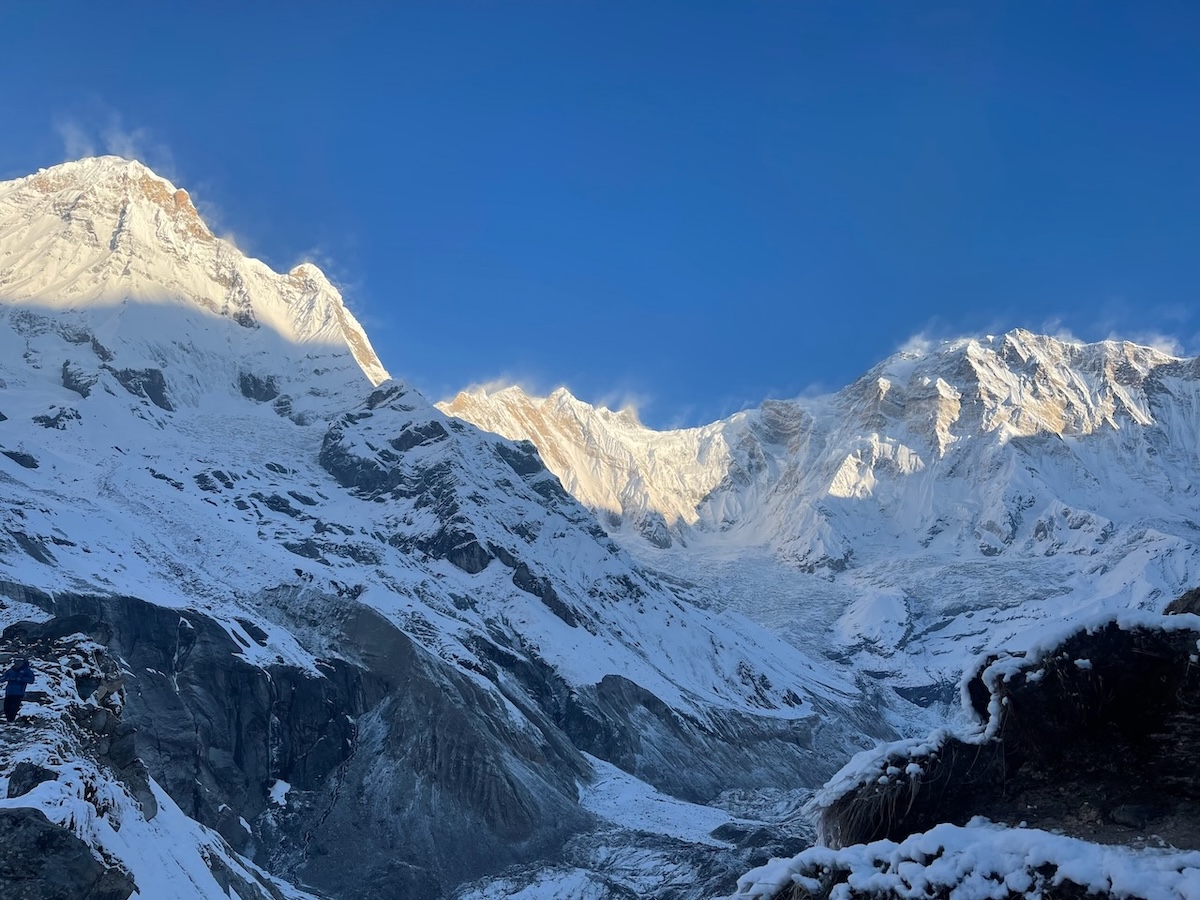
The evening hours at MBC offer some of the trek's most memorable moments. As the sun sets, the surrounding peaks glow with alpenglow—that magical pink and orange light that photographers dream about. The temperature drops quickly once the sun disappears behind the mountains, reminding you that you're in genuine high-altitude terrain. Inside the teahouse, trekkers from around the world gather around the dining hall stove, sharing stories and hot drinks while the mountains loom in silence outside.
The views from Machhapuchhre Base Camp showcase why the Annapurna region competes with the Everest region for trekkers' attention. While you don't get Everest's legendary status, you do get mountains that feel more accessible and intimate, with peaks that seem close enough to touch. The sacred nature of Machhapuchhre adds a spiritual dimension to the experience—this is a mountain that will never be conquered, maintaining its mystery and majesty for future generations.
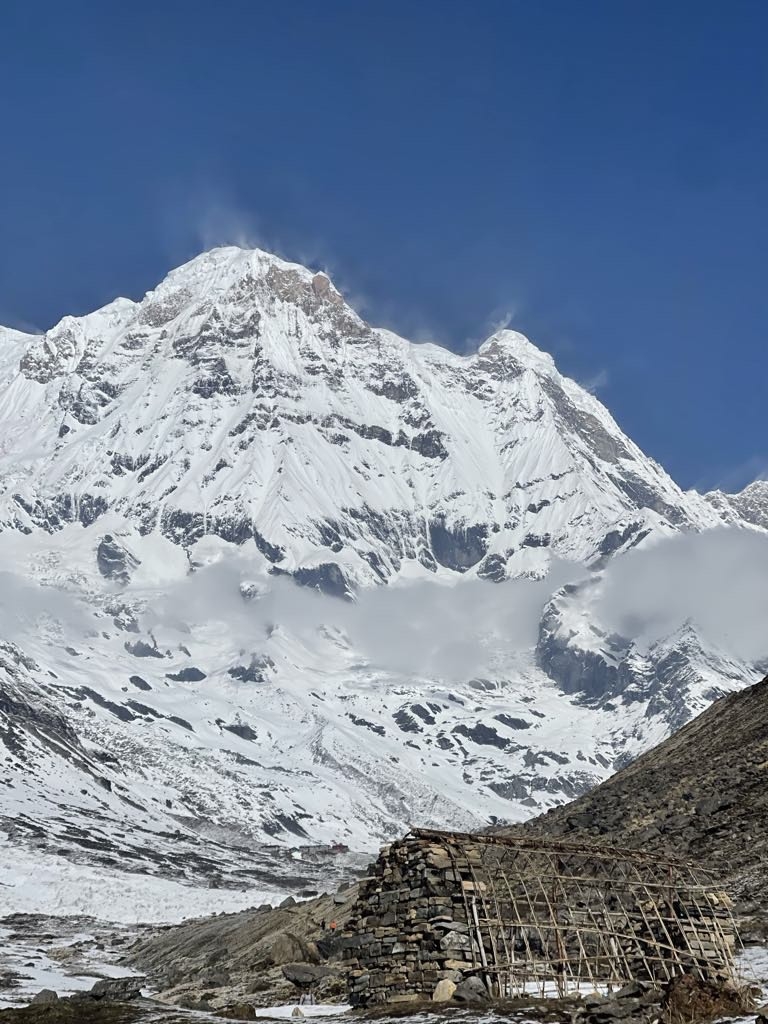
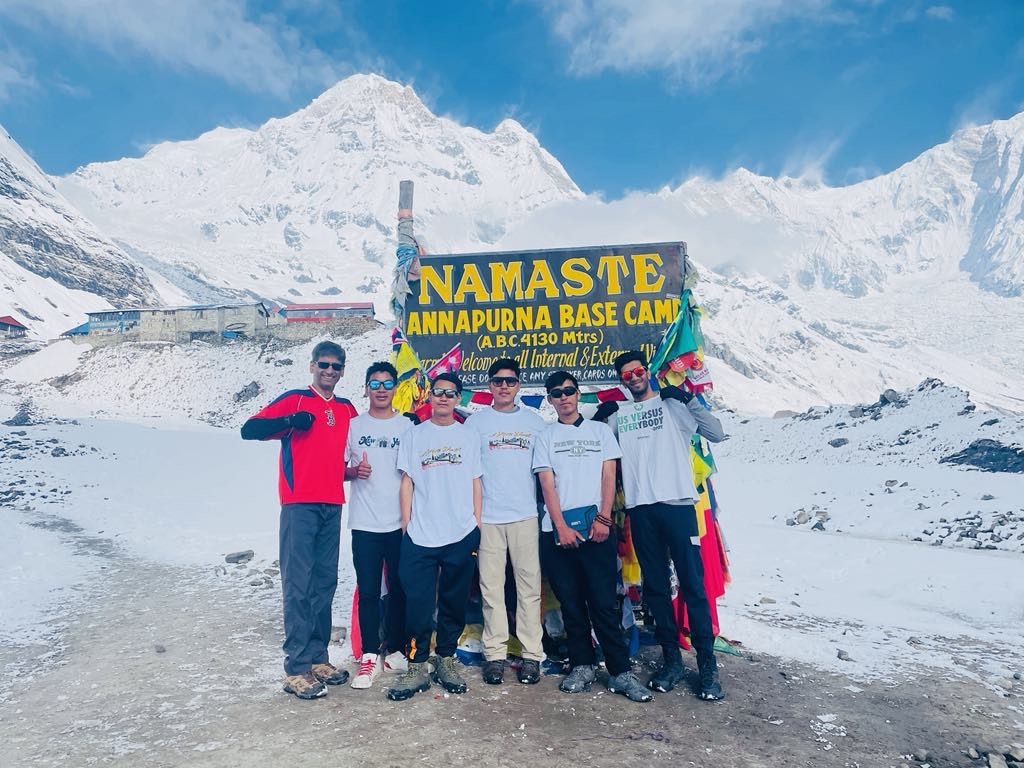
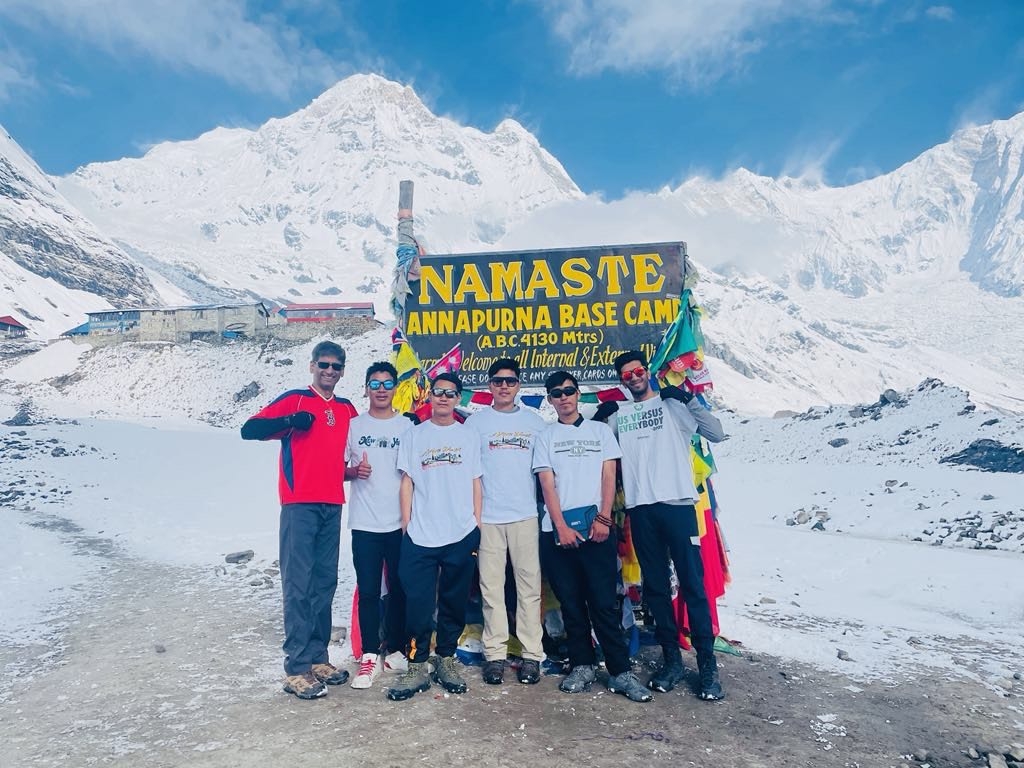
The final day's climb to Annapurna Base Camp at 4,130 meters rewards every step of the journey. You're standing in a glacial basin completely surrounded by some of the world's highest peaks. Annapurna I dominates the view, but you're also looking at Annapurna South, Hiunchuli, and several other giants that would be famous in their own right if they weren't overshadowed by their neighbors.
The sense of accomplishment at base camp is palpable. You've walked into the heart of the Himalayas using nothing but your own two feet. Unlike peak climbers who need technical skills and expensive equipment, trekkers can reach this spectacular location with good fitness and proper preparation. It's mountaineering made accessible, and that democratic nature makes the experience even more meaningful.
Weather conditions at base camp can change rapidly. Mornings often start crystal clear, with the mountains sharp against blue skies. By afternoon, clouds frequently roll in, obscuring views and dropping temperatures. This pattern makes early rising essential for the best mountain photography and simply soaking in the majesty of your surroundings. Most trekkers spend a single night at base camp before beginning their descent, though that one night remains etched in memory long after returning home.
Spring and autumn dominate the trekking calendar, and for good reason. From March through May, the rhododendron forests explode with color, painting entire hillsides in shades of red, pink, and white. The weather typically holds stable during these months, with clear mornings offering spectacular mountain views and moderate temperatures making the walking pleasant. This is peak season, so trails and teahouses see more traffic, but the conditions justify the crowds.
September through November brings post-monsoon clarity to the mountains. The air, scrubbed clean by summer rains, offers exceptional visibility. Autumn temperatures are cooler than spring, especially at higher elevations, but the crisp air creates ideal hiking conditions. Many experienced trekkers prefer this season for the pristine mountain views and comfortable walking temperatures, though you'll need to pack warmer layers for chilly mornings and evenings.
Winter trekking from December through February presents a different challenge. Snow at higher elevations, including at Annapurna Base Camp itself, creates a winter wonderland but requires proper cold-weather gear and potentially more flexible schedules. The upside? Far fewer trekkers on the trail means a more solitary experience. If you don't mind cold nights and the possibility of trail closures due to heavy snow, winter can offer a unique perspective on this route. Similar winter considerations apply to other high-altitude treks like the Langtang Valley Trek.
The monsoon season from June through August sees fewer trekkers for obvious reasons. Heavy rainfall makes trails slippery and potentially dangerous, leeches become active in forested areas, and mountain views often hide behind clouds. However, the landscape turns incredibly lush and green, wildflowers bloom everywhere, and teahouses offer discounted rates. If you can handle rain gear and don't mind occasional mountain-view disappointment, you'll have the trails largely to yourself.
Let's be honest about fitness requirements—this trek demands good physical condition but not athletic excellence. You're walking for several hours daily at increasing altitudes, carrying a daypack while porters handle your main luggage. Most days involve between four and seven hours of walking, with the trail including both uphill climbs and downhill descents that test different muscle groups.
The altitude component requires respect more than fear. At 4,130 meters, Annapurna Base Camp sits well below the extreme altitude zone, but you're still high enough that the reduced oxygen affects everyone differently. Headaches, mild nausea, and fatigue are common as your body adjusts. The key is ascending slowly, drinking plenty of water, and listening to your body's signals. Unlike more aggressive schedules on routes like the Everest Three Passes Trek, this itinerary allows natural acclimatization.
Preparing for this trek doesn't require a gym membership, though it certainly helps. The best training involves regular cardiovascular exercise—hiking, running, cycling, or even brisk walking. Focus on building endurance rather than sprint speed. If you can comfortably walk for three to four hours with a light backpack, you're probably ready. Stair climbing provides excellent specific training, as it mimics the endless uphills that define Himalayan trekking.
Previous trekking experience helps mentally more than physically. Knowing how your body responds to consecutive days of walking, understanding blister prevention, and having realistic expectations about facilities all contribute to a more enjoyable experience. First-time trekkers succeed on this route regularly, but some prior multi-day hiking helps set appropriate expectations and builds confidence.
Two permits are mandatory for the Annapurna region: the Annapurna Conservation Area Permit (ACAP) and the Trekkers' Information Management System (TIMS) card. The ACAP helps fund conservation efforts in this ecologically sensitive area, while the TIMS card provides safety tracking for emergency services. Together, these permits cost a modest amount that contributes directly to preserving the natural and cultural heritage you've come to experience.
Obtaining permits is straightforward when working with Higher Path Treks & Expeditions. We handle all paperwork, including the necessary passport photos, forms, and fee payments. This service eliminates the hassle of navigating bureaucracy and ensures you have proper documentation before setting foot on the trail. Independent trekkers can obtain permits at the Nepal Tourism Board offices in Kathmandu or Pokhara, though this requires extra time and local knowledge.
The permit system serves important functions beyond revenue generation. Conservation funding helps maintain trails, manage waste, and protect endangered species in the Annapurna Conservation Area. The TIMS database helps authorities track trekker movements, enabling quick response if someone goes missing or requires emergency evacuation. These systems work, making the Annapurna region one of Nepal's best-managed trekking areas.
Similar permit requirements apply across Nepal's trekking regions. Routes like the Manaslu Circuit Trek require special restricted area permits due to the region's proximity to Tibet, while areas like Ghorepani Poon Hill need only the standard ACAP permit. Understanding these requirements helps plan budgets and timelines appropriately.
Teahouse trekking defines the Annapurna experience. These family-run lodges provide basic but comfortable accommodation, usually in twin-bedded rooms with thin mattresses and warm blankets. Don't expect luxury—walls are thin, bathrooms are often shared, and heating is minimal at higher elevations—but do expect genuine hospitality, hot meals, and a comfortable place to rest after long walking days.
Facilities improve dramatically in lower-altitude villages where supplies arrive more easily. Jhinu Danda and Chomrong offer hot showers, varied menus, and even WiFi, making them popular rest days for trekkers. As you ascend toward Machhapuchhre Base Camp and Annapurna Base Camp, amenities become more basic. Hot showers might be unavailable or require payment for heated water. Electricity for charging devices becomes expensive as altitude increases. These limitations reflect the logistical challenge of running lodges in remote, high-altitude locations where everything must be carried in by porters or helicopters.
The teahouse dining experience brings trekkers together in ways hotels never could. Everyone gathers in the central dining room around a stove (at higher elevations) or in open spaces (at lower altitudes), sharing trail stories, comparing blisters, and forming temporary communities. The menu offers a mix of Nepali staples like dal bhat (rice and lentils) and Western comfort food like pizza and pasta. Dal bhat deserves special mention—unlimited refills of this nutritious meal provide the fuel you need for demanding trekking days.
Compared to camping treks or remote routes like the Upper Mustang Trek, teahouse trekking offers significant comfort advantages. You're not carrying tents or dealing with camp setup and breakdown. Warm meals don't require cooking skills or equipment. These conveniences make the Annapurna Base Camp Short Trek accessible to people who wouldn't consider more rugged expeditions.
What you bring dramatically affects your trekking experience. The right gear makes challenging days manageable; poor choices create unnecessary suffering. Start with a quality daypack (25-30 liters) for items you'll need during walking—water bottles, snacks, rain gear, camera, first aid kit, and extra layers. Your main duffel bag, carried by porters, should contain clothing, sleeping bag, and items needed only at teahouses.
Layering is essential for handling dramatic temperature swings. Mornings often start cold, requiring warm jackets. By midday, you might be walking in just a t-shirt. Evenings at higher elevations get genuinely cold, necessitating insulated jackets and warm layers. A typical layering system includes moisture-wicking base layers, insulating mid-layers (fleece or down), and waterproof outer shells. This combination handles everything from hot, sunny climbs to cold, rainy descents.
Footwear makes or breaks treks. Proper hiking boots with ankle support and broken-in comfort prevent blisters and provide stability on uneven trails. Bring comfortable shoes or sandals for wearing around teahouses in the evening—your feet will thank you for the break from boots. Quality wool or synthetic hiking socks prevent blisters better than cotton, which holds moisture and creates friction.
Don't forget essentials that might seem minor but prove crucial. A headlamp with extra batteries enables early morning starts and nighttime bathroom runs. Water purification tablets or a filtration system provide safe drinking water without buying endless plastic bottles. Sunscreen and sunglasses protect against intense high-altitude UV radiation that burns faster than you'd expect. Basic first aid supplies, blister treatment, and any personal medications belong in your daypack where you can access them immediately if needed.
Altitude affects everyone differently, regardless of fitness level. The reduced oxygen at high elevations challenges your body's normal functioning, potentially causing headaches, nausea, dizziness, and fatigue. These symptoms indicate your body is working to adapt, but they shouldn't be ignored. The Annapurna Base Camp Short Trek includes built-in acclimatization through gradual altitude gain, but individual responses vary significantly.
Recognizing the difference between normal altitude adjustment and serious altitude sickness can be life-saving. Mild headaches, slight nausea, and reduced appetite are common and typically resolve with rest and hydration. Severe symptoms—extreme headache, vomiting, confusion, or difficulty breathing—indicate potentially dangerous altitude sickness requiring immediate descent. Our experienced guides monitor trekkers daily, checking oxygen saturation and watching for warning signs.
Prevention strategies are simple but effective. Drink significantly more water than you think necessary—dehydration exacerbates altitude symptoms. Eat regularly even if appetite decreases; your body needs fuel for the extra work of functioning at altitude. Ascend slowly, following the "climb high, sleep low" principle where possible. Avoid alcohol and sleeping pills that can depress breathing. These basic practices dramatically reduce altitude sickness risk.
The itinerary for this short trek already incorporates acclimatization through its pacing. Unlike aggressive schedules that rush to base camp in fewer days, this route allows your body to adjust naturally. The night at Machhapuchhre Base Camp before reaching Annapurna Base Camp provides crucial adaptation time at 3,700 meters, making the final push to 4,130 meters much safer and more comfortable. This conservative approach means higher success rates and more enjoyable experiences.
While individual schedules vary, most Annapurna Base Camp Short Treks follow a similar pattern. After arriving in Pokhara, you'll drive to the trailhead at Kimche or Jhinu Danda, beginning the trek through lower villages. The first days involve ascending through rhododendron forests and terraced farmland, passing through Gurung settlements where traditional life continues largely unchanged by modernity.
Mid-trek days bring you into higher elevations, with stops at villages like Sinuwa and Deurali providing spectacular mountain views and necessary acclimatization. The landscape shifts from dense forest to alpine terrain, with bamboo giving way to low-growing shrubs and eventually rocky glacial approaches. Each day's destination offers progressively better mountain panoramas, building anticipation for the base camp finale.
The climax comes with the ascent to Machhapuchhre Base Camp, followed by the final push to Annapurna Base Camp itself. After soaking in the mountain amphitheater and overnight at ABC, most itineraries begin the descent. Going downhill proves faster than ascending, allowing coverage of more distance daily. The return journey offers different perspectives on landscapes you passed ascending, with details you missed in your uphill focus now catching your attention.
This condensed itinerary suits time-limited trekkers perfectly, but it requires good fitness and favorable weather. Those wanting a more relaxed pace might consider the standard Annapurna Base Camp Trek, which spreads the journey over more days with additional rest stops and acclimatization time.
The Gurung people dominate the ethnic landscape of the Annapurna region, and their villages dot the trekking route. These communities practice a blend of Hinduism and Buddhism, reflected in the monasteries, stupas, and prayer wheels you'll encounter along the trail. Traditional stone houses with slate roofs create picturesque settlements that seem to grow organically from the hillsides they occupy.
Local hospitality defines interactions with villagers. Despite limited material wealth, people along the trail welcome trekkers with genuine warmth. Children shout greetings as you pass their schools, elderly villagers pause from work to offer smiles and nods, and teahouse owners treat guests like extended family. These interactions provide cultural richness that pure wilderness treks cannot offer, creating memories as lasting as the mountain views.
Agriculture shapes daily life in lower villages, where terraced fields cascade down hillsides in geometric precision. During planting and harvest seasons, entire communities work together in a display of cooperation that seems rare in modern life. Water buffalo, crucial for plowing and dairy, are valued family members rather than mere livestock. Observing this agricultural rhythm provides context for the dal bhat you'll eat—this is the same rice and lentils grown on these very terraces.
Religious practices are visible throughout the trek. Prayer flags flutter from high points, carrying mantles into the wind. Stupas mark important trail junctions, and passing clockwise while spinning prayer wheels is the respectful approach. Monasteries open their doors to curious visitors, offering glimpses into Buddhist practice that has sustained these communities for centuries. Showing respect for these traditions enhances your experience and helps preserve the cultural authenticity that makes the Annapurna region special.
The Annapurna Conservation Area protects one of Asia's most biodiverse regions. The elevation range from subtropical valleys to alpine peaks creates habitat for an extraordinary variety of species. Birders can spot Himalayan monals (Nepal's national bird), blood pheasants, and various eagles soaring on thermal currents. The distinctive call of cuckoos echoes through forests, while tiny sunbirds flit between rhododendron blooms.
Mammals prove more elusive but leave signs of their presence. Himalayan tahr—wild goats with impressive horns—graze on impossibly steep slopes above the tree line. Musk deer hide in dense bamboo thickets, rarely seen but occasionally smelled. Langur monkeys crash through forest canopies, their calls carrying across valleys. Red pandas inhabit the region, though sightings are rare enough to be considered special gifts. The ultimate wildlife prize would be snow leopard tracks in high-altitude snow, evidence of these ghost cats that roam the highest reaches.
Plant diversity rivals the animal kingdom. Lower elevations support subtropical species including orchids, ferns, and flowering shrubs. Rhododendrons steal the show in spring, when entire hillsides explode with blooms ranging from white to deep crimson. Higher elevations support only the hardiest species—ground-hugging shrubs, hardy grasses, and lichens clinging to rocks. This vertical ecosystem creates a living laboratory where you can observe ecological succession simply by gaining altitude.
Conservation efforts in the Annapurna region serve as models for sustainable tourism elsewhere. Entry fees fund trail maintenance, waste management, and wildlife protection programs. Local communities participate in conservation decisions, ensuring their traditional practices and livelihoods are respected. This collaborative approach has reduced deforestation, improved waste handling, and protected endangered species while allowing trekkers to enjoy this spectacular region.
Himalayan landscapes present photographers with both opportunities and challenges. The dramatic scenery practically begs to be photographed, but high contrast between bright snow and dark valleys, rapidly changing weather, and extreme altitude all complicate getting good shots. Modern smartphones can capture excellent images with a few key techniques, while dedicated cameras offer additional creative control.
Lighting makes or breaks mountain photography. The golden hours—shortly after sunrise and before sunset—provide warm, directional light that gives dimension to landscapes. Midday sun creates harsh shadows and washed-out colors, better avoided for serious photography. The alpenglow on mountain peaks at dawn and dusk creates magical pink and orange tones that transform snow into glowing sculptures. Plan your schedule to be positioned for these prime lighting windows.
Composition separates snapshot from photograph. The rule of thirds places key elements at intersection points rather than dead center, creating more dynamic images. Including foreground elements—a prayer flag, a porter on the trail, or wildflowers—provides scale and context for distant mountains. Leading lines, whether trails, rivers, or ridgelines, draw viewers' eyes through the image toward main subjects.
Altitude affects electronics unpredictably. Camera batteries drain faster in cold temperatures, so carry spares in warm pockets. Changing lenses in dusty conditions risks getting particles on sensors. Extreme cold can cause LCD screens to respond slowly or fail temporarily. These challenges affect everything from smartphones to professional cameras, so plan accordingly and protect your equipment.
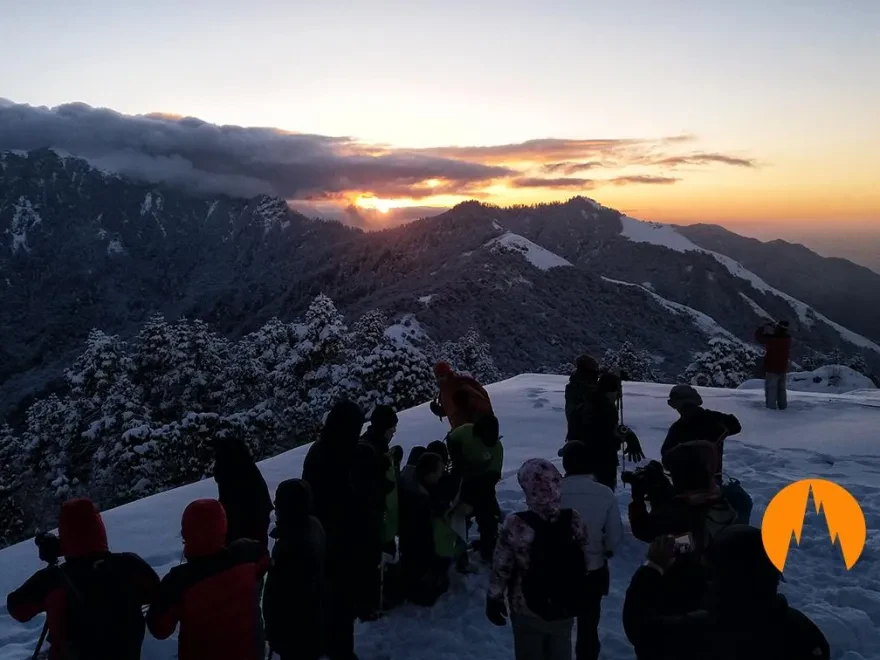
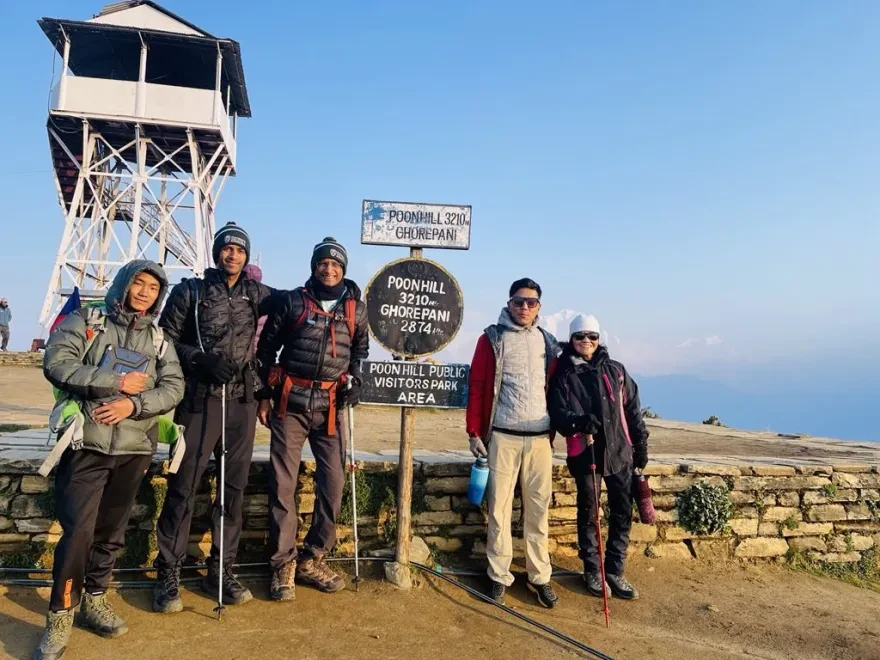
The Annapurna Base Camp Short Trek combines beautifully with other routes in the region for those with more time. The Ghorepani Poon Hill Trek shares part of the trail system and can be tacked onto either end of your ABC journey, adding spectacular sunrise views from Poon Hill's famous viewpoint. This combination provides diverse perspectives on the Annapurna range without requiring significantly more time or effort.
More ambitious trekkers might consider adding the Khopra Trek, a relatively new route that offers quieter trails and unique viewpoints. This community-based tourism initiative provides income to less-visited villages while giving trekkers a more solitary experience than the busy main routes. The combination creates a comprehensive Annapurna experience showcasing both classic highlights and hidden gems.
For maximum immersion in the Annapurna region, the Annapurna Circuit Trek offers a completely different experience. This legendary route circumnavigates the entire massif, crossing the Thorong La pass at 5,416 meters and exploring dramatically different landscapes on the northern side of the range. While requiring significantly more time, the circuit provides the ultimate Annapurna adventure for those with flexible schedules.
Some trekkers use the ABC route as training for more challenging objectives. After successfully reaching Annapurna Base Camp, adventures like Island Peak Climbing or Mera Peak Climbing become realistic next steps. These trekking peaks require technical skills and more extensive preparation but build on the altitude experience and fitness gained during your ABC trek.
Experience matters in the mountains, and Higher Path Treks & Expeditions brings decades of Himalayan expertise to every journey. Our guides are local to the regions they lead, with intimate knowledge of trails, weather patterns, and cultural protocols that transform good treks into exceptional ones. Founded by Karma Geljen Sherpa, who grew up in the Everest region, our company combines authentic local connections with professional service standards.
Safety forms the foundation of every decision we make. Our guides carry comprehensive first aid kits and oxygen for altitude emergencies. Regular health checks monitor trekkers for early signs of altitude sickness. Communication equipment ensures we can request evacuation if serious issues arise. These safety systems have earned us stellar safety records across thousands of treks, allowing clients to focus on enjoying their adventure rather than worrying about what-ifs.
Responsible tourism practices differentiate Higher Path Treks from companies focused solely on profit. We employ local porters and guides, ensuring tourism revenue benefits the communities hosting trekkers. We enforce strict waste management policies, packing out non-biodegradable items and using designated disposal systems in villages. We support local schools and monasteries through our Karma Project initiative, investing in the long-term wellbeing of mountain communities.
Flexibility and personalization define our approach to each trek. While we offer standard itineraries, we understand that one size doesn't fit all. Need extra acclimatization days? We'll adjust the schedule. Interested in side trips to quieter areas? We'll make it happen. Want to combine routes or extend your adventure? We'll create custom itineraries that match your interests, timeline, and fitness level. This personal approach has earned us loyal clients who return for multiple adventures and refer their friends.
Physical preparation gets most of the attention, but mental readiness proves equally important. Trekking in the Himalayas tests patience, persistence, and positive attitude as much as it tests legs and lungs. Understanding what to expect psychologically helps prepare for the inevitable challenges that arise during any adventure.
Discomfort becomes normal at altitude. Your head might ache, food might taste less appealing, and the warm bed you left at home will seem incredibly distant during cold nights in basic teahouses. These discomforts are temporary and manageable, but they're real. Accepting that trekking isn't always comfortable prevents the frustration that comes from expecting constant enjoyment. The rewards justify the challenges, but you'll earn those rewards through effort and occasional hardship.
Flexibility matters more in the mountains than in controlled environments. Weather changes plans, routes get modified, and schedules shift. Fighting these realities creates frustration; accepting them as part of the adventure reduces stress. Trust your guides when they suggest changes—they have your best interests at heart and decades of experience making these decisions.
The pace will feel slow, especially if you're used to pushing hard during exercise. "Bistari, bistari" (slowly, slowly) is the mantra of Himalayan trekking. This deliberate pace serves crucial functions: it prevents exhaustion, aids acclimatization, and allows you to actually notice and enjoy your surroundings. Rushing defeats the purpose of the journey and increases risks. Embrace the slower rhythm and use it to transition from your normal hectic pace into mountain time.
Completing the Annapurna Base Camp Short Trek leaves most people changed in subtle but meaningful ways. You've proven to yourself that you can accomplish challenging goals through persistence and patience. You've experienced natural beauty that renders words inadequate and photographs incomplete. You've connected with cultures dramatically different from your own, gaining perspective on what truly matters in life.
Physical recovery is usually quick. A hot shower, good meal, and comfortable bed in Pokhara work wonders after days of basic teahouses. Sore muscles recover within days, though you might notice surprising strength and endurance that lingers. Some people return home eager to plan their next adventure—perhaps the longer Annapurna Circuit or a complete change of scenery in the Everest region or Langtang region.
The psychological impact often surfaces gradually. Daily problems that seemed enormous before the trek appear smaller after standing beneath 8,000-meter peaks. The simplicity of trekking life—walk, eat, sleep, repeat—provides clarity on what you actually need versus what you've convinced yourself you need. These insights don't solve life's challenges, but they often provide fresh perspectives for approaching them.
Many trekkers become ambassadors for Nepal and the Himalayas. Sharing your experience inspires friends and family to consider their own adventures. Supporting responsible trekking companies helps preserve these spectacular regions for future generations. Some become regular visitors to Nepal, drawn back repeatedly by the mountains, culture, and people who made their first trek so memorable. The Annapurna Base Camp Short Trek might be short in duration, but its impact often lasts a lifetime.
The Annapurna Base Camp Short Trek distills the essence of Himalayan trekking into one remarkable week. You'll walk through forests where rhododendrons bloom in spring, climb to a base camp surrounded by the world's highest peaks, and connect with mountain communities whose warmth rivals the stunning scenery. This isn't just a vacation—it's a journey into one of earth's most spectacular landscapes, an achievement you'll carry with pride long after returning home.
Whether you're an experienced trekker looking for a time-efficient adventure or a first-timer ready to test yourself in the Himalayas, this route offers the perfect balance of challenge and accessibility, natural beauty and cultural richness. With Higher Path Treks & Expeditions handling logistics, permits, and guiding, you're free to focus on the experience itself—the crunch of boots on trail, the taste of mountain air, the sight of the sunrise painting Annapurna in shades of gold and pink.
The mountains are calling. Your adventure awaits. Contact Higher Path Treks & Expeditions today to begin planning your Annapurna Base Camp Short Trek and discover why this journey transforms everyone who completes it.The memories you'll create, the personal growth you'll experience, and the stories you'll tell are waiting—you just need to take the first step.
Top Blogs About Trekking in the Annapurna Region:
Uncover the best blogs about trekking in the Annapurna region, featuring expert advice, detailed itineraries, personal experiences, and essential tips for adventurers looking to explore the Himalayas.
Annapurna Base Camp Trek: A Short Journey to the Himalayas
Annapurna Circuit Trek with Tilicho Lake – A Complete Guide by Higher Path Treks & Expeditions
Top Tips for Climbing Pisang Peak on the Annapurna Circuit
Top Reasons to Trek Ghorepani Poon Hill
Top Reasons to Choose Tilicho Lake Trek with Thorong La Pass
Best Experience on the Short Mardi Himal Trek: A Journey to Remember
Top Reasons to Combine Pisang Peak Climbing with the Annapurna Circuit Trek
Comparing Chulu Far East Peak Climbing vs Chulu West Peak Climbing
The most picturesque village Ghandruk
Photography Guide: Capturing the Himalayas Without Expensive Gear
Nepal Peak Climbing 2026: Routes, Tips, and Top Summits
The Best Hiking Adventures: Famous Peak Climbs in 2025
Top Himalayan Peaks for Beginner Climbers: A Comprehensive Guide
Is Peak Climbing in Nepal Easy for Beginners?
Top Best Expedition Packages in Nepal 2025
Experience Mountain View in Nepal
Top Highlights of the Annapurna Base Camp Trek
Upon your arrival at Tribhuvan International Airport in Kathmandu, you will be warmly greeted by a representative from Higher Path Treks & Expeditions. They will transfer you to your hotel in the heart of Kathmandu, where you can relax and unwind after your international flight. Once you settle into your hotel, you’ll have the opportunity to explore the vibrant streets of Thamel, or simply rest and acclimatize. In the evening, there will be a pre-trek briefing at your hotel. During this session, your trek leader will provide you with essential information regarding the Annapurna Base Camp Short Trek, the route, safety procedures, and any last-minute preparations. You will also have the chance to ask any questions before the trek begins. Overnight stay at the hotel in Kathmandu.
After an early breakfast, you'll take a scenic flight from Kathmandu to Pokhara. The 25-minute flight offers magnificent views of the Himalayan peaks, including Machhapuchhre (Fishtail), Annapurna, and Dhaulagiri. Upon arrival in Pokhara, you will drive to Jinu, a small village situated at the start of the trekking route. The drive takes about 2-3 hours and offers views of the lush green valleys and terraced fields. From Jinu, you'll begin your trek towards Chhomrong, a beautiful Gurung village. The trek is relatively short, taking around 3-4 hours, and it ascends through a rhododendron forest with stunning mountain views. Upon reaching Chhomrong, you'll settle into a local lodge for an overnight stay. The village offers panoramic views of Annapurna South and Machhapuchhre. Overnight stay at a lodge in Chhomrong.
Today, after breakfast, you will begin your trek from Chhomrong towards Dovan. This leg of the trek is about 6-7 hours long, and the trail descends steeply from Chhomrong before following a river through a dense forest of rhododendron and bamboo. The path is filled with the sounds of chirping birds and the gushing river, creating a peaceful environment as you make your way through the terrain. Along the way, you'll enjoy stunning views of the surrounding peaks. Upon reaching Dovan, a small and quiet settlement, you'll rest and enjoy a hot meal before settling in for the night. Overnight stay at a lodge in Dovan.
On Day 4, you will continue your journey towards Machhapuchhre Base Camp (MBC), a place named after the iconic Machhapuchhre (Fishtail) mountain. The trek today is about 5-6 hours long and takes you through lush forests before opening up to alpine meadows and rocky terrain. As you ascend, the landscape becomes more dramatic, and the views of the Annapurna range become more magnificent. The last part of the trek will be more challenging, but the stunning surroundings make it worth the effort. Upon reaching MBC, you will be treated to incredible views of the Annapurna and Fishtail peaks. You will stay overnight at a lodge in MBC, which is one of the highest points before reaching Annapurna Base Camp.
Today is one of the highlights of the trek, as you will hike to Annapurna Base Camp (ABC). After an early breakfast, you will head to ABC, which takes about 3-4 hours of trekking. The trail is relatively steep as you approach the base camp, but the views of Annapurna I, Annapurna South, and Fishtail are simply awe-inspiring. Upon reaching ABC, you will take time to explore the area and marvel at the panoramic views of the surrounding peaks. It’s an ideal place to take photographs, soak in the beauty of the Annapurna Sanctuary, and enjoy a peaceful moment in the heart of the Himalayas. After spending some time at ABC, you will retrace your steps back to Dovan, where you will rest for the night. This will be a long day of trekking (7-8 hours), but the experience of reaching the base camp and the return journey will make it unforgettable. Overnight stay at a lodge in Dovan.
On Day 6, after breakfast, you will descend back towards Jinu. The trek takes around 5-6 hours, passing through Chhomrong once again. The downhill path is easier on the legs, and you’ll have time to enjoy the scenery and peaceful atmosphere of the lower regions. Once you reach Jinu, you will have the opportunity to relax in the natural hot springs, a popular spot for trekkers to soothe tired muscles. This is a perfect way to unwind after several days of trekking in the Himalayas. You will spend the night in Jinu at a local lodge, where you can enjoy a warm meal and reflect on your trekking adventure.
On the final trekking day, you will drive back to Pokhara from Jinu, which takes about 2-3 hours. Once in Pokhara, you will have time to explore the lakeside area and enjoy a relaxing afternoon. In the evening, you will take a short flight back to Kathmandu. The 25-minute flight offers more stunning views of the mountains and valleys. Upon arrival in Kathmandu, you will be transferred to your hotel for an overnight stay. You can take the evening to relax or do some last-minute shopping or sightseeing in the capital. Overnight stay at a hotel in Kathmandu.
On your final day, you will be transferred to Tribhuvan International Airport in Kathmandu based on your flight schedule. After an unforgettable adventure with Higher Path Treks & Expeditions, you will head home, taking with you memories of your Annapurna Base Camp Short Trek. Whether returning to your home country or continuing to other destinations, we wish you safe travels and hope to welcome you again on another trek in the future.
The Annapurna Base Camp Short Trek is a shortened version of the classic Annapurna Base Camp trek, offering trekkers the opportunity to experience the breathtaking beauty of the Annapurna region in a condensed time frame. It takes you to the base camp of Annapurna, one of the highest peaks in the world, while passing through picturesque villages, dense rhododendron forests, and stunning landscapes, all while being accessible for trekkers with limited time.
The Annapurna Base Camp Short Trek typically takes around 5 to 8 days to complete. This condensed version of the classic trek allows you to reach Annapurna Base Camp without the need for a lengthy expedition. The trek's shorter duration still provides ample opportunity to experience the grandeur of the Himalayas and the unique culture of the region.
The best times for the Annapurna Base Camp Short Trek are during the spring (March to May) and autumn (September to November) seasons. These months offer clear skies, mild weather, and the best trekking conditions. The landscape is also stunning during these times, with vibrant rhododendron blooms in the spring and crystal-clear mountain views in the autumn.
Along the route, you will stay in teahouses and lodges that offer basic but comfortable accommodations. These teahouses provide simple rooms and serve local food, such as dal bhat, momo, and other Nepali dishes. While the accommodations are basic, they provide a warm and welcoming environment, and the staff is friendly and accommodating.
Some of the main highlights of the Annapurna Base Camp Short Trek include the stunning sunrise views from Poon Hill, the dense rhododendron forests, the traditional Gurung villages such as Ghandruk, and the spectacular view of the Annapurna and Machapuchare (Fishtail) mountains. Reaching Annapurna Base Camp is the ultimate reward, with panoramic views of towering peaks and a sense of accomplishment after a rewarding trek.
The Annapurna Base Camp Short Trek requires a moderate level of fitness. The trek involves daily walking for several hours, often on uneven and steep terrain. While it is not an extreme trek, trekkers should be prepared for some challenging uphill sections and the high-altitude environment. As long as you are in good health and are accustomed to walking long distances, the trek should be manageable.
Yes, the Annapurna Base Camp Short Trek is generally considered safe, especially when trekking with a reliable company like Higher Path Treks & Expeditions. We prioritize your safety and wellbeing by providing professional, experienced guides who are well-versed in mountain safety, first aid, and emergency procedures. We also ensure proper acclimatization to reduce the risk of altitude sickness.
For the Annapurna Base Camp Short Trek, you’ll need to pack essential trekking gear such as comfortable trekking boots, a warm jacket, layers for colder weather, a waterproof jacket, trekking poles, a sleeping bag, a water bottle, sunscreen, and sunglasses. Other personal items like toiletries, a camera, and snacks are also important. Packing light is key, but make sure you have everything necessary for a comfortable and safe trek.
At Higher Path Treks & Expeditions, we strive to provide an unforgettable trekking experience with a focus on safety, comfort, and responsible tourism. Our experienced guides are passionate about the region and dedicated to ensuring your journey is enjoyable and smooth. We offer carefully crafted itineraries, proper acclimatization, and personalized attention to your needs. Our commitment to environmental conservation and cultural respect adds an enriching layer to your adventure.
Our Annapurna Base Camp Short Trek package includes an experienced and English-speaking guide, all necessary trekking permits, accommodations in teahouses, and three meals a day (breakfast, lunch, and dinner). We also provide transportation to and from the trek's starting and ending points. Additionally, you will receive a full briefing on the trek, along with a trekking map and other essentials to ensure a smooth and well-prepared journey.