Need help with booking? Send us a message.
One of Nepal's most rewarding short treks, offering extraordinary Himalayan scenery and cultural richness without a long commitment.
4*** Hotel in Kathmandu and Pokhara and Lodge / Tea House during the trek
Kathmanu-Pokhara-Ulleri-Ghorepani-Tadapani-Ghandruk-Pokhara-kathmandu

The Ghorepani Poon Hill Trek is one of the most rewarding short treks in Nepal, offering an extraordinary combination of Himalayan scenery, cultural richness, and comfortable walking trails. Located in the heart of the Annapurna region, this trek is ideal for travelers who want a genuine mountain experience without committing to a long or technically demanding expedition.
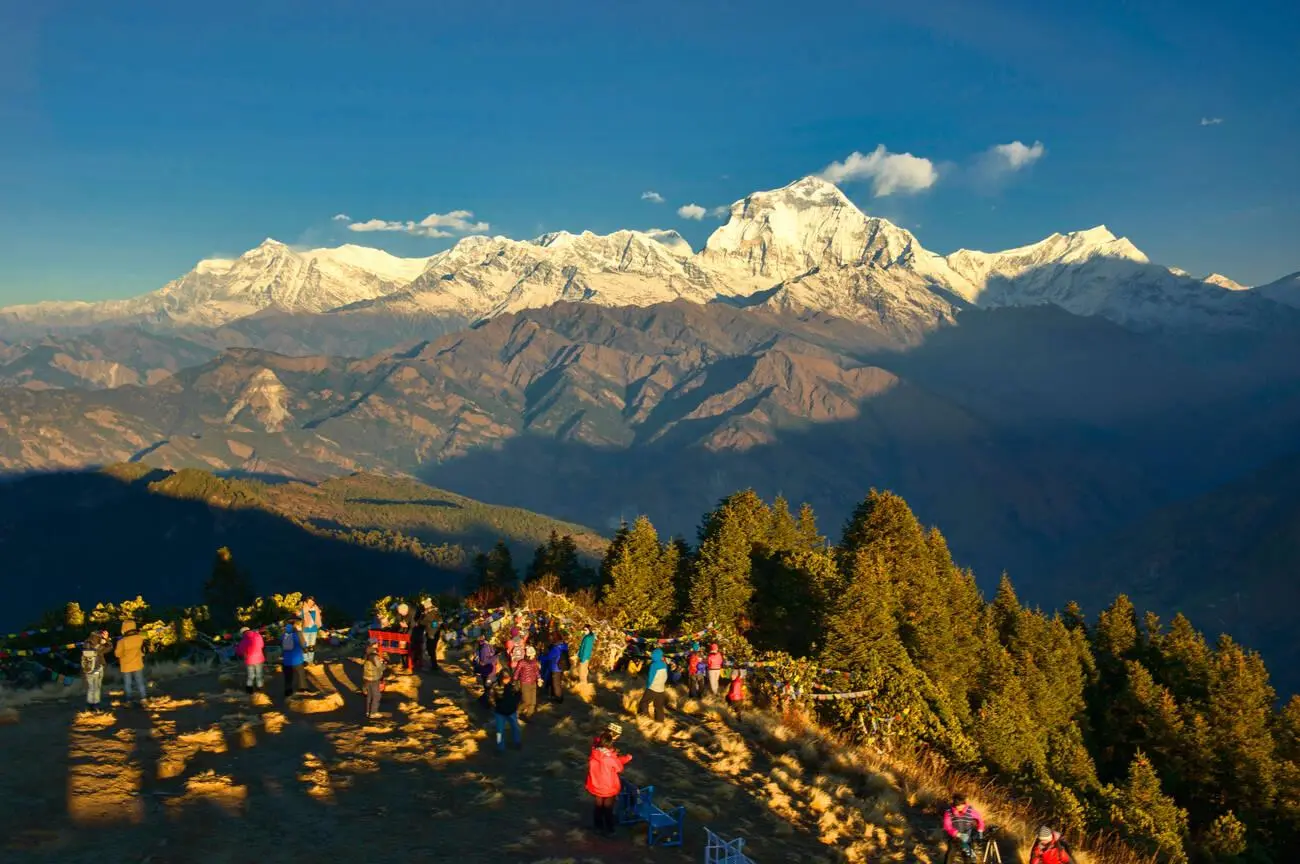
Ghorepani Poon Hill Trek is a short teahouse trek in Nepal’s Annapurna region, typically comples in 5 to 7 days. It is famous for its panoramic Himalayan sunrise views, especially from Poon Hill, where trekkers can see more than a dozen snow-capped peaks in a single sweep.
With Higher Path Treks, the journey becomes more than a walk through the mountains—it transforms into a carefully curated Himalayan experience that balances nature, culture, safety, and sustainability. From rhododendron-covered forests and traditional villages to the iconic sunrise view from Poon Hill (3,210m), this trek delivers unforgettable moments in just a few days.
Unlike longer Himalayan treks that require weeks of walking and extensive acclimatization, the Ghorepani Poon Hill Trek delivers maximum scenery in minimal time. It is one of the few treks where trekkers can experience:
For travelers with limited time, this trek serves as an excellent alternative to longer routes such as the Annapurna Base Camp Trek or the Annapurna Circuit Trek.
Ghorepani Poon Hill Trek is considered as a short and easy trek. First time trekkers without previous experience can complete this trek. Goof physical fitness and previous trekking experience is beneficial but not mandatory.
The trek follows a tea-house trekking system, meaning trekkers stay in locally run lodges along the route. Accommodations are carefully chosen to balance comfort, cleanliness, and location.
Meals typically include Nepali staples like dal bhat, as well as noodles, soups, rice dishes, and simple Western options. Compared to remote treks such as the Kanchenjunga Circuit Trek, food availability here is more varied and reliable.
The best time for the Ghorepani Poon Hill Trek is spring (March–May) and autumn (September–November).
Winter treks are possible with fewer crowds, while summer brings greenery but also monsoon rains.
Yes. It is one of the best treks in Nepal for beginners due to well-maintained trails, moderate altitude, and comfortable teahouse facilities.
The trek is considered easy to moderate. Some sections include stone staircases, but no technical climbing is required.
No prior trekking experience is required, though basic fitness is recommended.
Yes, but spring and autumn offer the best weather and mountain views.
The Ghorepani Poon Hill Trek proves that you don’t need extreme altitude or long duration to experience the magic of the Himalayas. In just a few days, trekkers are rewarded with majestic mountain panoramas, authentic village life, forested trails, and moments of deep relaxation.
With Higher Path Treks, every detail—from guiding and accommodation to safety and sustainability—is handled with care. The result is a trek that feels personal, immersive, and genuinely memorable.
For anyone seeking a short yet meaningful Himalayan journey, the Ghorepani Poon Hill Trek remains one of Nepal’s finest choices. Plan for this short trek in Nepal and contact with us today.
Helpful Blogs About Trekking in the Annapurna Region:
Uncover the best blogs about trekking in the Annapurna region, featuring expert advice, detailed itineraries, personal experiences, and essential tips for adventurers looking to explore the Himalayas.
Annapurna Base Camp Trek: A Short Journey to the Himalayas
Annapurna Circuit Trek with Tilicho Lake – A Complete Guide by Higher Path Treks & Expeditions
Top Tips for Climbing Pisang Peak on the Annapurna Circuit
Top Reasons to Trek Ghorepani Poon Hill
Top Reasons to Choose Tilicho Lake Trek with Thorong La Pass
Best Experience on the Short Mardi Himal Trek: A Journey to Remember
Top Reasons to Combine Pisang Peak Climbing with the Annapurna Circuit Trek
Comparing Chulu Far East Peak Climbing vs Chulu West Peak Climbing
The most picturesque village Ghandruk
Photography Guide: Capturing the Himalayas Without Expensive Gear
Nepal Peak Climbing 2026: Routes, Tips, and Top Summits
The Best Hiking Adventures: Famous Peak Climbs in 2025
Top Himalayan Peaks for Beginner Climbers: A Comprehensive Guide
Is Peak Climbing in Nepal Easy for Beginners?
Top Best Expedition Packages in Nepal 2025
Upon your arrival at Tribhuvan International Airport in Kathmandu (1,400 meters), you'll be warmly greeted by our representative who will assist with your transfer to the hotel. Depending on your arrival time, you may have some leisure time to explore the bustling streets of Thamel, a vibrant tourist hub with shops, restaurants, and cultural sights. In the evening, meet your trekking guide and team members. Overnight stay at a hotel in Kathmandu.
 Accommodation Hotel
  Meals breakfast
  Max. altitude 1,400m / 4,593ft.
 After an early breakfast, Scenic drive from Kathmandu to Pokhara, a journey that takes approximately 6-7 hours by road. The route offers stunning views of rural Nepal, passing through lush hills, terraced fields, and traditional villages. Upon arrival in Pokhara, you'll check into your hotel and have the rest of the day free to explore Lakeside Pokhara. You can stroll along the serene Phewa Lake, visit the World Peace Pagoda, or simply relax and enjoy the beautiful surroundings. Overnight stay at a hotel in Pokhara.
Accommodation Hotel Meals breakfast After breakfast in Pokhara, you'll drive for about 2.5 hours to Tikhedunga, the starting point of your trek. From Tikhedunga you'll begin trekking towards Ulleri (2,050 meters). The trail ascends steeply up stone steps to Ulleri (2,050 meters), a traditional Magar village The trail passes through small villages, and terraced fields. After approximately 3-4 hours of trekking, you'll reach Ulleri, where you'll stay overnight at a lodge. Enjoy the peaceful atmosphere and prepare for the days ahead. Overnight stay at a lodge in Ulleri.
Accommodation Teahouse Meals B,L,D Max. altitude 2,050m / 6,726ft. Today's trek takes you from Ulleri to Ghorepani (2,860 meters), a village located on a ridge with panoramic views of the surrounding mountains. From Ulleri, the trail continues through rhododendron and oak forests, offering occasional views of Machhapuchhre (Fishtail) (6,993 meters) and Annapurna South (7,219 meters). After approximately 5-6 hours of trekking, you'll arrive in Ghorepani where you can relax and enjoy the mountain scenery. Overnight stay at a lodge in Ghorepani.
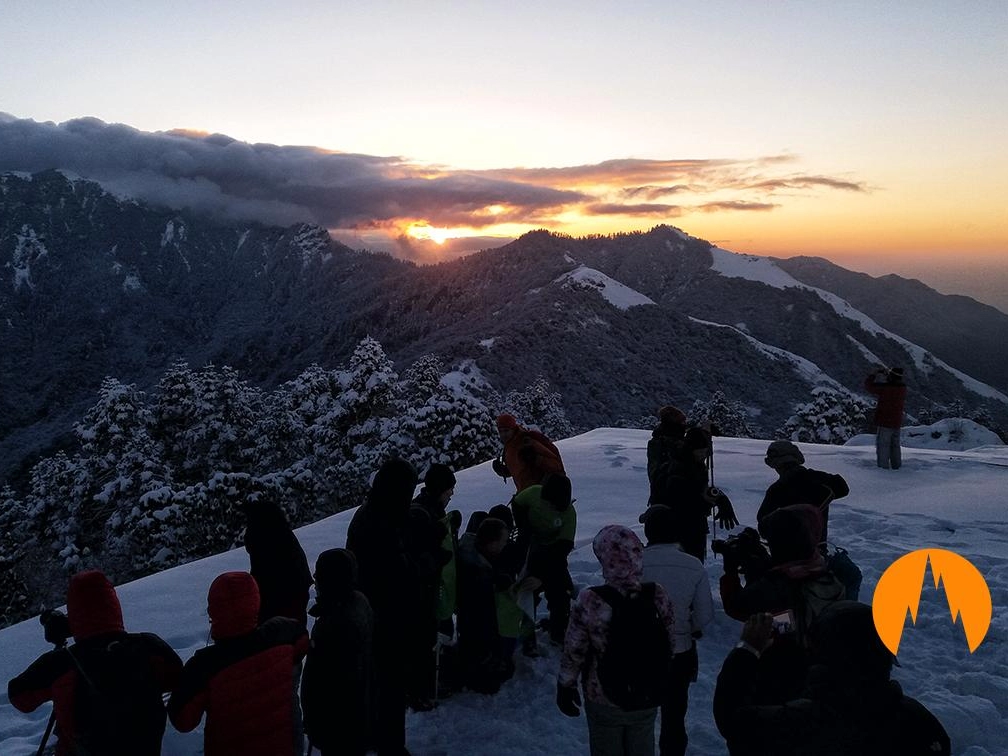
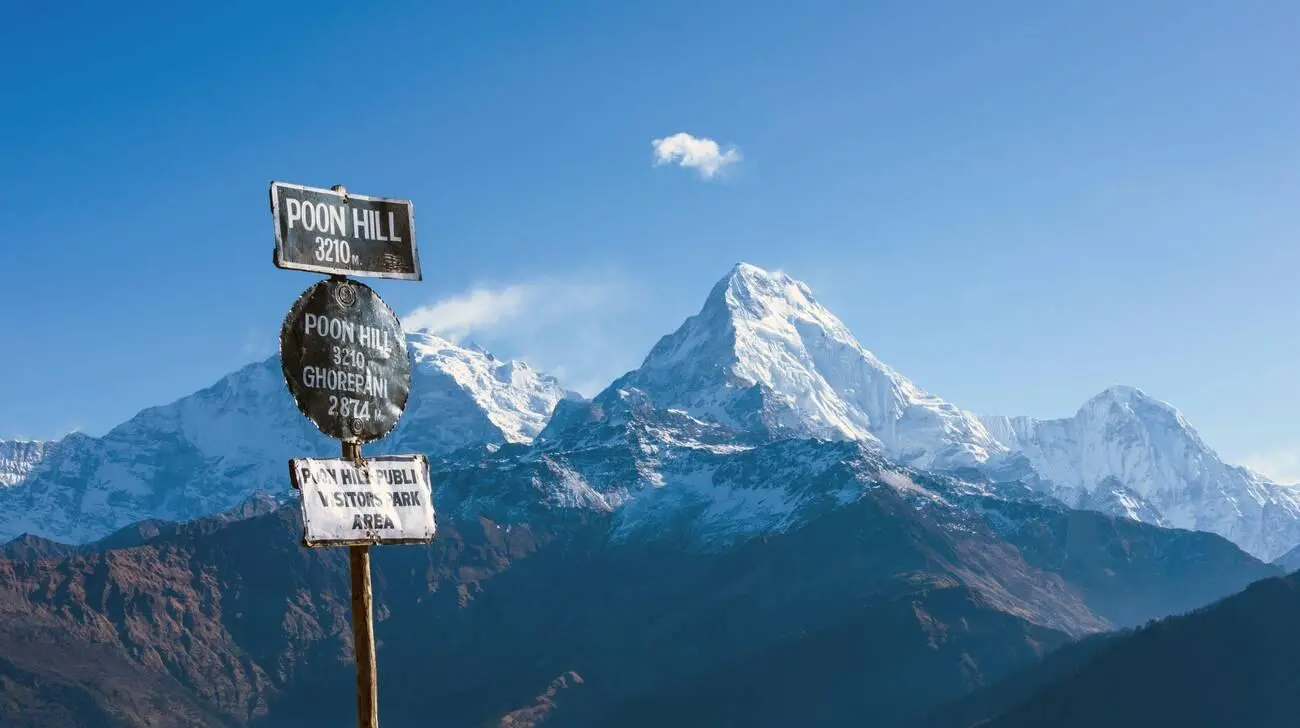
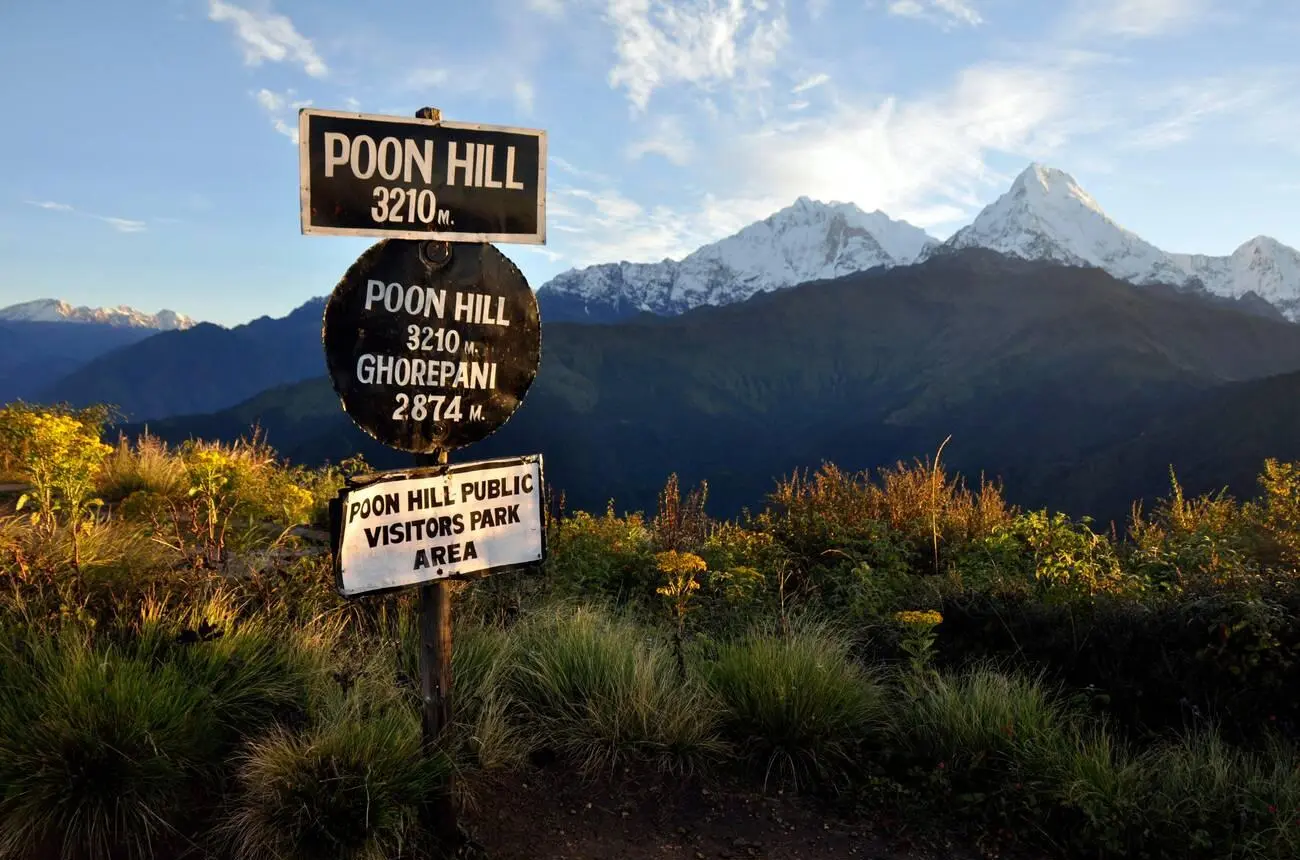
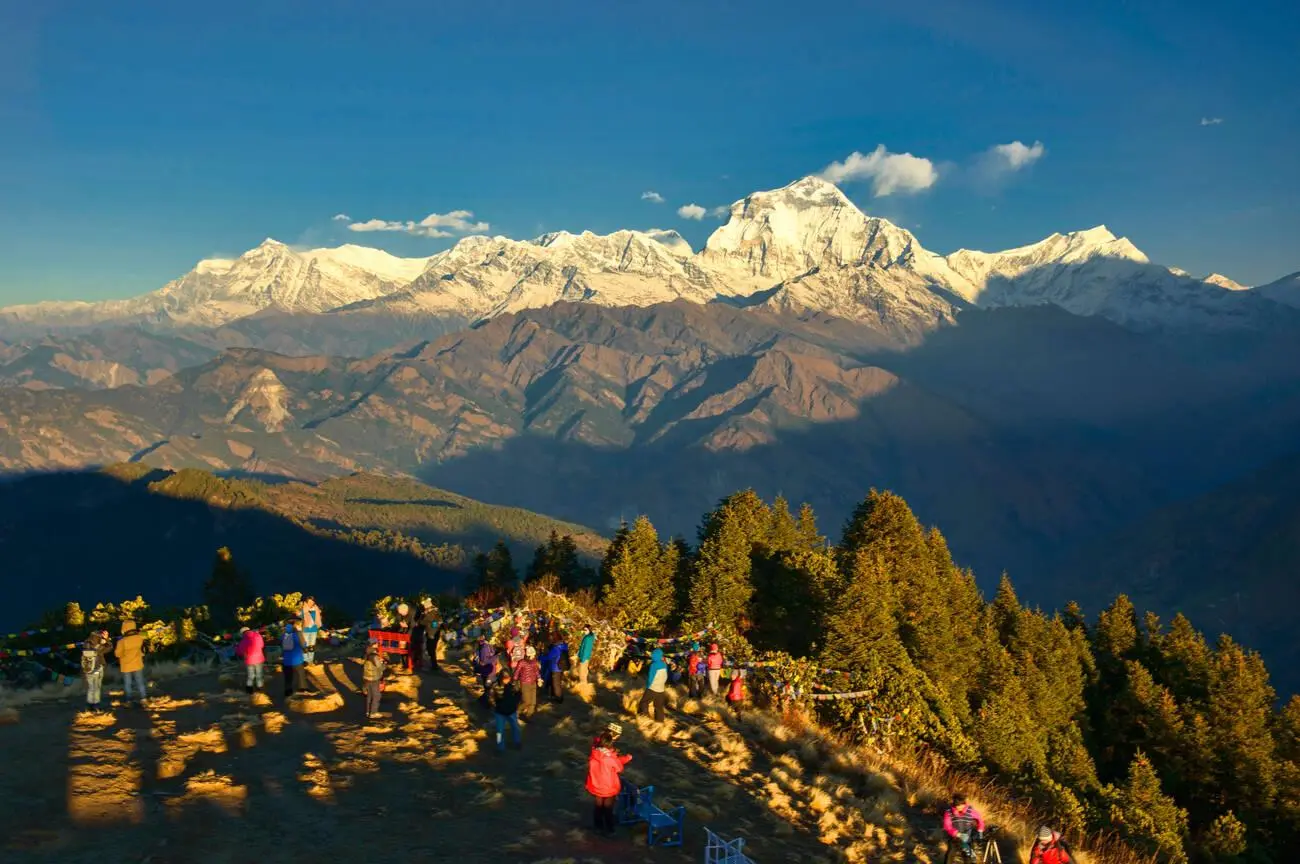
Accommodation Teahouse Meals B,L,D Max. altitude 2,860m / 9,383ft. Early in the morning, you'll hike up to Poon Hill (3,210 meters), one of the best viewpoints in the Annapurna region to witness a breathtaking sunrise over the Himalayas. The trail ascends steeply through rhododendron forests, reaching Poon Hill in time for sunrise. From the summit, you'll be treated to panoramic views of Dhaulagiri (8,167 meters), Annapurna I (8,091 meters), Machhapuchhre, and other peaks glowing in the morning light. After enjoying the sunrise, you'll trek back to Ghorepani for breakfast and then continue trekking towards Tadapani (2,630 meters). The trail descends through forests and crosses streams, offering occasional views of the mountains. After approximately 5-6 hours of trekking, you'll arrive in Tadapani where you'll spend the night. Overnight stay at a lodge in Tadapani.
Accommodation Teahouse Meals B,L,D Max. altitude 3,210m / 10,531ft. Leaving Tadapani behind, today's trek takes you to Ghandruk (1,940 meters), a picturesque Gurung village with traditional stone houses and terraced fields. The trail descends through forests with occasional views of the Annapurna range. You'll pass through Bhaisi Kharka and continue downhill to Ghandruk, which offers stunning views of Annapurna South (7,219 meters) and Machhapuchhre. After approximately 4-5 hours of trekking, you'll arrive in Ghandruk where you can explore the village, visit the Gurung Museum, and interact with local villagers. Overnight stay at a lodge in Ghandruk.
Accommodation Teahouse Meals B,L,D Max. altitude 1,940m / 6,365ft. Today is the final day, after breakfast in Ghandruk, you'll board a vehicle for the drive back to Pokhara, which takes about 4-5 hours. In Pokhara, you can celebrate the completion of your trek with a delicious meal and reflect on your memorable journey through the Annapurna foothills. Overnight stay at a hotel in Pokhara.
Accommodation Hotel Meals breakfast Max. altitude 800m / 2,625ft. After breakfast in Pokhara, Scenic drive back to Kathmandu, which takes approximately 6-7 hours. Along the way, you can enjoy the rural landscapes, terraced fields, and distant views of the Himalayas. Upon arrival in Kathmandu, you'll be transferred to your hotel where you can rest and refresh. In the evening, you may explore more of Kathmandu, shop for souvenirs, or simply relax at your hotel. Overnight stay at a hotel in Kathmandu.
Accommodation Hotel Meals breakfast Max. altitude 1,400m / 4,593ft. Depending on your flight schedule, you may have some free time in Kathmandu for last-minute shopping or sightseeing. Our representative will transfer you to Tribhuvan International Airport for your onward journey. We hope you had a memorable trekking experience in the Annapurna region and carry back with you wonderful memories of the mountains and cultural encounters.
Accommodation N/A Meals N/A 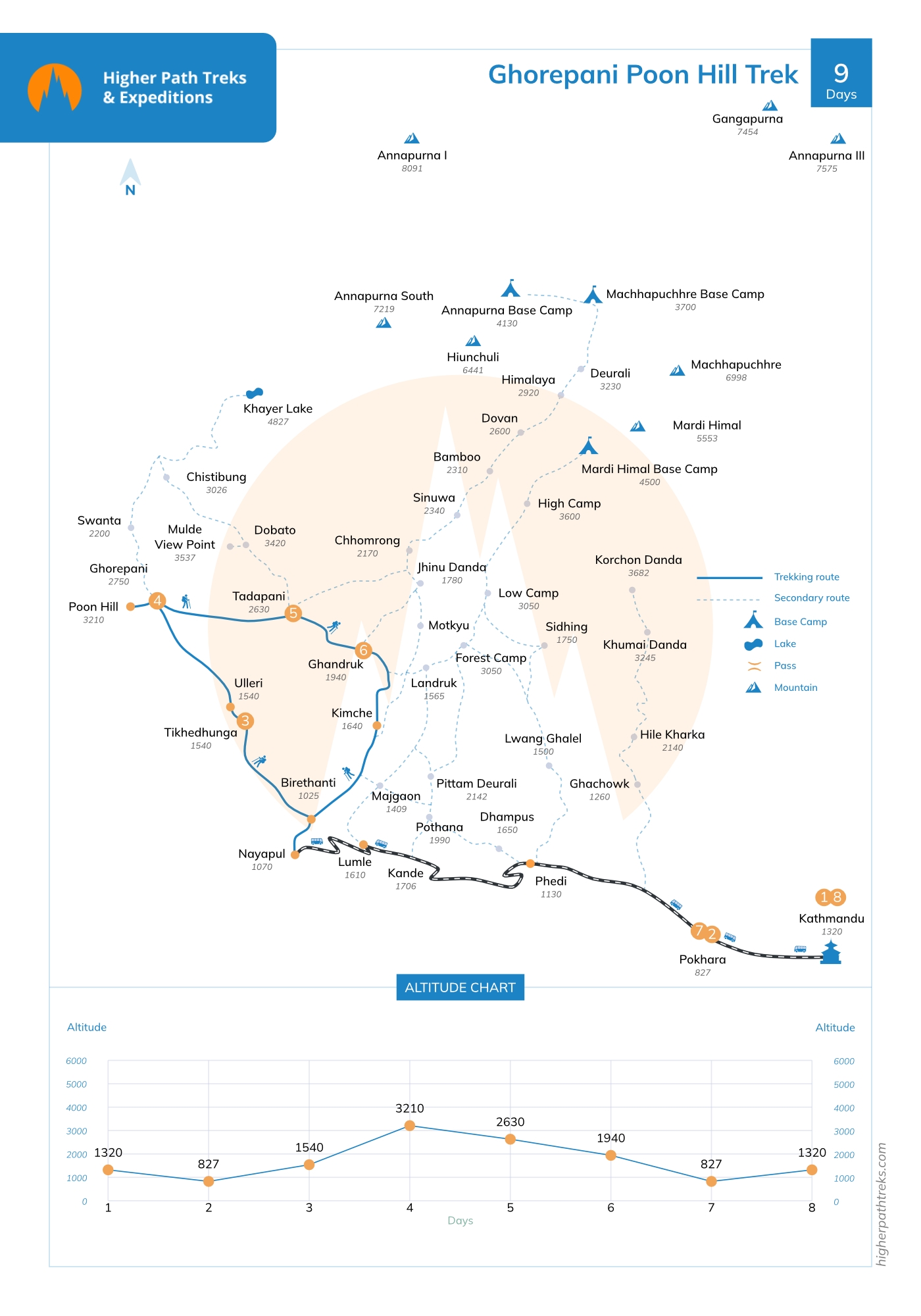
Your Start Date is the day you land in Nepal, and your End Date is when you fly home.
If the set Ghorepani Poon Hill Trek group dates don’t suit your schedule, we can offer alternative dates upon request.
Ghorepani Poon Hill Trek with Higher Path Treks & Expeditions was an amazing experience from start to finish. The trek was well-organized, and our guide was supportive, friendly, and very knowledgeable about the trails and local culture. The highlight was the stunning sunrise from Poon Hill, where the Himalayan peaks lit up in golden colors, absolutely unforgettable. The accommodations and meals were well arranged throughout the journey. I would highly recommend Higher Path Treks & Expeditions for anyone looking for a beautiful and moderate trekking experience in Nepal.
The Ghorepani Poon Hill Trek with Higher Path Treks & Expeditions was a short but incredibly rewarding adventure. The sunrise view from Poon Hill was absolutely breathtaking and worth every step. The trek was well organized and comfortable throughout. Karma’s support and professionalism made the experience smooth, safe, and enjoyable from start to finish.
The Ghorepani Poon Hill Trek, also known simply as the Poon Hill Trek, is a popular short trekking route in the Annapurna region of Nepal. It is renowned for its panoramic views of the Annapurna and Dhaulagiri mountain ranges, including stunning sunrise views from Poon Hill (3,210 meters). The trek typically starts and ends in Nayapul or Phedi, passing through rhododendron forests, traditional Gurung villages, and terraced fields.
Highlights include panoramic sunrise views from Poon Hill over the Annapurna and Dhaulagiri ranges, walking through beautiful rhododendron forests (blooming in spring), experiencing the culture and hospitality of Gurung villages like Ghorepani and Ghandruk, and enjoying stunning mountain vistas throughout the trek.
The trek usually takes around 5-9 days, depending on the specific itinerary and trekking pace. It is suitable for trekkers looking for a shorter trek that still offers breathtaking mountain views and cultural experiences.
The best times are during the pre-monsoon (March to May) and post-monsoon (September to November) seasons. These periods offer stable weather, clear mountain views, and comfortable temperatures for trekking. The trail is also accessible during the winter months, but temperatures can be colder.
You will need two main permits: the Annapurna Conservation Area Project (ACAP) entry permit and the TIMS (Trekkers' Information Management System) card. These permits can be obtained in Kathmandu or Pokhara before starting the trek.
Both options are possible, but many trekkers opt to join a guided tour with a reputable trekking agency for safety, navigation, and logistical support. Guides provide local knowledge, arrange permits, accommodations, and ensure a smoother experience throughout the trek.
Essentials include sturdy trekking boots, comfortable clothing suitable for trekking (layers), a warm jacket, sunscreen, sunglasses with UV protection, a hat, a daypack, a first aid kit, personal medications, toiletries, and a headlamp or flashlight with extra batteries. A detailed packing list can be obtained from your trekking agency.
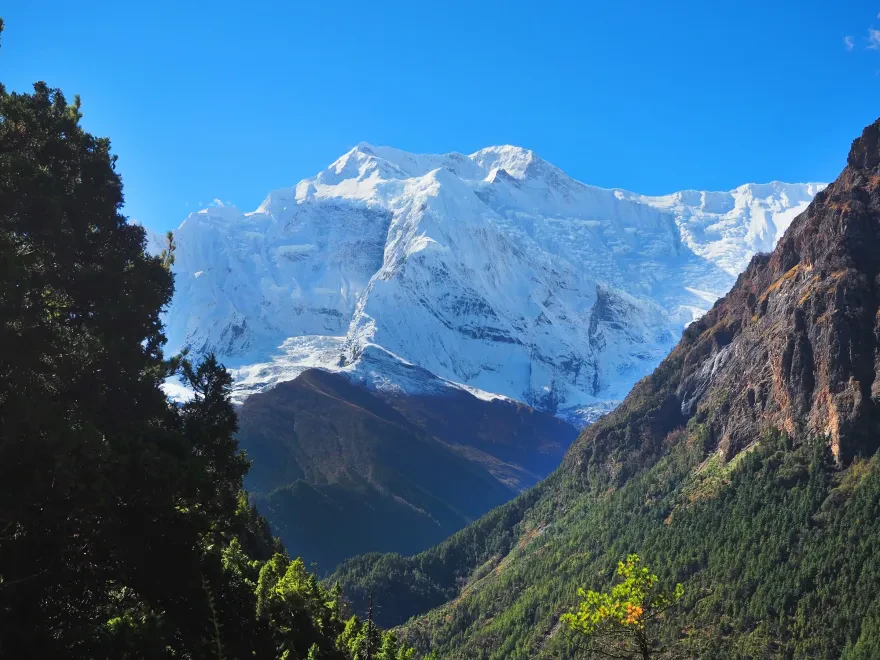
| No of people | Price per person |
|---|---|
| 1 - 1 | $1,490 |
| 2 - 5 | $1,455 |
| 6 - 10 | $1,405 |
| 11 - 20 | $1,355 |
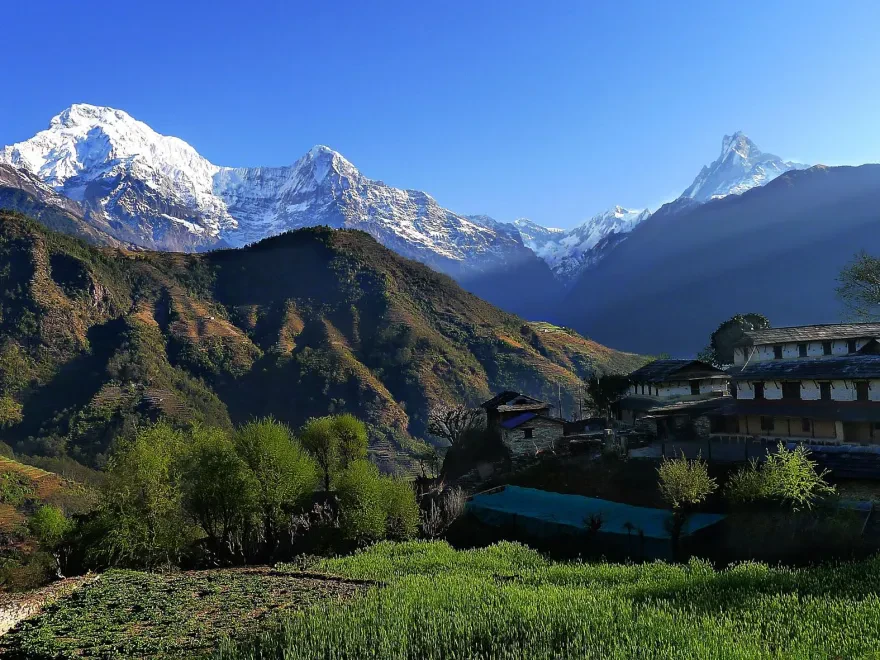
| No of people | Price per person |
|---|---|
| 1 - 1 | $1,105 |
| 2 - 5 | $1,055 |
| 6 - 10 | $1,005 |
| 11 - 20 | $955 |
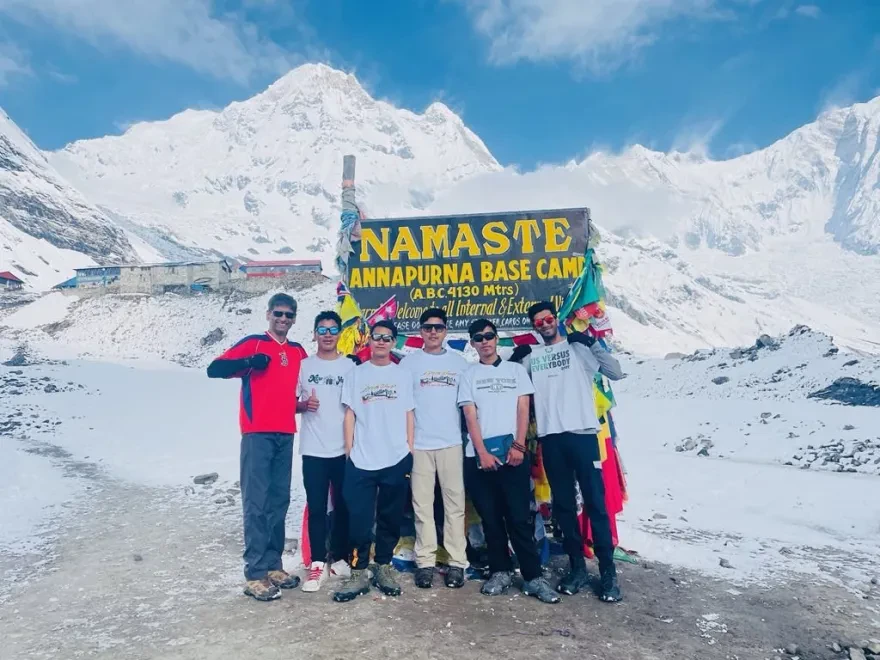
| No of people | Price per person |
|---|---|
| 1 - 1 | $955 |
| 2 - 5 | $925 |
| 6 | $905 |