Need help with booking? Send us a message.
Join our professionally organized Lobuche Peak Base Camp Service, designed for trekkers and climbers seeking reliable support for a successful ascent of Lobuche Peak (6,119m). This package is ideal for independent trekkers completing the Everest Base Camp, Kala Patthar, Gokyo, or Cho La Pass routes who wish to add a Himalayan climbing experience to their adventure.
Our experienced climbing team provides complete base camp logistics, climbing support, meals, permits, and safety management to ensure a safe, enjoyable, and well-organized expedition.
Seasonal Rates
Additional trps Climbing Guide
Additional guides are recommended for larger groups or climbers requiring extra support.
Permit Requirements
Please provide the following documents before the climb:
Climbing Gear Rental in Chhukung
Essential climbing equipment can be rented in Chhukung before the expedition.
For Lobuche Peak climbs, equipment must be transported from Chhukung to Lobuche High Camp. Porter transportation charges are approximately USD 50, depending on load weight.
Required Climbing Equipment
Estimated Rental Cost
Extra Base Camp Stay
If you would like to stay additional nights at Lobuche Peak Base Camp or High Camp, an extra charge of USD 100 per day applies.
Additional Cost Includes
Extra nights are highly recommended for:
Flexible Last-Minute Booking Service
This climbing service is specially designed for independent trekkers who are already trekking in the Everest region and decide to climb Lobuche Peak during their journey.
It is a perfect option for trekkers coming from:
If you have sufficient time, good physical fitness, and basic trekking experience, you can easily join the climb.
Easy & Flexible Booking
One of the major advantages of this service is its flexibility.
You can book the Lobuche Peak Base Camp Service while trekking in the Everest region — even up to 10 days before the climbing date.
During this period, we will organize:
This flexible system is ideal for trekkers who prefer to keep their itinerary open while exploring the Himalayas.
Why Choose Our Lobuche Peak Base Camp Service?
Experience the thrill of Himalayan climbing with a trusted local team dedicated to your safety, success, and unforgettable mountain adventure.
Notes
After arriving at Lobuche Peak High Camp before lunchtime, you will meet your professional climbing guide and support team.
Following lunch, the guide will conduct a comprehensive climbing briefing covering:
This preparation session is essential for ensuring a safe and successful summit attempt. You will have time to organize your personal climbing equipment and rest before the early morning climb.
Our kitchen staff will prepare an early breakfast with tea, coffee, and boiled drinking water before departure. Climbers should have all equipment prepared in advance.
The summit climb usually takes around 9–10 hours round trip, depending on weather conditions, trail conditions, and individual fitness levels.
After successfully summiting Lobuche Peak and returning to High Camp, enjoy lunch and a short rest before descending to either:
Your climbing guide will accompany and assist you throughout the entire climb and descent for maximum safety.
After breakfast, continue your trek according to your itinerary. Popular onward routes include:
Your Start Date is the day you land in Nepal, and your End Date is when you fly home.
If the set Lobuche Peak Base Camp Service group dates don’t suit your schedule, we can offer alternative dates upon request.
An incredible high-altitude experience with Higher Path Treks & Expeditions. The Lobuche Peak Base Camp service was well organized, with a smooth itinerary and excellent support from the guides. The route offered stunning views of Everest region peaks and a real sense of adventure as we moved closer to the glacier landscapes. The team was very professional, especially in handling altitude challenges and ensuring safety at every step. Base camp training and preparation were clear and helpful for anyone planning the summit. A challenging but highly rewarding Himalayan experience that I would recommend to serious trekkers.
The Lobuche Peak Base Camp service by Higher Path Treks & Expeditions includes full logistical and climbing support from the moment you arrive at High Camp until you continue your trekking journey after the summit. The package typically covers professional licensed climbing guides, kitchen staff support at high camp, meals during the climbing period, tented accommodation, safety briefing, and technical equipment guidance. The team also assists with route planning, weather monitoring, and emergency coordination if required. Every aspect is designed to ensure climbers experience a safe, well-organized, and successful summit attempt on Lobuche Peak.
The climbing briefing conducted at Lobuche Peak High Camp is extremely important for safety and success. Higher Path Treks & Expeditions ensures that every climber attends this detailed session before the summit push. During the briefing, the guide explains the route, timing, risks, weather conditions, and proper use of climbing gear such as crampons, harnesses, and ropes. It also includes emergency procedures and team coordination instructions. This preparation helps climbers understand what to expect during the night ascent and ensures everyone is mentally and physically ready for the challenging summit day.
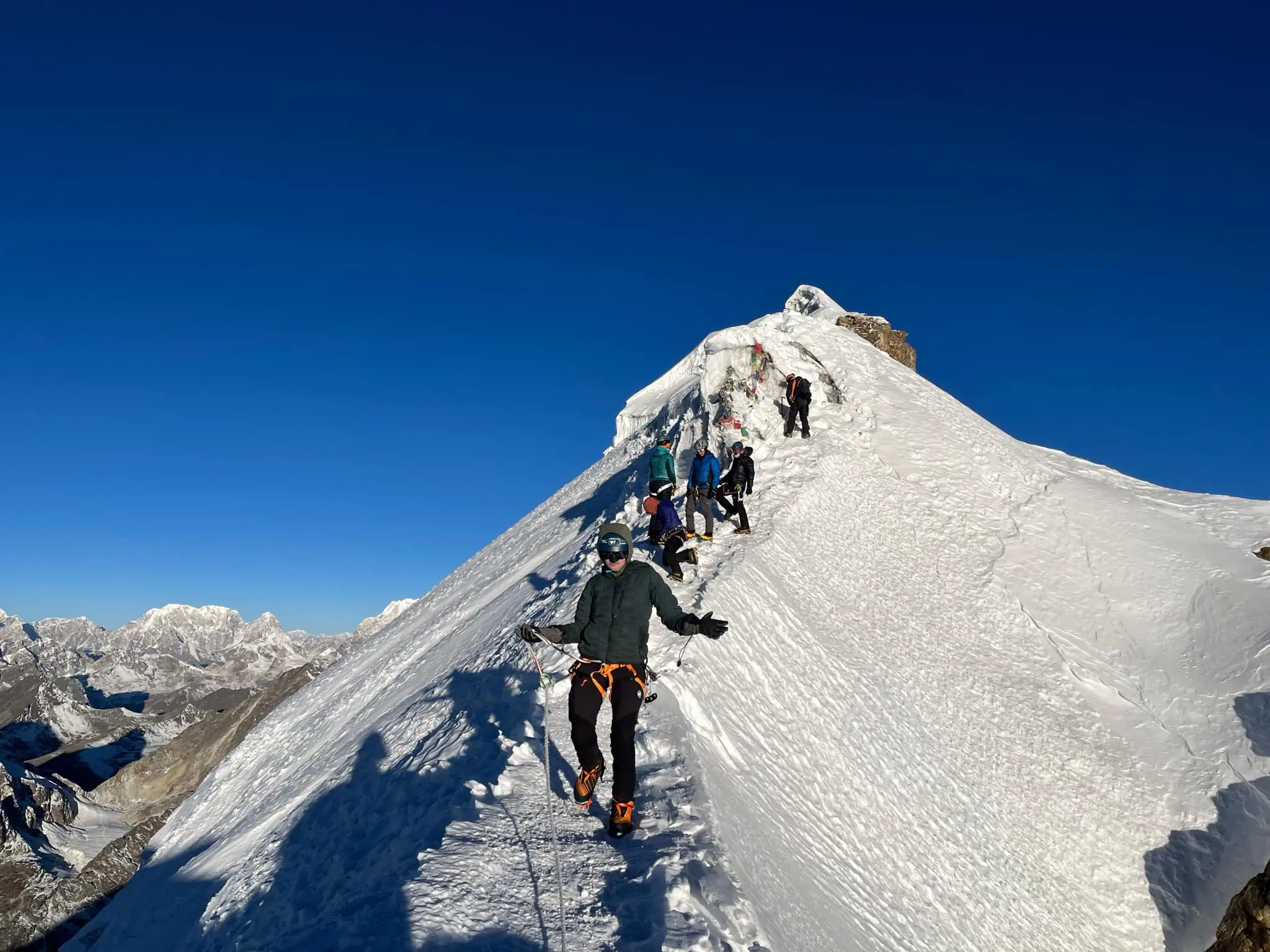
Summit day is the most demanding and rewarding part of the expedition with Higher Path Treks & Expeditions. Climbers typically wake up around 1:00 AM and begin their ascent by 2:30 AM under the guidance of experienced climbing leaders. The route is climbed in darkness using headlamps, and fixed ropes are often used in steep sections. The journey to the 6,119m summit takes around 9–10 hours round trip depending on conditions and fitness. After reaching the summit and enjoying panoramic Himalayan views, climbers descend safely back to High Camp or further down to Dzongla or Lobuche Village.
Lobuche Peak is considered a moderately technical climbing peak in the Everest region, requiring basic mountaineering experience. Higher Path Treks & Expeditions recommends prior trekking experience at high altitude and familiarity with climbing equipment such as crampons and harnesses. The climb includes glacier travel, steep icy sections, and rope-assisted climbing near the summit ridge. While it is not an extreme technical expedition, physical endurance, altitude acclimatization, and mental determination are essential. With proper guidance and preparation, many fit trekkers successfully complete the summit with professional support.
After reaching the summit of Lobuche Peak at 6,119 meters, climbers begin a careful descent under the supervision of Higher Path Treks & Expeditions guides. Once back at High Camp, a warm meal and short rest are provided. Depending on the itinerary and weather conditions, climbers then continue descending to either Dzongla or Lobuche Village on the same day. The descent is managed slowly to avoid fatigue and altitude-related issues. The following day, trekkers continue their onward journey toward destinations like Everest Base Camp, Gokyo Valley, or return to Lukla.
Prior technical climbing experience is not mandatory but is highly recommended for Lobuche Peak with Higher Path Treks & Expeditions. First-time climbers can participate as long as they have good physical fitness, trekking experience, and willingness to learn basic mountaineering techniques. Before the summit push, guides provide instruction on how to use climbing gear such as crampons, ascenders, and ropes. However, having prior experience in high-altitude trekking like Everest Base Camp greatly improves success rates and helps climbers adapt more easily to challenging terrain and altitude conditions.
After completing the Lobuche Peak climb, Higher Path Treks & Expeditions offers multiple trekking continuation options depending on your original itinerary. Popular routes include returning via Lukla, crossing the challenging Cho La Pass, or continuing toward Everest Base Camp and Kala Patthar for additional exploration. Some trekkers also extend their journey into the scenic Gokyo Valley region. Each route offers unique landscapes, cultural experiences, and Himalayan views. Your guide will help you choose the best continuation path based on weather conditions, time availability, and physical condition.
At Lobuche Peak High Camp, Higher Path Treks & Expeditions provides tented accommodation designed for high-altitude conditions. The tents are insulated and shared among climbers for warmth and safety. Sleeping mats and basic bedding are provided, but climbers are encouraged to bring a high-quality sleeping bag suitable for sub-zero temperatures. The camp also includes a communal dining tent where meals are served by the kitchen staff. Although facilities are basic due to the remote location, the setup ensures comfort, safety, and proper rest before the summit attempt.
During the Lobuche Peak climbing period, Higher Path Treks & Expeditions provides freshly prepared meals at High Camp and during briefing times. The menu typically includes high-energy foods such as soups, rice, pasta, eggs, bread, tea, coffee, and hydration drinks. On summit day, an early breakfast is served before departure, usually consisting of warm beverages and easily digestible food. The kitchen team ensures climbers receive sufficient calories to maintain energy levels at high altitude. Safe drinking water is also provided, often boiled or treated for purification to ensure health and hydration.
Safety is the top priority for Higher Path Treks & Expeditions during Lobuche Peak expeditions. The team uses fixed ropes, harness systems, helmets, and ice axes where required. Experienced certified climbing guides lead every group and monitor weather conditions continuously. Climbers are briefed on altitude sickness symptoms and emergency procedures before the summit attempt. Oxygen support and evacuation planning are also considered in case of emergencies. The guide maintains strict group coordination to ensure no climber is left behind, and decisions are made based on safety rather than speed or summit pressure.