Need help with booking? Send us a message.
A 15-day journey through Sherpa villages and ancient monasteries to the base of the world's tallest mountain—a life-changing Himalayan adventure.

There's something about standing at the base of the world's tallest mountain that changes you. I've seen it happen to hundreds of trekkers—the moment they realize they've actually made it to Everest Base Camp. Some cry. Some laugh. Most just stand there, speechless, taking it all in.
The 16-day Everest Base Camp trek isn't just a hike—it's a journey that weaves through Sherpa villages, ancient monasteries, and some of the most dramatic mountain scenery on Earth. And honestly? The extra days compared to shorter itineraries make all the difference. Your body gets time to adjust, you actually enjoy the experience instead of suffering through it, and you'll have stories that'll last a lifetime.
Look, I know two weeks feels like a long time to commit. But here's the thing: the Himalayas aren't like hiking in your local mountains. The altitude is real, the terrain is challenging, and rushing it is how people end up miserable—or worse, sick.
The 16-day itinerary gives you proper acclimatization days in Namche Bazaar and Dingboche. These aren't wasted days sitting around (though there's some of that, and it's necessary). They're opportunities to explore side valleys, visit monasteries, and let your body produce the red blood cells it needs to function at altitude.
I've guided both the rushed 12-day version and this more relaxed 16-day trek. The difference? Night and day. On the longer trek, people actually smile at Kala Patthar instead of looking like zombies.
The adventure kicks off with one of the world's most thrilling flights. The small plane from Kathmandu to Lukla takes about 35 minutes, but those 35 minutes? Absolutely unforgettable. You're weaving between mountains, watching peaks emerge from clouds, and then suddenly you're descending toward what looks like a postage stamp of a runway perched on a mountainside.
Tenzing-Hillary Airport in Lukla has earned its reputation as one of the world's most dangerous airports, but don't let that scare you. The pilots are incredibly experienced, and honestly, the flight is more exhilarating than frightening. Just maybe don't look out the window during landing if you're nervous.
Once you land at 2,860 meters, the real trekking begins. The trail from Lukla to Phakding is relatively gentle—a nice warm-up that takes you through your first Sherpa villages and across suspension bridges that sway over the churning Dudh Koshi River below.
The climb from Phakding to Namche Bazaar is your first real taste of Himalayan trekking. That last uphill section before Namche? It's steep. Really steep. But then you round a corner and—boom—there's Everest in the distance, and suddenly your burning legs don't matter quite as much.
Namche sits in a natural amphitheater at 3,440 meters and serves as the commercial hub of the Khumbu region. This isn't some tiny village—it's got bakeries, gear shops, Irish pubs (seriously), and even decent WiFi in some lodges. It's where trekkers from all over the world converge, swap stories, and prepare for the higher altitudes ahead.
You'll spend two nights here for acclimatization, which gives you time to explore. The hike up to the Everest View Hotel is a must—it's a bit of a climb, but the panoramic views of Everest, Lhotse, and Ama Dablam from the top are absolutely worth the effort. Plus, the acclimatization hike principle of "climb high, sleep low" will serve you well for the rest of the trek.
Saturday is market day in Namche, and if your timing lines up, it's fascinating to watch. Traders have been coming here for centuries, and while these days it's more tourist-oriented than it used to be, you can still see the traditional commerce that keeps mountain communities connected.
For those interested in understanding Sherpa culture more deeply, the Sherpa Culture Museum offers excellent insights into mountaineering history and local traditions.
From Namche, the trail to Tengboche takes you through rhododendron and juniper forests (absolutely stunning if you trek in spring when the rhododendrons bloom). The path undulates—down to the Dudh Koshi River, then up again—before reaching Tengboche at 3,867 meters.
Tengboche Monastery is one of those places that just feels special. Perched on a ridge with jaw-dropping views of Everest, Nuptse, Lhotse, and the iconic Ama Dablam, it's been a spiritual center for Sherpas for generations. If you time your visit right, you might catch the afternoon prayer ceremony—the deep chanting of monks, the smell of juniper incense, and those mountain views create an atmosphere that's hard to describe.
Many trekkers say Tengboche is their favorite stop on the entire journey. There's something about the combination of natural beauty and spiritual energy that resonates deeply. Take your time here. Sit. Breathe. Watch the sunset paint Ama Dablam orange and pink.
The Annapurna Base Camp Trek offers similar monastery experiences if you're considering other routes after this one.
The trek from Tengboche to Dingboche (4,410 meters) marks your entry into the alpine zone. Trees disappear. The landscape becomes stark, beautiful, and a bit otherworldly. Stone walls crisscross the valley, protecting barley fields from wind and yaks.
Dingboche is another crucial acclimatization stop, and you'll spend two nights here as well. The acclimatization hike up to Nagarjun Hill (5,100 meters) is challenging but incredibly rewarding. From the top, you get 360-degree views that include Makalu, the world's fifth-highest peak, along with closer views of Island Peak, which many ambitious trekkers attempt after completing EBC.
This is where altitude really starts to affect people. Headaches, shortness of breath, and fatigue are normal. Drink water. Lots of it. More than you think you need. And listen to your body—if you're feeling rough, tell your guide. There's no shame in taking it slow or even turning back if necessary.
The trek from Dingboche to Lobuche (4,940 meters) takes you past the Thukla memorial, where climbers who died on Everest are commemorated with stone cairns. It's a sobering reminder of the mountain's power and the risks involved in high-altitude mountaineering.
The Mount Everest Expedition teams pass through here on their way to Base Camp, and you might see them preparing for their summit attempts.
From Lobuche, it's a relatively short but tough trek to Gorak Shep (5,164 meters), the highest settlement on the route. Gorak Shep literally means "dead ravens" in Sherpa—a name that accurately captures the harsh, barren environment. But the location is strategic: it's your base for both Everest Base Camp and Kala Patthar.
Most groups drop their gear at the lodge in Gorak Shep and continue straight to Everest Base Camp the same afternoon. It's another 3-4 hours round trip, but you're so close at this point that waiting feels impossible.
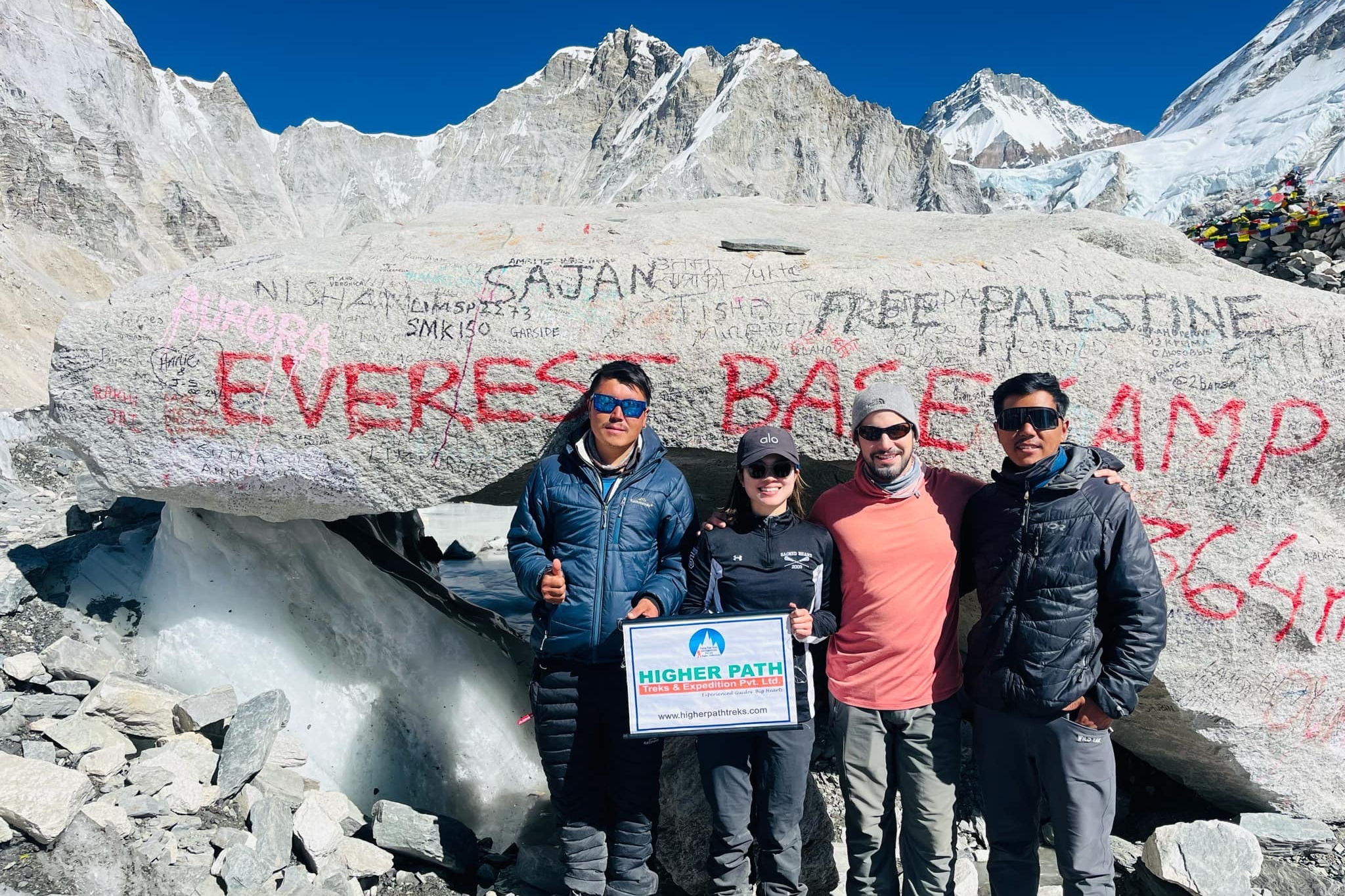
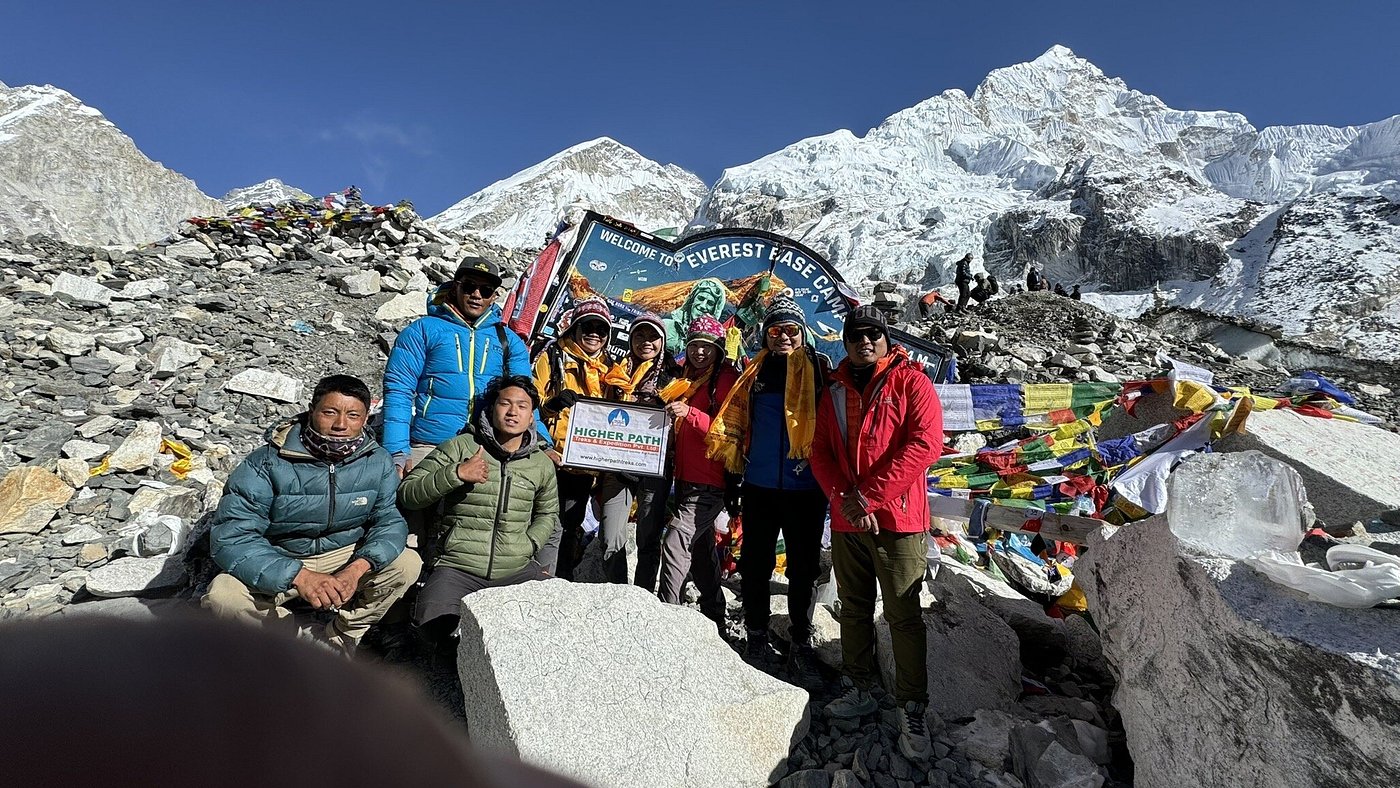
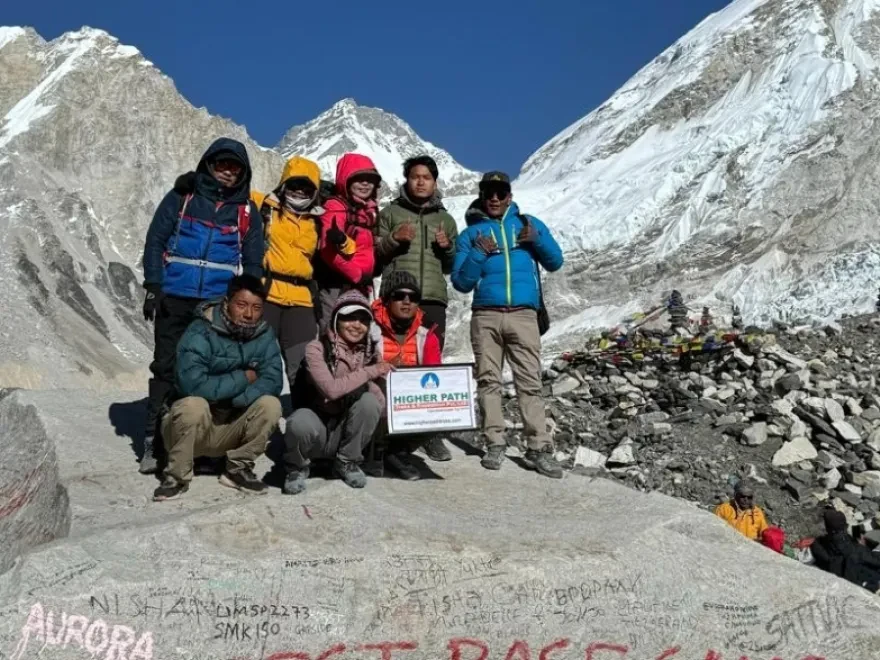
Walking into Everest Base Camp is surreal. The Khumbu Icefall towers above you, a chaotic maze of ice blocks the size of houses. Prayer flags flutter everywhere. If you're there during climbing season (April-May or September-October), you'll see the colorful tents of expedition teams preparing for their summit attempts.
At 5,364 meters, just standing there is an achievement. You're at the foot of the world's highest mountain, breathing air that has 50% less oxygen than sea level. Look around. That's Nuptse to your left, the Khumbu Icefall straight ahead, and somewhere up there, hidden behind ridges and ice, is Everest's summit.
Many people expect Base Camp itself to be more dramatic, and honestly, it can feel anticlimactic at first. You can't see Everest's peak from there—it's hidden behind the Nuptse-Lhotse ridge. But give it time. Sit down. Look at the icefall, at the prayer flags, at the determination on climbers' faces. The significance sinks in.
The real views come the next morning at Kala Patthar.
Most trekkers wake up around 4:30 AM for the climb to Kala Patthar (5,545 meters). It's cold—like, really cold—and every step at this altitude requires effort. But then the sky starts to lighten, and gradually, the peaks emerge from darkness.
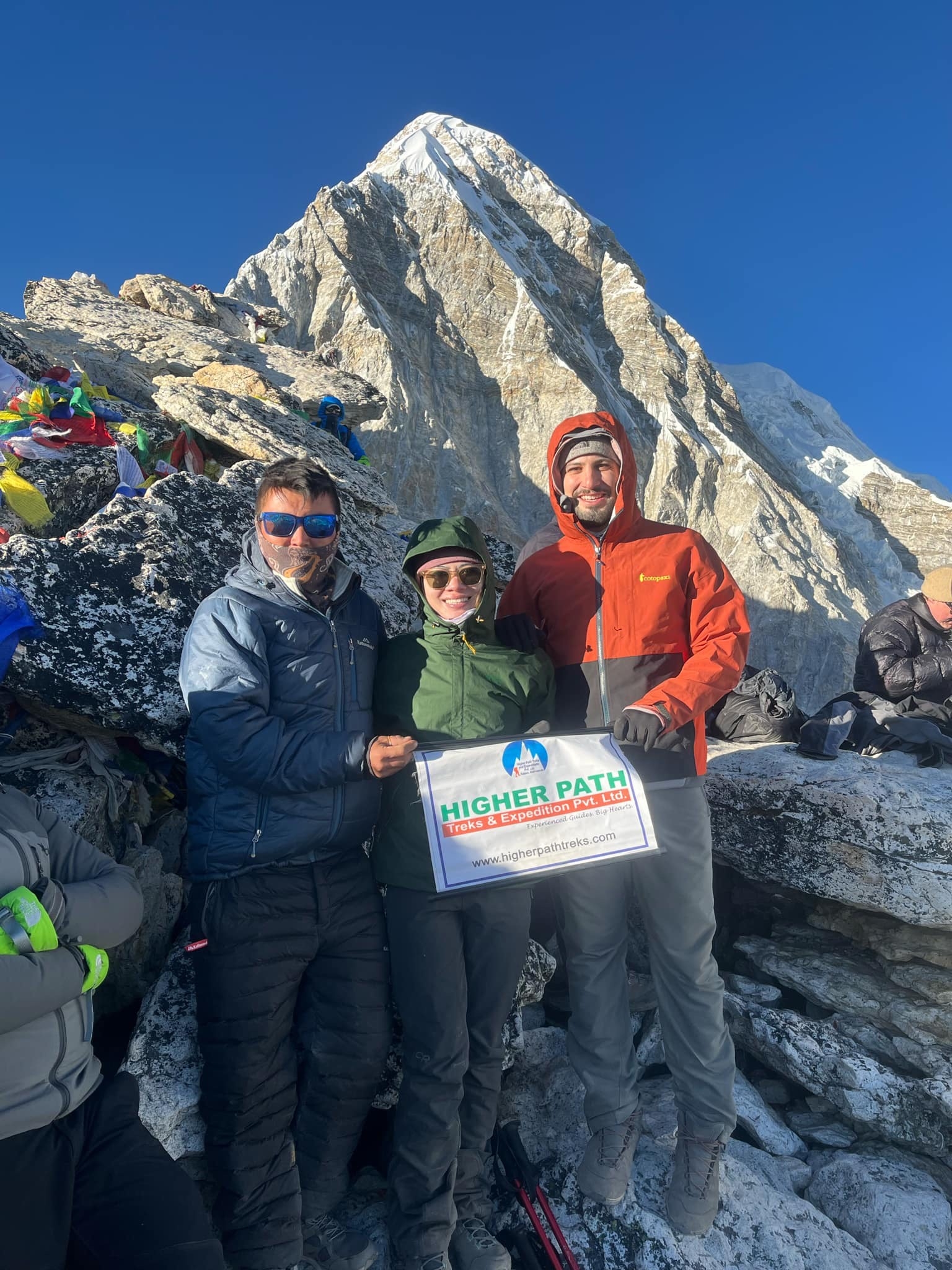
When the first rays of sun hit Everest's summit pyramid, turning the snow golden-orange against the deep blue sky, you'll understand why people come from all over the world to see this. Everest, Nuptse, Changtse, Pumori—they all catch fire with alpenglow while you stand on top of this rocky viewpoint, probably crying a little (everyone does, even if they won't admit it).
This is the highest you'll go on the standard trek, and arguably the best viewpoint of Everest available to non-climbers. Take your time up there. Take a million photos. You've earned it.
For those bitten by the high-altitude bug, our Everest Three Passes Trek offers even more dramatic viewpoints and challenging passes.
The return journey retraces your steps through Pheriche (instead of Dingboche), Namche, and back to Lukla. Descending is physically easier on your lungs but harder on your knees. Trekking poles become your best friends.
Going downhill also gives you a different perspective on the route. Things you missed on the way up—the intricate wood carvings on mani stones, the play of light on the mountains, the details of village life—become more noticeable when you're not gasping for breath.
Many trekkers find the descent bittersweet. You're excited to get back to civilization (hot showers! Normal oxygen levels! Food that isn't dal bhat!), but there's also sadness that this incredible journey is ending.
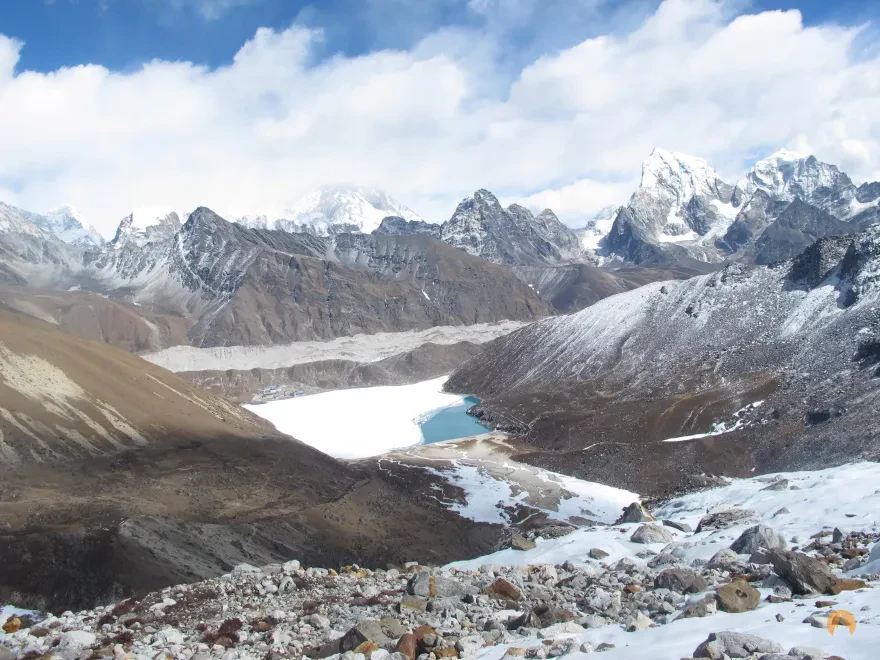
Some people extend their adventure by adding Gokyo Lakes to their itinerary, which offers turquoise alpine lakes and a different perspective on Everest.
Sure, the mountains are the star attraction. But what makes the Everest Base Camp trek unforgettable is everything else: the Sherpa people who welcome you into their homes, the yak trains that force you to the cliff side of narrow trails, the lodge evenings spent comparing stories with trekkers from six different countries, the way your body surprises you by actually adapting to altitude.
You'll eat more dal bhat than you thought humanly possible. You'll develop strong opinions about which lodges have the best apple pie (spoiler: Namche Bakery). You'll learn to say "namaste" and "dhanyabad" and probably pick up some Sherpa words along the way.
The Khumbu region is protected as Sagarmatha National Park, a UNESCO World Heritage site that's home to rare wildlife including snow leopards (rarely seen), Himalayan tahrs, and the colorful Danphe pheasant (Nepal's national bird). The conservation efforts here are remarkable, especially considering the thousands of trekkers who pass through each year.
The 16-day EBC trek works best during two main seasons:
Spring (March-May): Warmer temperatures, rhododendrons in bloom, and the main Everest climbing season means Base Camp is bustling with expedition activity. The downside? More trekkers on the trail and higher lodge prices.
Autumn (September-November): Clear skies, stable weather, and crisp mountain views. This is peak trekking season for good reason. The trade-off is that lodges fill up quickly and popular sections can feel crowded.
Winter (December-February) is possible but very cold, especially at higher elevations. Monsoon season (June-August) brings clouds, rain, and leeches at lower elevations—generally not recommended unless you enjoy trekking in the rain.
For a less crowded alternative, consider the Manaslu Circuit Trek, which offers similar altitude challenges and stunning views with fewer trekkers.
I'm going to be honest: you don't need to be an ultra-athlete to complete this trek. But you do need to be reasonably fit. Think "can comfortably hike for 5-6 hours with a daypack" level of fitness.
The best preparation is hiking with elevation gain. If you live somewhere flat, take the stairs. A lot. With a weighted backpack. Your knees and lungs will thank you on the trail.
That said, I've seen people of all ages and fitness levels complete this trek. The 16-day itinerary's gradual pace and built-in rest days help tremendously. Your attitude matters more than your fitness—determination, flexibility, and a positive mindset go a long way.
For those looking to combine trekking with a technical challenge, Lobuche Peak Climbing with EBC adds a mountaineering element to the journey.
Look, anyone can organize a trek to Everest Base Camp. But there's a huge difference between just getting there and having a truly exceptional experience.
We've been organizing expeditions and treks for over a decade now, and our philosophy is simple: summit success, safe return, and enjoyment of the journey—in that order. Safety always comes first. Always.
What sets us apart isn't just talk. It's the way our guides carry extra oxygen on every high-altitude trek. It's how our Sherpa team members have summited 8,000-meter peaks themselves and know exactly what altitude sickness looks like before it becomes dangerous. It's the fact that we're willing to adjust itineraries if weather or health concerns arise, even if it means logistical complications.
We're transparent about costs—no hidden fees showing up halfway through your trek. Our group sizes stay manageable (typically 8-12 people max), which means personalized attention from guides. And our success rate speaks for itself: over 95% of our trekkers reach Everest Base Camp and return safely.
But beyond statistics and logistics, we genuinely love what we do. Our guides aren't just leading you to a destination—they're sharing their mountains, their culture, and their stories. That connection transforms a trek from a checkmark on your bucket list into an experience that shapes how you see the world.
Whether you're considering the classic EBC route or exploring options like the Annapurna Circuit or Langtang Valley, we're here to make it happen safely and memorably.
Our 16-day Everest Base Camp package includes all permits (Sagarmatha National Park entry and TIMS card), domestic flights between Kathmandu and Lukla, experienced guide and porter support, accommodation in tea houses throughout the trek, and three meals a day once trekking begins.
What's not included: international flights to Nepal, Nepal visa fees, travel insurance (mandatory—seriously, get comprehensive coverage that includes helicopter evacuation), personal expenses like snacks and drinks beyond basic meals, tips for guides and porters, and any hotel stays in Kathmandu before or after the trek.
We recommend arriving in Kathmandu at least two days before your trek starts. This buffer accounts for flight delays (common in Lukla due to weather) and gives you time to explore Nepal's capital, sort out any gear needs, and adjust to the time zone.
The 16-day Everest Base Camp trek is challenging but achievable for anyone in reasonable physical condition with determination and proper preparation. It's long enough to properly acclimatize but not so extended that it feels endless. You'll push your limits, but with the right pace and support, you'll surprise yourself with what you're capable of achieving.
If you've been dreaming about standing at the base of Everest, stop waiting for the "perfect time." There's no perfect time. There's just deciding to do it and taking the first step.
The mountains will still be there tomorrow, yes. But will you?
Ready to start planning your journey? Check out our detailed 16-day Everest Base Camp Trek itinerary or reach out to our team with questions. We're here to help make your Himalayan dream a reality.
Ready for your adventure? Contact us today to book your 16-day Everest Base Camp trek, or explore our other popular routes like Mera Peak Climbing for a more technical challenge.
Top Blogs About Trekking in the Everest Region:
Uncover the best blogs about trekking in the Everest region, featuring expert advice, detailed itineraries, personal experiences, and essential tips for adventurers looking to explore the Himalayas.
Photography Guide: Capturing the Himalayas Without Expensive Gear
Everest Luxury Trek: An Unforgettable Himalayan Experience
Nepal Peak Climbing 2026: Routes, Tips, and Top Summits
Solo Trekking to Everest Base Camp: Is It Possible?
Top 10 Highlights of the Everest Base Camp Trek
Successfully Trekking to Everest Base Camp and Kala Patthar
Why Famous Trekkers Choose Everest Base Camp?
Autumn Season to Everest Base Camp Trek
The Best Hiking Adventures: Famous Peak Climbs in 2025
Top Himalayan Peaks for Beginner Climbers: A Comprehensive Guide
Everest Three Peaks: A Beginner’s Guide to the Ultimate Himalayan Challenge
Is Peak Climbing in Nepal Easy for Beginners?
Must-Know Facts About Everest Base Camp Trekking
Why Gokyo Ri is a Must-Visit for Everest Trek Lovers
The Roof of the World: Peak Climbing Journeys through Nepal’s High Country
What to Expect on an Island Peak Climbing Expedition
Mera Peak Climbing Guide for Beginners: Tips, Difficulty & Preparation
Four Peaks, One Journey: Mera, Island, Lobuche & Amphu Lapcha Expedition
Top Best Expedition Packages in Nepal 2025
Which is Easier: Mera Peak or Island Peak?
Why Choose Island Peak Climbing with Everest Base Camp Trek for Beginners
Best Trekking Peaks in Everest Region for Beginners
Notes
Alternative Transportation Option
In case of flight cancellation, an alternative overland route is available:
This option is commonly used during bad weather or peak trekking seasons when flights are disrupted.
Optional Helicopter Upgrade
Kathmandu – Lukla – Kathmandu Helicopter Service
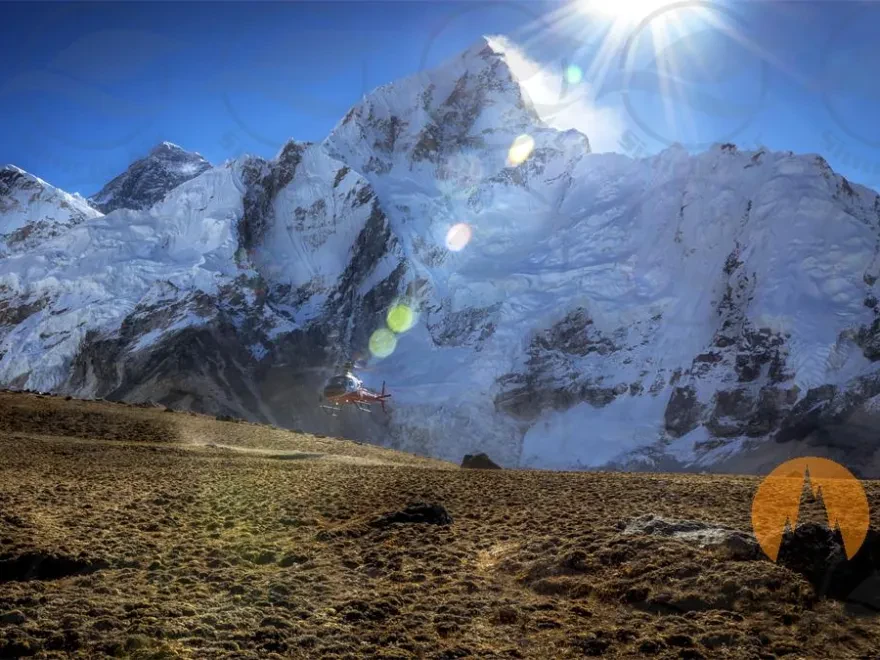
For greater comfort, flexibility, and to avoid possible flight delays, direct helicopter flights between Kathmandu and Lukla are available.
Helicopter flights are faster, more comfortable, and operate more reliably during unstable weather conditions compared to regular domestic flights.
Travel Recommendation
We strongly recommend keeping a few extra buffer days in your travel itinerary before international flights, especially during the busy spring and autumn trekking seasons, as weather-related delays in the Everest region are common.
 Accommodation Hotel
  Meals Welcome Dinner
  Max. altitude 1,400m / 4,593ft. Accommodation Lodge Meals Breakfast, Lunch, Dinner Max. altitude 1,060m / 3,478ft. Accommodation Lodge Meals Breakfast, Lunch, Dinner Max. altitude 2,610m / 8,563ft. Accommodation Lodge Meals Breakfast, Lunch, Dinner Max. altitude 3,440m / 11,286ft. Accommodation Lodge Meals Breakfast, Lunch, Dinner Max. altitude 3,440m / 11,286ft.
 Today, the journey continues with a gentle but meaningful ascent from Namche Bazaar toward Khumjung, one of the most culturally rich Sherpa settlements in the Khumbu region. The trail first leads through quiet ridgelines above Namche, gradually opening into wide Himalayan panoramas where peaks like Thamserku and Kangtega dominate the skyline. As you move away from the busier trekking routes, the atmosphere becomes noticeably calmer, offering a deeper sense of connection with the mountains. Passing through juniper and pine forests, you may encounter grazing yaks and traditional stone-built huts that reflect centuries-old mountain life. Khumjung village itself sits beneath the sacred peak of Khumbila and is known for its monastery and strong community traditions. Overnight stay here allows you to experience authentic Sherpa hospitality in a peaceful alpine setting, arranged smoothly by Higher Path Treks & Expeditions, ensuring comfort and cultural immersion at high altitude.
Accommodation Lodge Meals Breakfast, Lunch, Dinner Max. altitude 3,790m / 12,434ft. Today’s trek from Khumjung to Pangboche is a rewarding journey deeper into the heart of the Khumbu Valley, where the landscapes grow increasingly dramatic and spiritually significant. The trail gradually descends and then climbs through open alpine terrain, passing scattered settlements, mani walls, prayer flags, and yak pastures framed by towering Himalayan giants. As you progress, the majestic Ama Dablam begins to dominate the horizon, revealing why this region is considered one of the most scenic trekking corridors in the world. Pangboche, one of the oldest permanent Sherpa villages in the region, holds deep spiritual importance, especially due to its ancient monastery, believed to be among the oldest in Khumbu. The atmosphere here feels timeless, with traditional stone houses and strong Buddhist heritage shaping daily life. Arriving in the evening, you settle into a cozy lodge, reflecting on the day's journey, with all arrangements carefully managed by Higher Path Treks & Expeditions to ensure a smooth and enriching Everest trekking experience.
Accommodation Lodge Meals Breakfast, Lunch, Dinner Max. altitude 3,900m / 12,795ft. Accommodation Lodge Meals Breakfast, Lunch, Dinner Max. altitude 4,360m / 14,304ft. Accommodation Lodge Meals Breakfast, Lunch, Dinner Max. altitude 4,360m / 14,304ft. Accommodation Lodge Meals Breakfast, Lunch, Dinner Max. altitude 4,910m / 16,109ft. With Higher Path Treks & Expeditions, Day 11 marks the most anticipated highlight of the entire journey as you leave Lobuche and trek toward Gorak Shep, the final settlement before Everest Base Camp. The trail is rocky, glacial, and demanding, but every step brings you closer to your goal. After reaching Gorak Shep, you continue onward to Everest Base Camp, standing at an impressive 5,164m / 16,942ft. The feeling of finally arriving at the base of the world’s highest peak is overwhelming. After spending time at EBC for photos and reflection, you retrace your steps back to Gorak Shep for an overnight stay in a lodge.
Accommodation Lodge Meals Breakfast, Lunch, Dinner Max. altitude 5,164m / 16,942ft. Today with Higher Path Treks & Expeditions, you begin early for a sunrise hike to Kala Patthar, one of the most iconic viewpoints in the Everest region. The climb is steep and cold, but it rewards you with breathtaking panoramic views of Everest and the surrounding peaks. At a maximum altitude of 4,371m / 14,341ft, you experience some of the clearest mountain vistas of the entire trek. After descending back to Gorak Shep for breakfast, you continue your long descent toward Pheriche. The trail gradually becomes easier as oxygen levels improve, and your body begins to feel stronger again. You stay overnight in a comfortable lodge with full board meals.
Accommodation Lodge Meals Breakfast, Lunch, Dinner Max. altitude 4,371m / 14,341ft. On Day 13 with Higher Path Treks & Expeditions, you leave Pheriche and begin your descent toward Namche Bazaar, retracing scenic Himalayan valleys, suspension bridges, and rhododendron forests. The trail is long but far more comfortable compared to high-altitude trekking days. As you descend to 3,440m / 11,286ft, your breathing becomes easier, and your energy improves noticeably. You pass familiar Sherpa villages and enjoy warm hospitality along the way. Namche Bazaar welcomes you back with its vibrant atmosphere, bakeries, and mountain shops. Tonight, you rest in a lodge, enjoying proper meals: breakfast, lunch, and dinner, while reflecting on how far you have come since ascending into the Everest region.
Accommodation Lodge Meals Breakfast, Lunch, Dinner Max. altitude 3,440m / 11,286ft. With Higher Path Treks & Expeditions, Day 14 is the final trekking day as you descend from Namche Bazaar back to Lukla. The trail involves steep downhill sections and some final uphill climbs, making it a mix of challenge and celebration. At 2,860m / 9,383ft, Lukla feels much warmer and more energetic compared to the high mountains above. You cross suspension bridges over the Dudh Koshi River one last time, passing through charming villages and forested paths. Arriving in Lukla, you celebrate the completion of your trek with your guide and porter team. Overnight accommodation is in a lodge with meals provided: breakfast, lunch, and dinner, marking the end of your trekking journey in the Everest region.
Accommodation Lodge Meals Breakfast, Lunch, Dinner Max. altitude 2,860m / 9,383ft. Today, with Higher Path Treks & Expeditions, you take an early morning flight from Lukla to Manthali, enjoying a final breathtaking aerial view of the Himalayas. After landing, you begin a scenic 4–5 hour drive back to Kathmandu. As you descend to 1,400m / 4,593ft, the landscape changes dramatically from rugged mountains to green hills and busy settlements. Arriving in Kathmandu feels surreal after days in the remote Everest region. You check into your hotel, enjoy a hot shower, and relax in comfort. Meals include breakfast and dinner. The rest of the day is free to explore Thamel, shop for souvenirs, or simply rest and recover from your incredible Himalayan achievement.
Accommodation Hotel Meals Breakfast, Dinner Max. altitude 1,400m / 4,593ft. With Higher Path Treks & Expeditions, Day 16 is reserved as a buffer day in Kathmandu to manage potential flight delays from Lukla or Manthali, which are common in the Himalayan weather system. If everything runs smoothly, this day becomes a well-earned day of leisure and recovery. You stay at a comfortable hotel at 1,400m / 4,593ft, enjoying breakfast and dinner included. Many trekkers use this time to explore UNESCO World Heritage Sites, relax at cafes, or enjoy a traditional Nepali massage to ease post-trek muscle fatigue. It is also a perfect opportunity for souvenir shopping in Thamel or simply reflecting on your journey to Everest Base Camp in a calm and comfortable environment.
Accommodation Hotel Meals Breakfast, Dinner Max. altitude 1,400m / 4,593ft. On your final day with Higher Path Treks & Expeditions, your unforgettable Everest Base Camp Trek officially concludes. Depending on your flight schedule, you may have time for last-minute shopping or a short cultural visit around Kathmandu before departure. The team ensures a smooth airport transfer from your hotel at 1,400m / 4,593ft, assisting you with check-in and farewell arrangements. As you leave Nepal, you carry more than just memories; you take home the experience of standing at the base of Everest, crossing high mountain passes, and pushing beyond personal limits. The journey ends, but the sense of achievement and connection with the Himalayas remains with you long after you return home.
Accommodation NA Meals Breakfast Max. altitude 1,400m / 4,593ft. 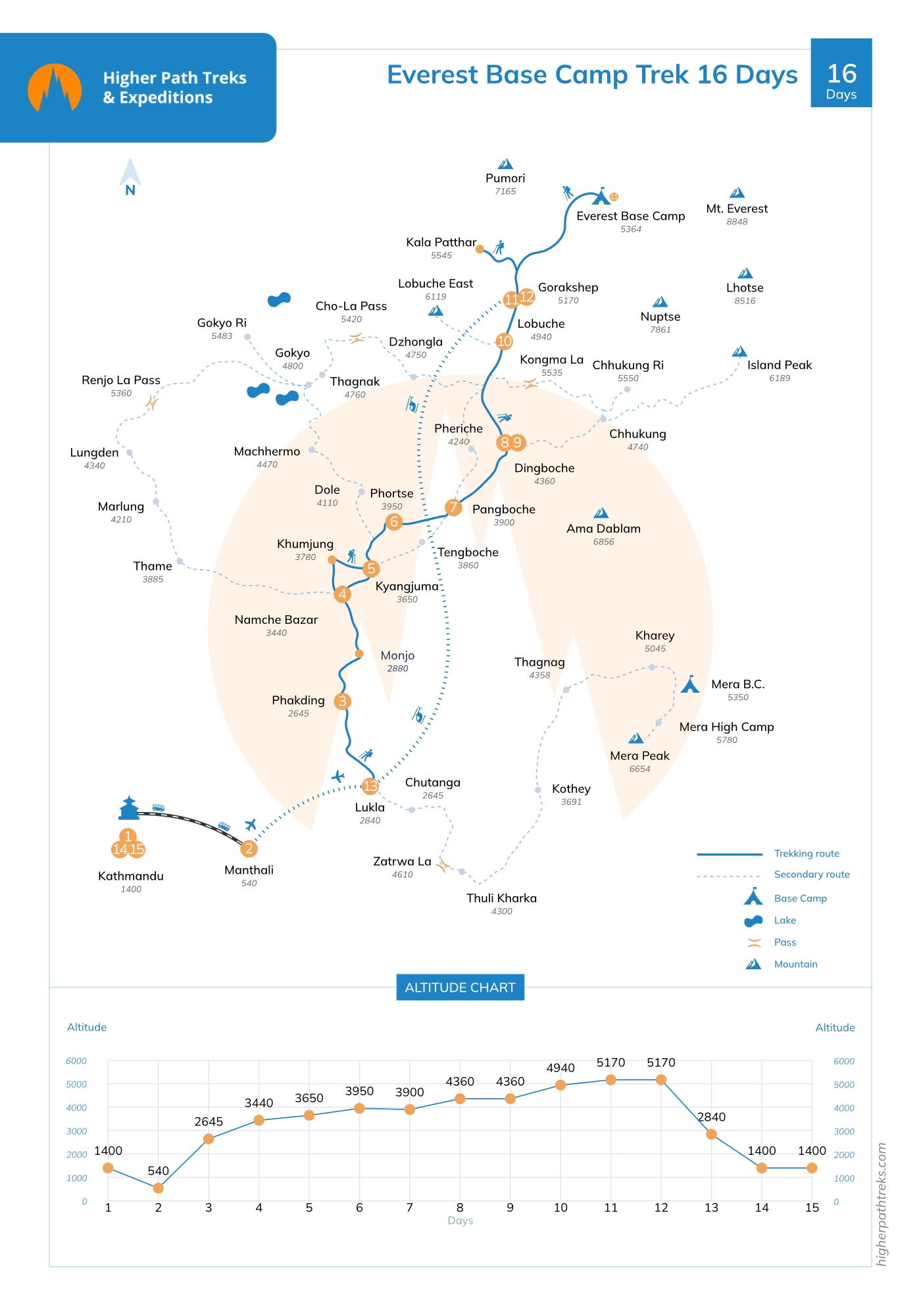
Your Start Date is the day you land in Nepal, and your End Date is when you fly home.
If the set Everest Base Camp Trek 15 Days group dates don’t suit your schedule, we can offer alternative dates upon request.
My 17-day Everest Base Camp Trek with Higher Path Treks & Expeditions was absolutely unforgettable. From the moment I landed in Kathmandu, everything was perfectly organized. The guides were professional, friendly, and very knowledgeable about the mountains and local culture. The trekking route was challenging but incredibly rewarding, with breathtaking views of Everest, Lhotse, and Ama Dablam at every turn. Acclimatization days were well planned, which made the journey safe and comfortable. Reaching Everest Base Camp was a dream come true. I highly recommend Higher Path Treks & Expeditions for anyone planning this once-in-a-lifetime adventure in Nepal.
Our group went to Everest Base Camp with Higher Path Trek. Our guide Phuri, assistant guide Porsu and porters Diwa and Dilu made it possible for us to complete and enjoy the trek. Phuri is very knowledgeable and an expert on the Himalayas that we felt safe and ready on each day of the trek. He is very patient with answering our never ending questions. The team made sure that we are okay and acclimatized. They are very reliable and friendly which made the trek more enjoyable. Karma, the owner also went above and beyond with organizing our trip. I appreciate the flexibility and the warm welcome that he gave us. Higher path trek is a local business supporting small villages. This is my second trip with them and I definitely recommend!
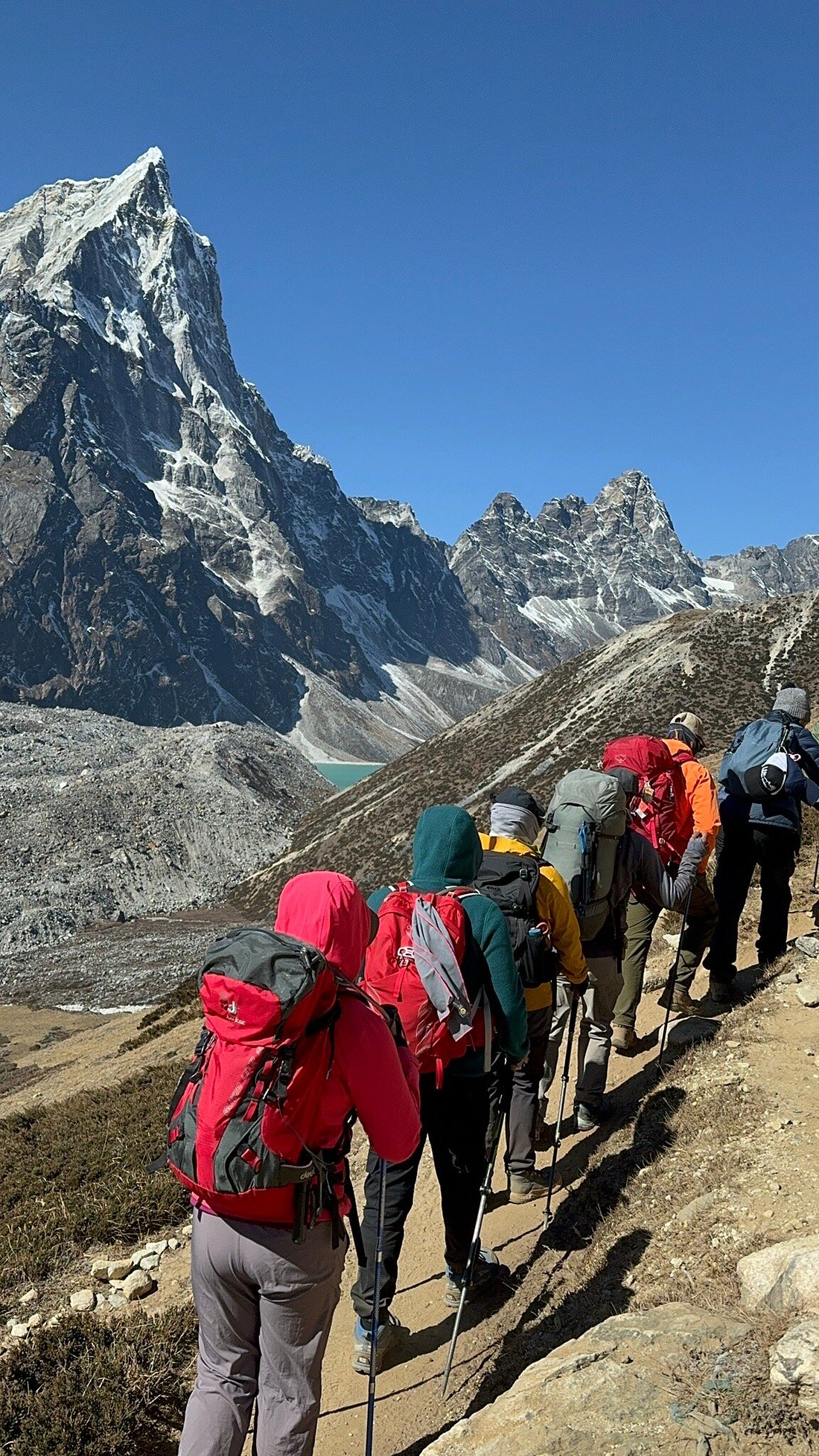
The 14-day itinerary for the Everest Base Camp Trek typically starts with a flight from Kathmandu to Lukla, where the trek begins. From Lukla, you trek through picturesque Sherpa villages like Namche Bazaar, where you spend a day acclimatizing. The route then continues through Tengboche, Dingboche, Lobuche, and Gorak Shep, finally reaching Everest Base Camp itself. After spending time at Base Camp, you trek back via Pheriche, Namche Bazaar, and Lukla, where you catch a return flight to Kathmandu.
The trek is physically demanding due to its length and the altitude gained. Trekkers should be in good physical condition and prepared for daily hikes of 5-7 hours on varied terrain, including steep ascents and descents. Acclimatization days are built into the itinerary to help minimize the risk of altitude sickness.
Highlights include breathtaking views of Mount Everest and other Himalayan peaks, exploring Sherpa culture in traditional villages, visiting Buddhist monasteries like Tengboche Monastery, and standing at Everest Base Camp itself. The trek also offers opportunities to witness stunning landscapes, including glaciers and alpine forests.
Accommodation along the trekking route consists primarily of tea houses (local lodges) that offer basic amenities such as twin-shared rooms with beds and blankets. In larger villages like Namche Bazaar, accommodations may be more comfortable with attached bathrooms and hot showers available for an additional cost.
Yes, travel insurance that covers trekking activities up to the altitudes of Everest Base Camp (usually around 5,500 meters) is essential. This insurance should include coverage for emergency medical evacuation, as well as trip cancellation, loss of belongings, and other unforeseen circumstances.
While it is possible to trek independently, joining a guided tour with a reputable trekking agency is recommended for safety, navigation, and logistical support. Experienced guides and porters enhance the overall trekking experience and provide assistance in case of emergencies.
Packing essentials include sturdy trekking boots, warm clothing layers (including a down jacket), a sleeping bag suitable for cold temperatures, sunglasses with UV protection, sunscreen, a first aid kit, personal medications, toiletries, and a headlamp or flashlight with extra batteries. A detailed packing list can be obtained from your trekking agency.
| No of people | Price per person |
|---|---|
| 1 - 1 | $2,765 |
| 2 - 5 | $2,600 |
| 6 - 10 | $2,580 |
| 11 - 20 | $2,565 |
| No of people | Price per person |
|---|---|
| 1 - 1 | $2,125 |
| 2 - 5 | $1,990 |
| 6 - 10 | $1,965 |
| 11 - 20 | $1,950 |