Need help with booking? Send us a message.
Combine the classic Annapurna Circuit trek with the exhilarating climb of Chulu West Peak for a diverse Himalayan adventure.
Join Higher Path Treks on an extraordinary adventure that combines the classic Annapurna Circuit trek with the exhilarating climb of Chulu West Peak. This expedition is crafted for adventurers seeking a diverse Himalayan experience, blending high-altitude trekking with a thrilling mountaineering challenge amidst the stunning landscapes of the Annapurna region.
Your journey begins in Kathmandu, where you'll be warmly welcomed by the experienced team from Higher Path Treks. After a comprehensive briefing and equipment check, you'll scenic drive to Syange or Jagat (as per situation) via Besisahar, the starting point of the Annapurna Circuit trek. From here, the trail gradually ascends through lush subtropical forests, quaint villages, and terraced fields adorned with blooming rhododendrons (in season).
As you trek deeper into the Annapurna region, you'll encounter diverse landscapes that transition from verdant valleys to arid, high-altitude terrain. The trail takes you through picturesque villages such as Chame, Manang, and Pisang, where traditional Tibetan Buddhist culture thrives amidst stunning Himalayan vistas. Along the way, you'll have opportunities to visit ancient monasteries, interact with friendly locals, and witness breathtaking panoramas of peaks like Annapurna II, III, and IV.
Manang serves as a vital acclimatization point, where you'll rest and explore while adjusting to the increasing altitude. Here, you can delve into the unique culture of the Manangi people, sample local cuisine, and prepare for the challenges ahead. Higher Path Treks ensures a gradual ascent to optimize acclimatization and maximize your chances of summiting Chulu West Peak successfully.
Leaving the main Annapurna Circuit trail, you'll head towards the Chulu West Base Camp, situated in a serene alpine setting surrounded by towering peaks. The base camp serves as your launching point for the climb, with Higher Path Treks' expert guides providing technical briefings and support throughout.
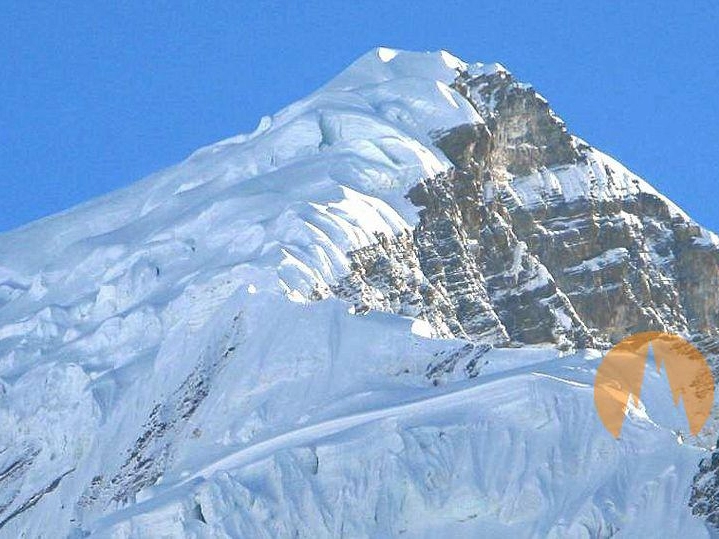
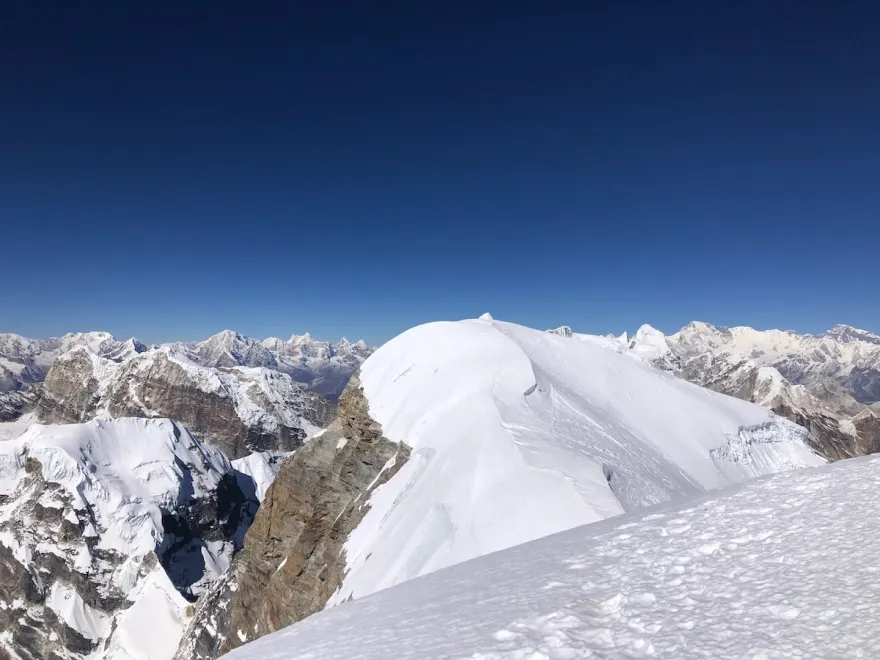
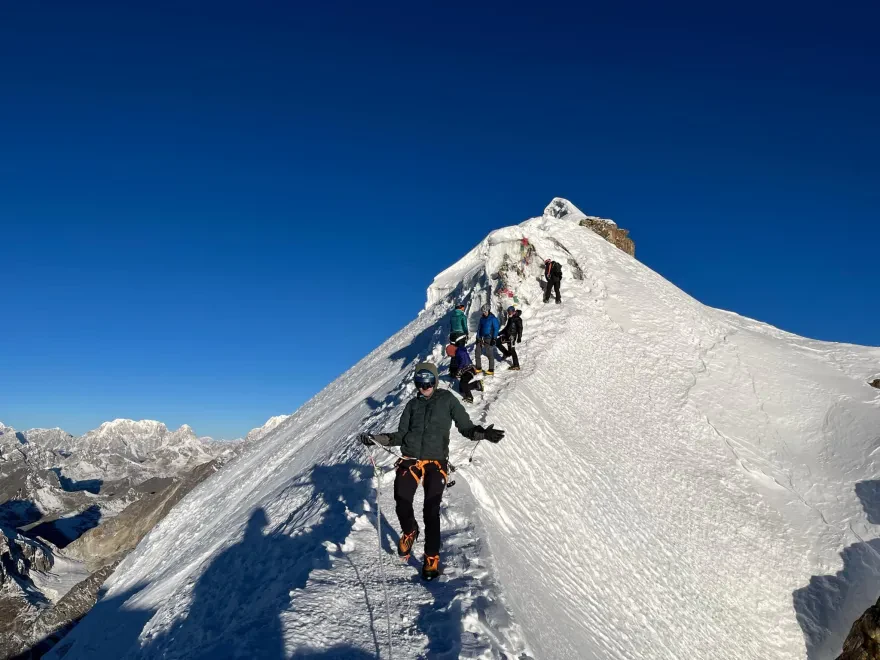
Chulu West Peak (6,419 meters / 21,055 feet) presents a thrilling mountaineering challenge, requiring a combination of physical stamina and technical skill. The ascent involves navigating steep slopes, icy ridges, and possibly encountering crevasses, all under the guidance of experienced mountaineering guides. The reward for your efforts includes unparalleled views of the Annapurna massif, Dhaulagiri, Manaslu, and numerous other peaks that dominate the skyline.
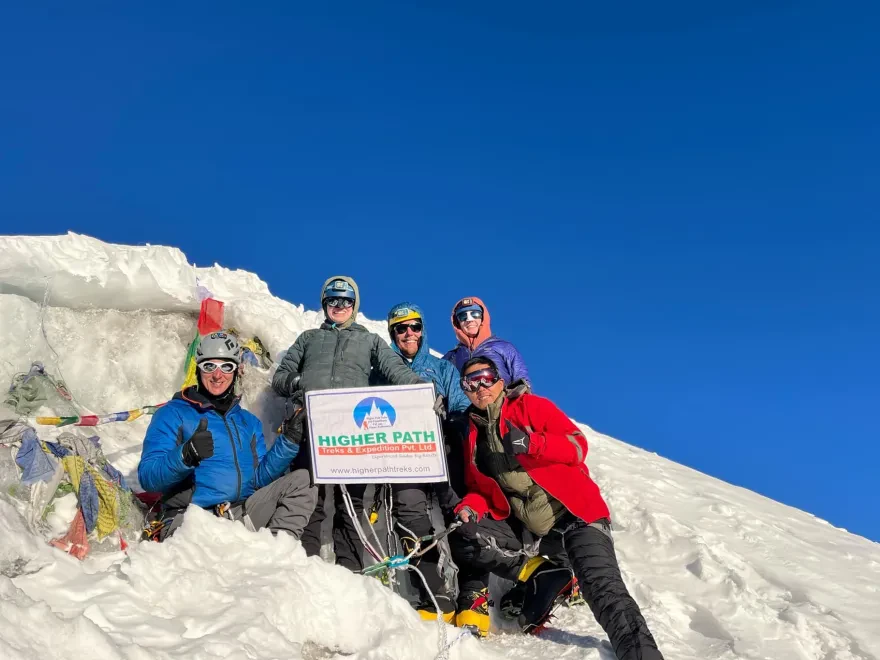
Summit day begins before dawn, as you set out equipped with crampons, ice axes, and ropes to conquer the final push to the summit. The feeling of standing on the roof of the Annapurna region, surrounded by the vastness of the Himalayas, is a moment of triumph and reflection. The panoramic views extend across the entire Annapurna range, creating memories that will last a lifetime.
After descending from Chulu West Peak, you'll rejoin the Annapurna Circuit trail, trekking through picturesque landscapes and serene villages towards Jomsom. Here, you can celebrate your achievements with the team from Higher Path Treks, enjoying local hospitality and reflecting on the incredible journey you've undertaken.
The expedition concludes with a scenic flight from Jomsom to Pokhara, where you can relax amidst the serene lakeside setting before returning to Kathmandu. Throughout the journey, Higher Path Treks prioritizes safety, sustainability, and cultural sensitivity, ensuring a memorable and responsible adventure in the Himalayas.
By choosing to climb Chulu West Peak with Higher Path Treks, you're not only exploring on a challenging mountaineering expedition but also supporting sustainable tourism practices in the Annapurna region. Join us for an unforgettable journey where every step brings you closer to the heart of the Himalayas, leaving an indelible mark on your soul and creating memories that will inspire your adventurous spirit for years to come.
Top Blogs About Trekking in the Annapurna Region:
Uncover the best blogs about trekking in the Annapurna region, featuring expert advice, detailed itineraries, personal experiences, and essential tips for adventurers looking to explore the Himalayas.
Annapurna Base Camp Trek: A Short Journey to the Himalayas
Annapurna Circuit Trek with Tilicho Lake – A Complete Guide by Higher Path Treks & Expeditions
Top Tips for Climbing Pisang Peak on the Annapurna Circuit
Top Reasons to Trek Ghorepani Poon Hill
Top Reasons to Choose Tilicho Lake Trek with Thorong La Pass
Best Experience on the Short Mardi Himal Trek: A Journey to Remember
Top Reasons to Combine Pisang Peak Climbing with the Annapurna Circuit Trek
Comparing Chulu Far East Peak Climbing vs Chulu West Peak Climbing
The most picturesque village Ghandruk
Photography Guide: Capturing the Himalayas Without Expensive Gear
Nepal Peak Climbing 2026: Routes, Tips, and Top Summits
The Best Hiking Adventures: Famous Peak Climbs in 2025
Top Himalayan Peaks for Beginner Climbers: A Comprehensive Guide
Is Peak Climbing in Nepal Easy for Beginners?
Top Best Expedition Packages in Nepal 2025
Experience Mountain View in Nepal
Top Highlights of the Annapurna Base Camp Trek
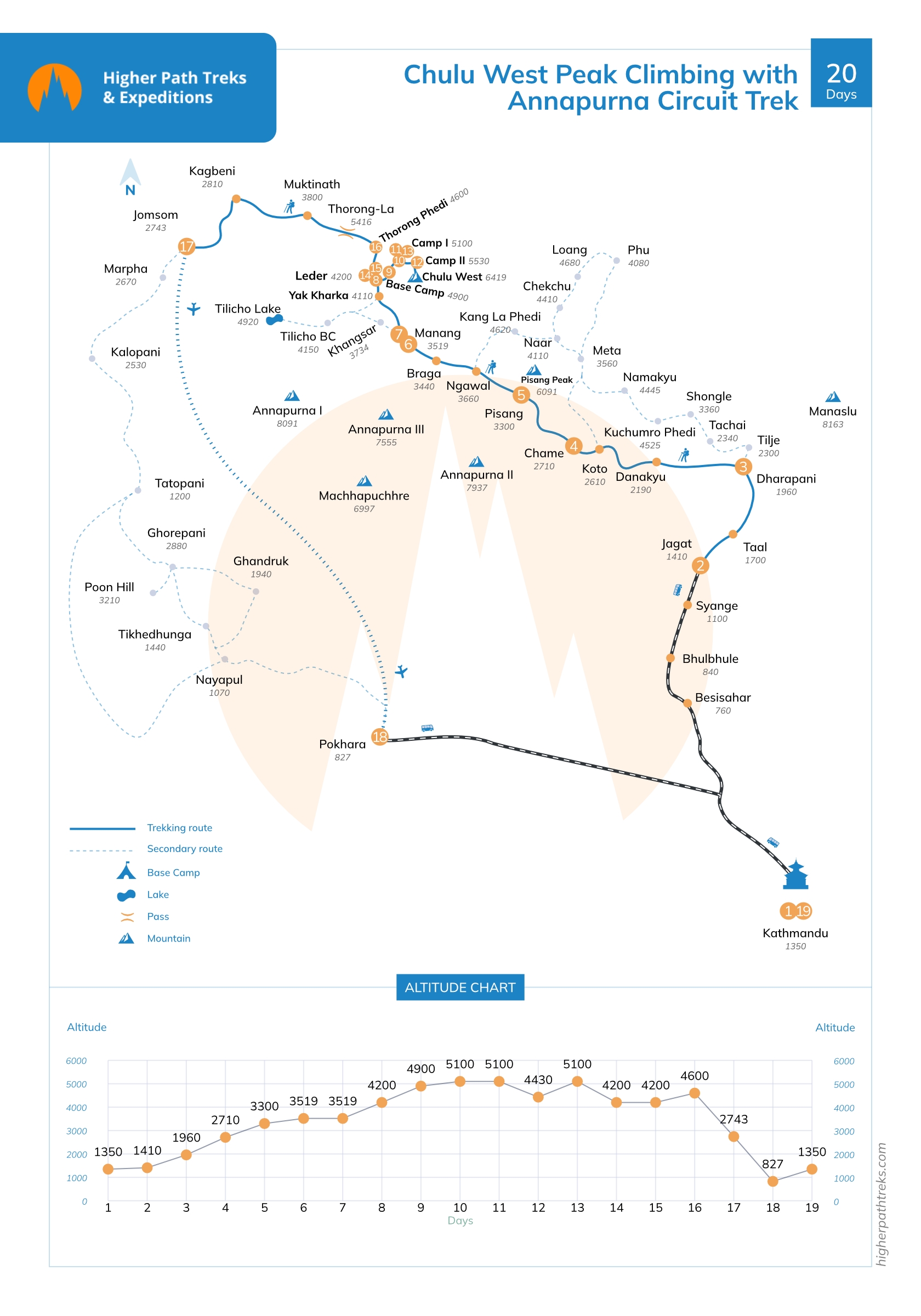
Upon your arrival at Tribhuvan International Airport in Kathmandu, you will be greeted by a representative who will transfer you to your hotel in Thamel, the bustling tourist hub of the city. Depending on your arrival time, you can explore the vibrant streets of Thamel, known for its shops, restaurants, and cultural diversity. In the evening, there will be a pre-trip briefing where you'll meet your climbing guide and fellow climbers. Overnight in Kathmandu.
Early in the morning, Scenic drive from Kathmandu to Syange or Jagat, the starting point of your trek. The drive takes approximately 7-8 hours, passing through picturesque landscapes, terraced fields, and traditional villages. You'll follow the winding Trishuli River and eventually reach Syange or Jagat, where you'll spend the night in a tea house or lodge, preparing for the trek ahead.
Your trekking adventure officially begins today as you trek from Syange or Jagat to Dharapani. The trail initially descends to the Marsyangdi River, which you'll cross over a suspension bridge. From here, the trail gradually ascends through beautiful forests of pine and oak, passing through several small villages. Dharapani is a scenic village with traditional stone houses and terraced fields, marking your entry into the Annapurna Conservation Area. Overnight in Dharapani.
Leaving Dharapani, the trail continues along the Marsyangdi River valley, with stunning views of Manaslu and Lamjung Himal. You'll pass through dense forests of pine and fir, encountering several Mani walls and chortens along the way. After crossing a suspension bridge, you ascend steeply to reach the village of Chame, the administrative center of the Manang district. Chame offers impressive views of Annapurna II and is known for its apple orchards. Overnight in Chame.
Today's trek takes you through dense forests of pine and oak, with occasional views of Annapurna II and Pisang Peak. The trail passes through several small villages and barley fields before reaching the village of Pisang. Upper Pisang, with its traditional Tibetan-style houses and a monastery, offers stunning views of Annapurna II and Pisang Peak. Overnight in Pisang.
The trail from Upper Pisang to Manang offers panoramic views of the Annapurna range, including Annapurna III, Annapurna IV, Gangapurna, and Tilicho Peak. You have the option to take a lower route via Humde village or a higher route via Ghyaru and Ngawal villages, both offering unique cultural insights and breathtaking scenery. Manang is a picturesque village with Tibetan Buddhist culture and is known for its traditional architecture and prayer wheels. Overnight in Manang.
Today is set aside for acclimatization in Manang to help your body adjust to the higher altitudes. You can take a short hike to Gangapurna Lake or visit the Himalayan Rescue Association (HRA) clinic to attend an altitude sickness lecture. Alternatively, you can explore the quaint streets of Manang, visit monasteries, or relax and enjoy the mountain views. This day is crucial for your overall well-being and readiness for the climb ahead. Overnight in Manang.
Leaving Manang, the trail ascends gradually through alpine meadows and yak pastures towards the base of Chulu West. You pass through Gunsang village and Yak Kharka before reaching Leder, a small settlement with basic tea houses. The views of Annapurna III, Gangapurna, and Chulu West are stunning from here. Overnight in Leder.
Today's trek takes you to Chulu West Base Camp, where you'll set up camp in preparation for the climb. The trail ascends steadily through moraines and rocky terrain, with panoramic views of the surrounding peaks. Upon reaching Base Camp, you'll rest and acclimatize, preparing for the climb ahead. Your climbing guide will provide a briefing on climbing techniques and safety measures. Overnight at Chulu West Base Camp.
Today, you'll ascend further towards Camp I on Chulu West. The trail involves navigating through rocky ridges and possibly some snow slopes, depending on the season. Camp I is strategically located for the summit push the following day. Upon reaching Camp I, you'll rest and prepare your equipment for the summit attempt. Overnight at Camp I.
Today is a rest day at Camp I for further acclimatization and final preparations before the summit push. You can review climbing techniques with your guide, check equipment, and ensure you are well-rested and hydrated for the summit attempt. It's crucial to conserve energy and acclimatize properly at this altitude. Overnight at Camp I.
Today's objective is to establish Camp II higher on the mountain, closer to the summit of Chulu West. The climb involves ascending steep sections and negotiating crevasses and icefalls. Camp II provides basic shelter and a strategic position for the summit push. Upon reaching Camp II, you'll rest and prepare for the challenging summit day ahead. Overnight at Camp II.
Today is the highlight of your expedition as you make the summit push for Chulu West Peak. Starting in the early hours of the morning, you'll ascend steep slopes and possibly negotiate technical sections using ropes and crampons. The final push to the summit offers breathtaking views of the Annapurna range and the surrounding Himalayan peaks. After celebrating your achievement at the summit, you'll descend carefully back to Camp I for a well-deserved rest. Overnight at Camp I.
After the summit success, you descend back to Leder, retracing your steps through Camp I and Chulu West Base Camp. The descent allows you to reflect on your climbing achievements and enjoy the changing landscapes. Overnight in Leder.
A contingency day is kept in case of any delays due to weather conditions or if additional rest and acclimatization are needed. If not used, this day can be utilized for exploration or relaxation at Leder.
Leaving Leder, you descend towards Thorong Phedi, the base of the Thorong La Pass. The trail descends through yak pastures and alpine landscapes, offering views of Thorong Peak and the surrounding mountains. Thorong Phedi is a small settlement with basic tea houses, serving as a rest point before crossing the pass the next day. Overnight in Thorong Phedi.
Today is a challenging yet rewarding day as you cross the Thorong La Pass, the highest point on the Annapurna Circuit. Starting early in the morning, you ascend steeply to the pass, marked with prayer flags and offering panoramic views of the Annapurna and Dhaulagiri ranges. After celebrating at the pass, you descend to Muktinath, a sacred pilgrimage site for both Hindus and Buddhists. From Muktinath, the trail descends further to Jomsom, a windy town famous for its apples and as the gateway to Mustang. Overnight in Jomsom.
Early in the morning, you take a short scenic flight from Jomsom to Pokhara, enjoying aerial views of the Annapurna and Dhaulagiri ranges. Upon arrival in Pokhara, you can relax and explore the lakeside area of Pokhara, known for its tranquil atmosphere and stunning mountain views. You have the option to take a boat ride on Phewa Lake or visit local markets. Overnight in Pokhara.
After breakfast in Pokhara, you drive back to Kathmandu, retracing the scenic route through lush hills, terraced fields, and traditional Nepali villages. Upon reaching Kathmandu, you can rest at your hotel or explore more of the city's cultural sites and markets. In the evening, you can celebrate the successful completion of your trek and climbing expedition with a farewell dinner. Overnight in Kathmandu.
Your adventure in Nepal concludes as you are transferred to Tribhuvan International Airport for your departure flight. Depart Kathmandu with cherished memories of your Chulu West Peak Climbing and Annapurna Circuit Trek, along with a sense of accomplishment having conquered one of the Himalayas' majestic peaks.
Your Start Date is the day you land in Nepal, and your End Date is when you fly home.
If the set Chulu West Peak Climbing with Annapurna Circuit Trek group dates don’t suit your schedule, we can offer alternative dates upon request.
The Chulu West Peak Climbing with Annapurna Circuit Trek, organized by Higher Path Treks & Expeditions, was an incredible blend of classic trekking and technical climbing. The route offered diverse landscapes, rich culture, and a thrilling summit experience. Everything was well planned with excellent support and safety throughout. Karma's guidance was professional, reliable, and highly reassuring, making the entire expedition smooth and unforgettable.
The Chulu West Peak Climbing with Annapurna Circuit Trek with Higher Path Treks & Expeditions was an amazing Himalayan adventure combining cultural trekking and a rewarding summit climb. The scenery along the Annapurna Circuit was breathtaking, and the climb to Chulu West was challenging but unforgettable. Everything was very well organized with strong attention to safety and acclimatization. Karma Sherpa’s leadership was excellent, calm, experienced, and highly supportive throughout the journey.
Chulu West Peak Climbing with Annapurna Circuit Trek combines a classic trekking route, the Annapurna Circuit, with a summit attempt on Chulu West Peak (6,419 meters) located in the Manang region of Nepal.
This expedition is challenging and requires prior trekking experience at high altitudes. Climbing Chulu West involves technical aspects like using ropes and crampons. Adequate physical fitness and acclimatization are essential.
Highlights include trekking through diverse landscapes of the Annapurna region, crossing Thorong La Pass (5,416 meters), exploring Manang Valley and its Buddhist culture, and the technical ascent of Chulu West Peak with stunning Himalayan views.
The best seasons are spring (March to May) and autumn (September to November). These months offer stable weather, clear skies, and favorable climbing conditions. Winter climbs are possible but require more preparation due to colder temperatures.
You will need an Annapurna Conservation Area Project (ACAP) entry permit and a climbing permit for Chulu West Peak from the Nepal Mountaineering Association (NMA). Your trekking agency will usually arrange these permits.
Accommodation ranges from teahouses along the Annapurna Circuit to tents during the peak climbing phase. Teahouses provide basic amenities such as meals, beds, and sometimes hot showers, while camping offers a more rugged experience at higher altitudes.
| No of people | Price per person |
|---|---|
| 1 - 1 | $2,900 |
| 2 - 5 | $2,855 |
| 6 - 10 | $2,805 |
| 11 - 20 | $2,755 |
| No of people | Price per person |
|---|---|
| 1 - 1 | $3,100 |
| 2 - 5 | $3,100 |
| 6 - 10 | $3,100 |
| 11 - 20 | $3,100 |