Need help with booking? Send us a message.
The ultimate Himalayan experience combining Everest Base Camp trek with the exhilarating climbs of Lobuche East and Island Peak.
Join Higher Path Treks on a once-in-a-lifetime journey that combines the iconic Everest Base Camp trek with the exhilarating climbs of Lobuche East and Island Peak. This expedition is designed for adventurers seeking the ultimate Himalayan experience, blending challenging climbs with the breathtaking beauty of the Khumbu region.
Your adventure begins in Kathmandu, where you'll be warmly welcomed by the experienced team from Higher Path Treks. After a briefing and equipment check, you'll fly to Lukla, a thrilling and scenic flight that marks the beginning of your trek. From Lukla, the trail winds through vibrant Sherpa villages, prayer flags fluttering in the mountain breeze, and serene valleys dotted with rhododendron forests.
As you trek towards Everest Base Camp, every step brings you closer to the world's highest peak. The trail takes you through iconic landmarks like Namche Bazaar, the bustling hub of the Khumbu region, and Tengboche Monastery, where you can immerse yourself in the spiritual ambiance amidst panoramic mountain views. Along the way, you'll pass through charming Sherpa villages such as Pangboche and Dingboche, gaining insight into the local culture and traditions.
Reaching Everest Base Camp is a monumental achievement in itself, standing at the foot of the Khumbu Icefall and surrounded by towering peaks. The sense of accomplishment and awe as you gaze upon Everest, Lhotse, and Nuptse from this vantage point is unparalleled.
After experiencing the majesty of Everest Base Camp, the focus shifts to mountaineering as you prepare for Lobuche East and Island Peak. Higher Path Treks' experienced guides will conduct thorough briefings and provide technical training to ensure you are well-prepared for the challenges ahead.
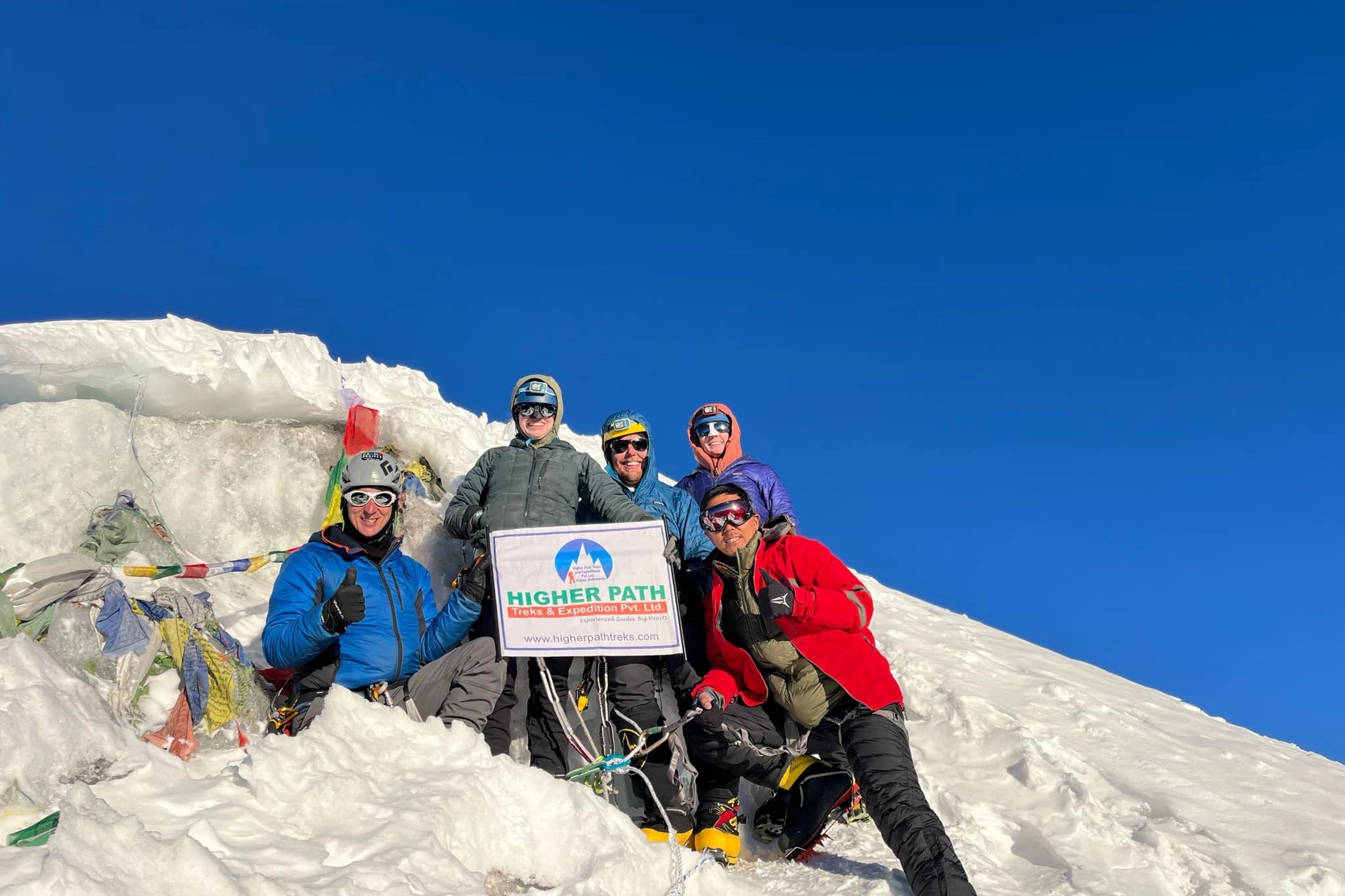
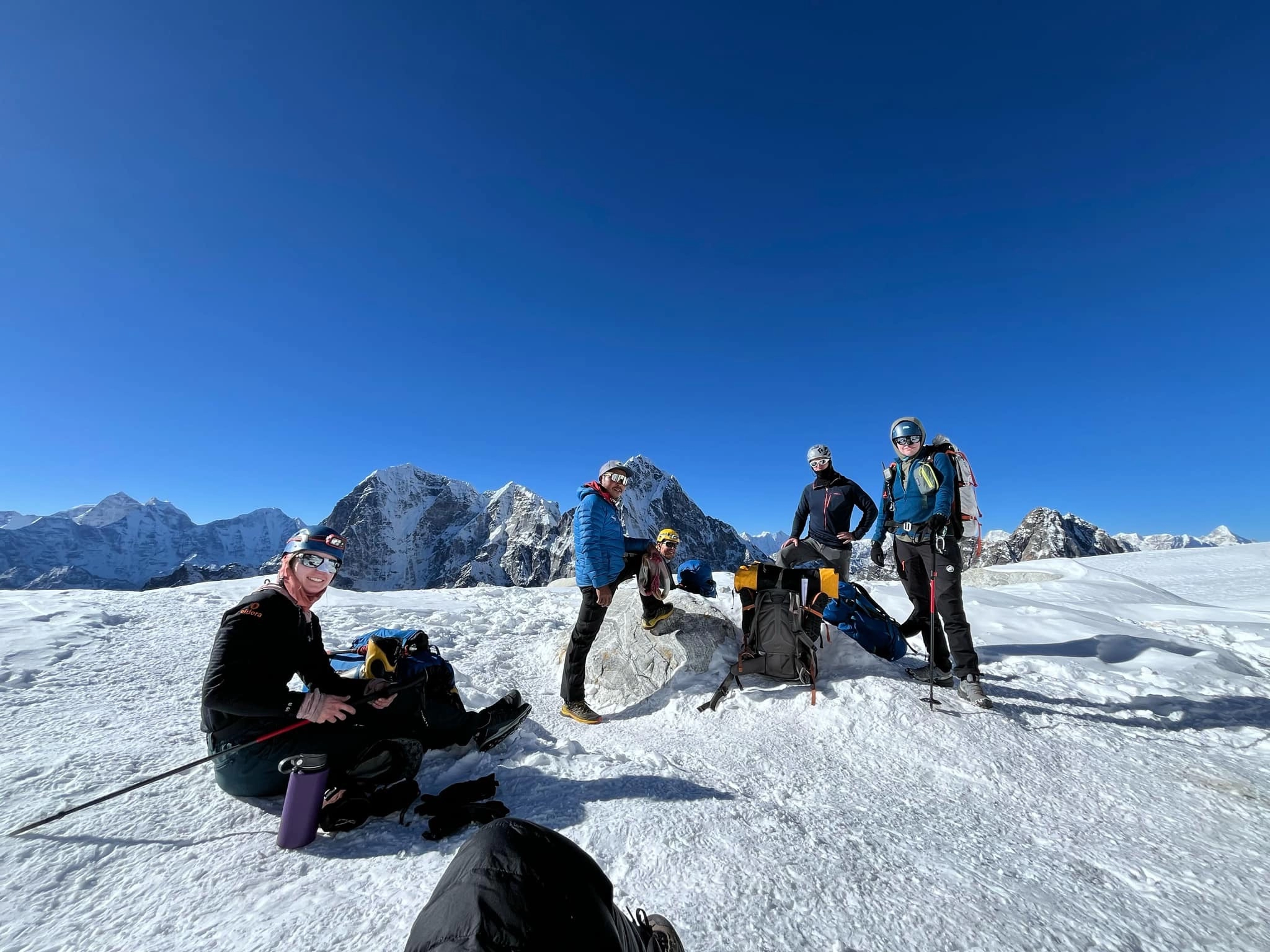
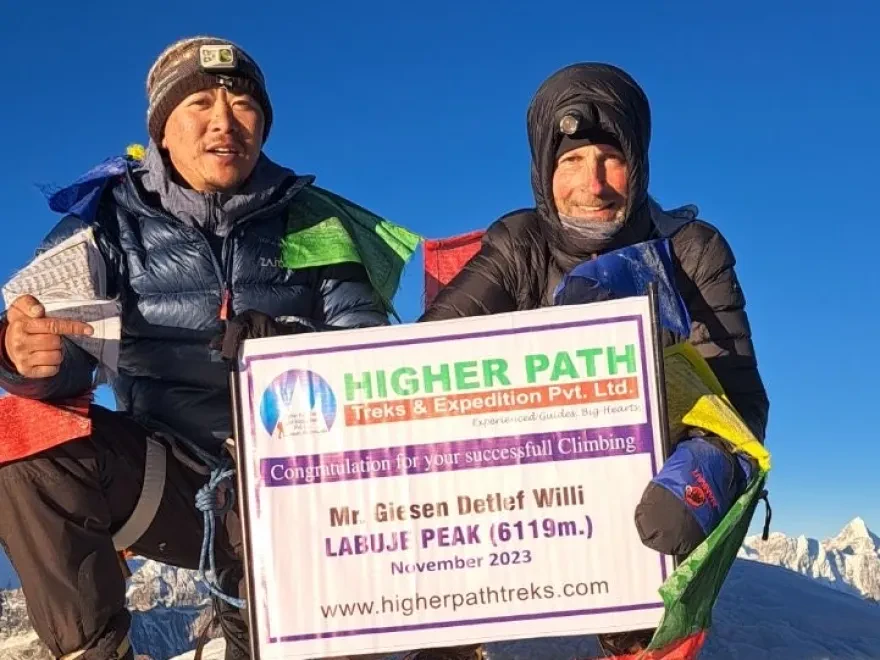
Lobuche East (6,119 meters / 20,075 feet) is your first mountaineering objective. The climb involves traversing snowy slopes and negotiating crevasses under the guidance of seasoned mountaineers. The summit push offers stunning views of the entire Everest massif, including Pumori, Ama Dablam, and Cho Oyu, making it a highlight of the expedition.
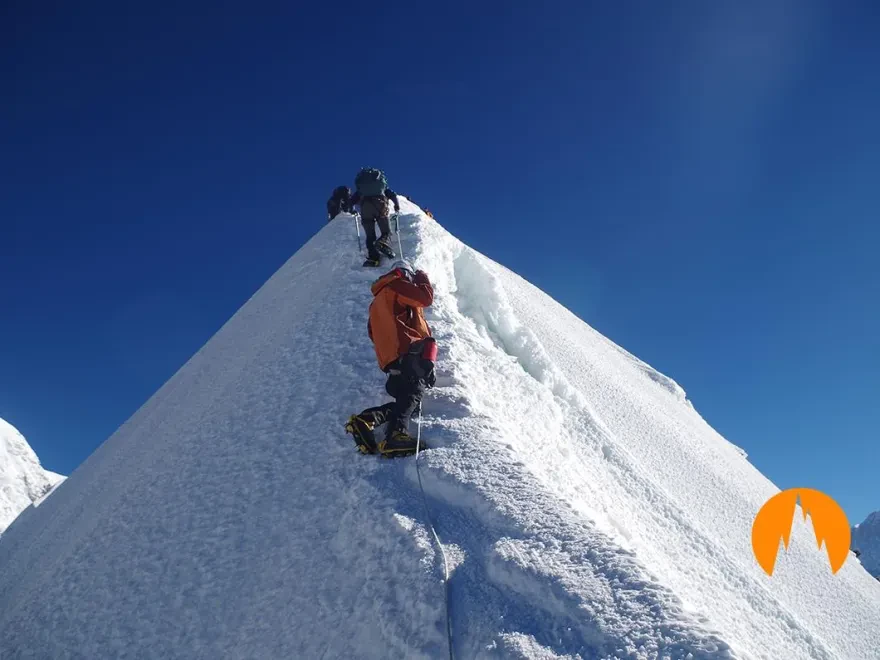
Next, you'll tackle Island Peak (6,189 meters / 20,305 feet), known locally as Imja Tse. This peak is renowned for its challenging ascent and breathtaking summit panorama. The climb requires technical proficiency in using crampons, ice axes, and ropes to navigate steep ice and rock faces. From the summit, the views extend across the Khumbu Glacier and beyond, rewarding your efforts with a sense of accomplishment and awe-inspiring vistas.
Throughout the climbs, safety is paramount, with Higher Path Treks ensuring meticulous planning and support. Experienced Sherpa guides, trained in high-altitude rescue and first aid, accompany you every step of the way, enhancing your safety and confidence.
After successfully summiting Lobuche East and Island Peak, you descend back through the Khumbu Valley, retracing your steps towards Lukla. Each day brings new appreciation for the rugged beauty and spiritual richness of the Himalayas. Celebrate your achievements with the team from Higher Path Treks in Lukla before flying back to Kathmandu, where you can reflect on the incredible experiences and friendships forged during your Himalayan adventure.
Higher Path Treks is committed to responsible tourism practices, respecting the environment and supporting local communities. By choosing this expedition, you not only embark on a life-changing adventure but also contribute to sustainable tourism in the Everest region.
Join Higher Path Treks on this unforgettable journey to Lobuche and Island Peak, where every moment is infused with the spirit of adventure and the majesty of the Himalayas. Whether you're a seasoned climber or embarking on your first high-altitude expedition, this adventure promises memories that will last a lifetime. Discover the magic of the Khumbu region with Higher Path Treks and let the towering peaks and pristine landscapes leave an indelible mark on your soul.
Top Blogs About Trekking in the Everest Region:
Uncover the best blogs about trekking in the Everest region, featuring expert advice, detailed itineraries, personal experiences, and essential tips for adventurers looking to explore the Himalayas.
Photography Guide: Capturing the Himalayas Without Expensive Gear
Everest Luxury Trek: An Unforgettable Himalayan Experience
Nepal Peak Climbing 2026: Routes, Tips, and Top Summits
Solo Trekking to Everest Base Camp: Is It Possible?
Top 10 Highlights of the Everest Base Camp Trek
Successfully Trekking to Everest Base Camp and Kala Patthar
Why Famous Trekkers Choose Everest Base Camp?
Autumn Season to Everest Base Camp Trek
The Best Hiking Adventures: Famous Peak Climbs in 2025
Top Himalayan Peaks for Beginner Climbers: A Comprehensive Guide
Everest Three Peaks: A Beginner’s Guide to the Ultimate Himalayan Challenge
Is Peak Climbing in Nepal Easy for Beginners?
Must-Know Facts About Everest Base Camp Trekking
Why Gokyo Ri is a Must-Visit for Everest Trek Lovers
The Roof of the World: Peak Climbing Journeys through Nepal’s High Country
What to Expect on an Island Peak Climbing Expedition
Mera Peak Climbing Guide for Beginners: Tips, Difficulty & Preparation
Four Peaks, One Journey: Mera, Island, Lobuche & Amphu Lapcha Expedition
Top Best Expedition Packages in Nepal 2025
Which is Easier: Mera Peak or Island Peak?
Why Choose Island Peak Climbing with Everest Base Camp Trek for Beginners
Best Trekking Peaks in Everest Region for Beginners
Experience Mountain View in Nepal
Essentials for Everest Base Camp
Notes
Alternative Transportation Option
In case of flight cancellation, an alternative overland route is available:
This option is commonly used during bad weather or peak trekking seasons when flights are disrupted.
Optional Helicopter Upgrade
Kathmandu – Lukla – Kathmandu Helicopter Service
For greater comfort, flexibility, and to avoid possible flight delays, direct helicopter flights between Kathmandu and Lukla are available.
Helicopter flights are faster, more comfortable, and operate more reliably during unstable weather conditions compared to regular domestic flights.
Travel Recommendation
We strongly recommend keeping a few extra buffer days in your travel itinerary before international flights, especially during the busy spring and autumn trekking seasons, as weather-related delays in the Everest region are common.
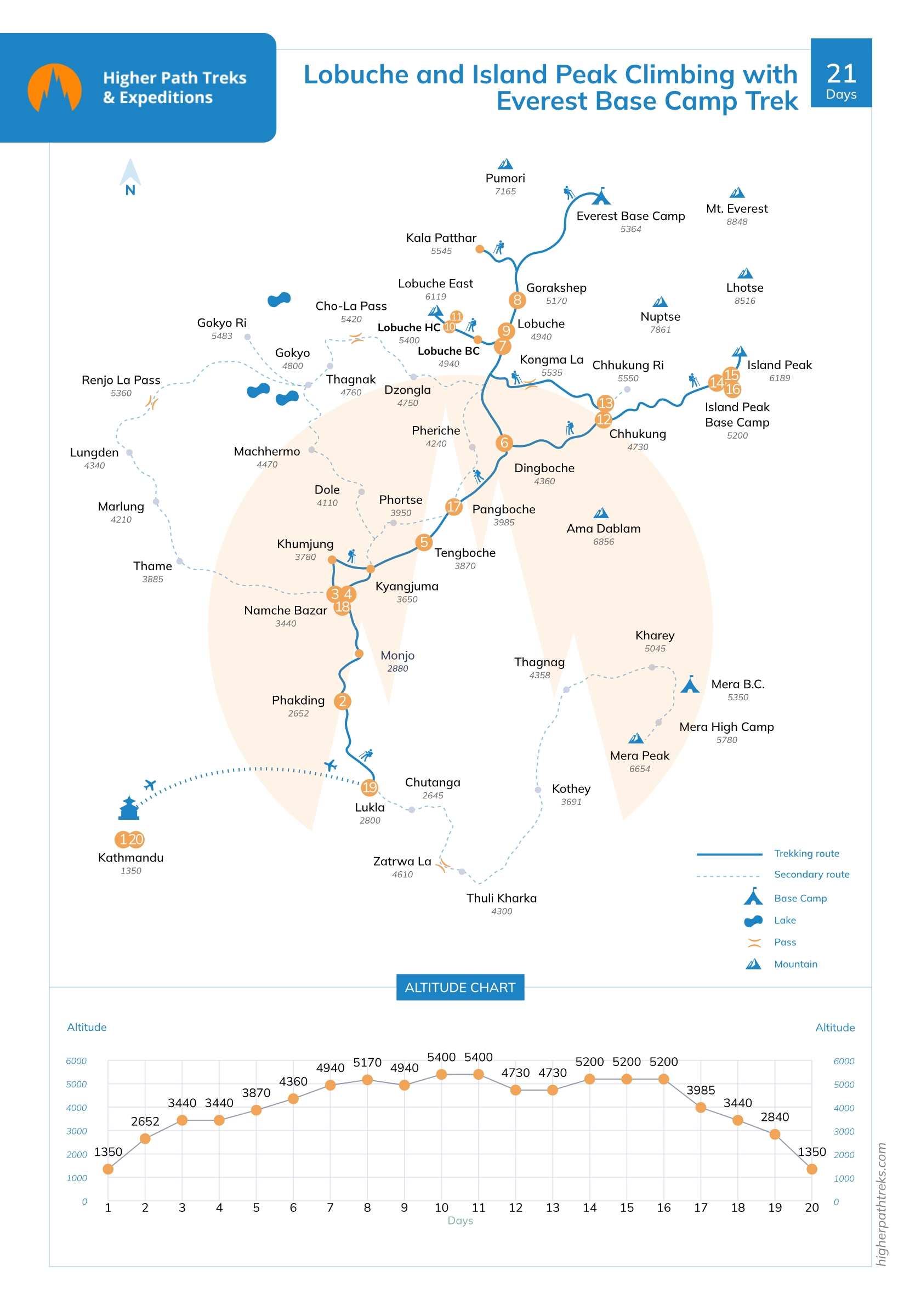
Upon your arrival at Tribhuvan International Airport in Kathmandu, you will be greeted by a representative who will transfer you to your hotel in Thamel, the bustling tourist hub of the city. After settling in and refreshing yourself, you can explore the vibrant streets of Thamel, known for its shops, restaurants, and cultural diversity. In the evening, there will be a briefing about the trek and climbing expedition. Overnight in Kathmandu.
Early in the morning, you will take a scenic flight from Kathmandu to Lukla, the gateway to the Everest region. The flight itself is an adventure, offering stunning views of the Himalayan peaks. Upon arrival in Lukla, you meet your trekking crew and begin your trek to Phakding. The trail descends through pine forests, passing through several small villages and teahouses. You'll cross several suspension bridges over the Dudh Koshi River, finally reaching Phakding where you spend the night.
Today’s trek continues along the Dudh Koshi River, crossing it multiple times via suspension bridges adorned with prayer flags. You enter Sagarmatha National Park at Monjo, where your permits will be checked. The trail ascends steeply after Jorsale, bringing you to the famous Namche Bazaar, a bustling town and the commercial hub of the Everest region. You'll have your first glimpse of Everest and surrounding peaks from here. Overnight in Namche Bazaar.
Acclimatization is crucial for adjusting to the increasing altitude. Today, you have the option to hike to Everest View Hotel for panoramic views of Everest, Lhotse, Ama Dablam, and other peaks. Alternatively, you can explore the Sherpa Culture Museum or hike to Khumjung village to see the Hillary School and a monastery with a purported Yeti scalp.
Leaving Namche Bazaar, the trail ascends gradually through rhododendron and juniper forests with magnificent views of Everest, Lhotse, and Ama Dablam. You pass through the village of Phunki Thenga before reaching Tengboche, home to the largest monastery in the Everest region, where you can attend a prayer ceremony if timing permits. Overnight in Tengboche.
The trek descends through forests to Deboche and crosses a suspension bridge over the Imja Khola. You then climb up past Pangboche village, the oldest Sherpa village in the region, and continue to Dingboche. The views of Island Peak, Lhotse, and Ama Dablam are spectacular from here. Overnight in Dingboche.
Today’s trek gains altitude gradually as you trek towards Duglha, where you stop for lunch. The trail then ascends the steep terminal moraine of the Khumbu Glacier, passing memorials to climbers who have lost their lives on Everest. You continue to Lobuche, a small settlement with teahouses offering stunning views of Nuptse. Overnight in Lobuche.
Today is a challenging day as you trek to Everest Base Camp, the starting point for Everest expeditions. The trail traverses rocky moraines and ice-covered terrain, offering close-up views of the Khumbu Icefall. After spending time at Base Camp, you return to Gorak Shep for the night, nestled under the shadow of Pumori.
Early in the morning, you hike to Kala Patthar, a famous viewpoint offering the best sunrise views over Everest, Nuptse, and Lhotse. The climb is challenging but rewarding as you soak in the panoramic Himalayan vista. After descending back to Gorak Shep for breakfast, you continue trekking back to Lobuche for the night.
Today, you trek to Lobuche High Camp, a strategic point for your Lobuche summit bid. The afternoon is dedicated to pre-climb training and preparations with your climbing guide. You'll go over basic climbing techniques, safety measures, and equipment usage to ensure you are well-prepared for the summit push. Rest early to prepare for the summit day ahead.
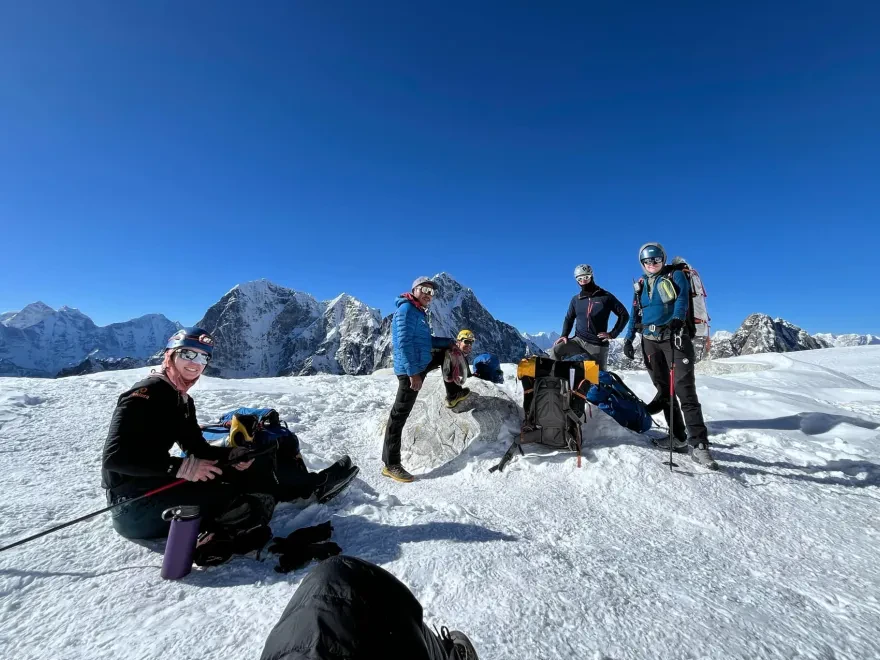
Today is the highlight of your climbing expedition as you attempt to summit Lobuche East Peak. You start early in the morning, navigating through rocky terrain and possibly snow-covered slopes. The climb is technically challenging, requiring the use of climbing gear such as crampons, ropes, and ice axes. Upon reaching the summit, you are rewarded with breathtaking views of Everest, Lhotse, Nuptse, and surrounding peaks. After celebrating your achievement, you descend carefully back to High Camp for the night.
Leaving Lobuche behind, you descend towards Chhukung, retracing your steps through Lobuche and Dingboche. Chhukung is a small village situated below Island Peak and is a popular resting point for climbers attempting the peak. Overnight in Chhukung.
Today is a well-deserved rest day in Chhukung to recover from the climbing efforts and to prepare for the upcoming Island Peak summit push. You can explore around Chhukung, take short hikes for acclimatization, or simply relax and enjoy the mountain views.
Today’s trek takes you to Island Peak Base Camp, located beneath the south face of the peak. The trail gradually ascends through rocky moraines and glacial terrain, offering stunning views of the surrounding peaks. Upon reaching Base Camp, you settle in and prepare for the summit attempt the following day. Overnight at Island Peak Base Camp.
Today is the summit day for Island Peak, the most technical part of your climbing expedition. You start early in the morning, navigating through rocky ridges and a steep snow slope. The final push to the summit involves the use of climbing equipment under the guidance of your experienced climbing guide. From the summit, you are treated to incredible views of Lhotse, Nuptse, Makalu, and other peaks. After celebrating your achievement, you descend back to Base Camp for a well-deserved rest.
A contingency day is kept in case of unfavorable weather or if additional acclimatization or rest is needed before the descent. If not used, this day can be used for additional exploration or relaxation.
After the successful climb of Island Peak, you descend towards Pangboche, retracing your steps through Dingboche and Tengboche. The descent offers different perspectives of the landscapes you passed through earlier. Pangboche is a picturesque Sherpa village with a monastery and is a pleasant place to spend the night.
Continuing your descent, you trek back towards Namche Bazaar via Tengboche. The trail descends steeply through forests and past small settlements, offering opportunities to reflect on your climbing achievements. Overnight in Namche Bazaar.
Today marks the final leg of your trekking journey as you descend from Namche Bazaar to Lukla. The trail winds through forests and past Sherpa villages, with occasional glimpses of Everest and other peaks. Upon reaching Lukla, you celebrate the completion of your trek with your team. Overnight in Lukla.
In the morning, you take a scenic flight back to Kathmandu, enjoying the final views of the Himalayas from the air. Upon arrival in Kathmandu, you can rest at your hotel or explore more of the city's cultural sites and markets. This is also a good opportunity for souvenir shopping and enjoying a farewell dinner with your climbing companions.
Your adventure in Nepal concludes as you are transferred to Tribhuvan International Airport for your departure flight. Depart Kathmandu with cherished memories of your trekking and climbing achievements in the Everest region.
Your Start Date is the day you land in Nepal, and your End Date is when you fly home.
If the set Lobuche and Island Peak Climbing with Everest Base Camp Trek group dates don’t suit your schedule, we can offer alternative dates upon request.
Love, love, love Karma and Higher Path Treks. Arriving in Nepal, I had no idea what I was going to do, but Karma came with glowing recommendations. I told him I had a month to trek, and he recommended I do the Three Passes Trek + climb Island Peak in the Khumbu region. Long story short, it was a magical experience, and my guides Pema and Sonam Tsering are now my good friends. Later on, I participated in a Himalayan Alpine Climbing Course run in part by Karma. The course was a month long, and at the end we climbed Mera Peak. It was an experienced that pushed me mentally and physically, and it was amazing to be on that mountain with Karma and the others. Go with Higher Path Treks, you will not be disappointed!
The Lobuche and Island Peak Climbing with Everest Base Camp Trek, organized by Higher Path Treks & Expeditions, was an extraordinary high-altitude adventure. The journey combined the classic EBC trek with two rewarding summit climbs, making it both challenging and unforgettable. Everything was expertly managed with great attention to safety, acclimatization, and logistics. Karma Sherpa’s leadership was outstanding, calm, professional, and highly experienced, ensuring a successful and memorable Himalayan expedition.
This expedition combines the classic Everest Base Camp Trek with ascents of two challenging peaks: Lobuche East (6,119 meters) and Island Peak (6,189 meters) in the Everest region of Nepal.
This trek and climbing expedition is strenuous and demanding, requiring prior high-altitude trekking and some technical climbing experience. It involves glacier crossings, steep ascents, and exposure to high-altitude conditions.
Highlights include trekking to Everest Base Camp, experiencing breathtaking views of Everest, Lhotse, and Nuptse, crossing the challenging Cho La Pass, summiting Lobuche East and Island Peak, and exploring Sherpa culture in villages like Namche Bazaar and Pangboche.
The best seasons for this expedition are spring (March to May) and autumn (September to November). These months offer stable weather, clear skies, and optimal climbing conditions.
You will need a Sagarmatha National Park entry permit and climbing permits for Lobuche East and Island Peak from the Nepal Mountaineering Association (NMA). Your trekking agency will usually arrange these permits.
Yes, it is highly recommended to hire an experienced guide or join a reputable trekking agency. They provide essential support, ensure safety during climbing, have knowledge of the terrain, and assist with permits and logistics.
Essential gear includes crampons, ice axe, harness, helmet, trekking poles, down jacket, sleeping bag suitable for sub-zero temperatures, sturdy trekking boots, and appropriate clothing for extreme weather conditions and climbing.
Start preparing by building endurance through regular hiking and trekking. Familiarize yourself with high-altitude environments and practice using mountaineering gear. Mental preparation is also crucial as the expedition involves physical challenges and unpredictable weather.
| No of people | Price per person |
|---|---|
| 1 - 1 | $3,900 |
| 2 - 5 | $3,400 |
| 6 - 10 | $3,350 |
| 11 - 20 | $3,330 |
| No of people | Price per person |
|---|---|
| 1 - 1 | $3,900 |
| 2 - 5 | $3,400 |
| 6 - 10 | $3,350 |
| 11 - 20 | $3,330 |
| No of people | Price per person |
|---|---|
| 1 - 1 | $4,850 |
| 2 - 5 | $4,500 |
| 6 - 10 | $4,445 |
| 11 - 20 | $4,415 |