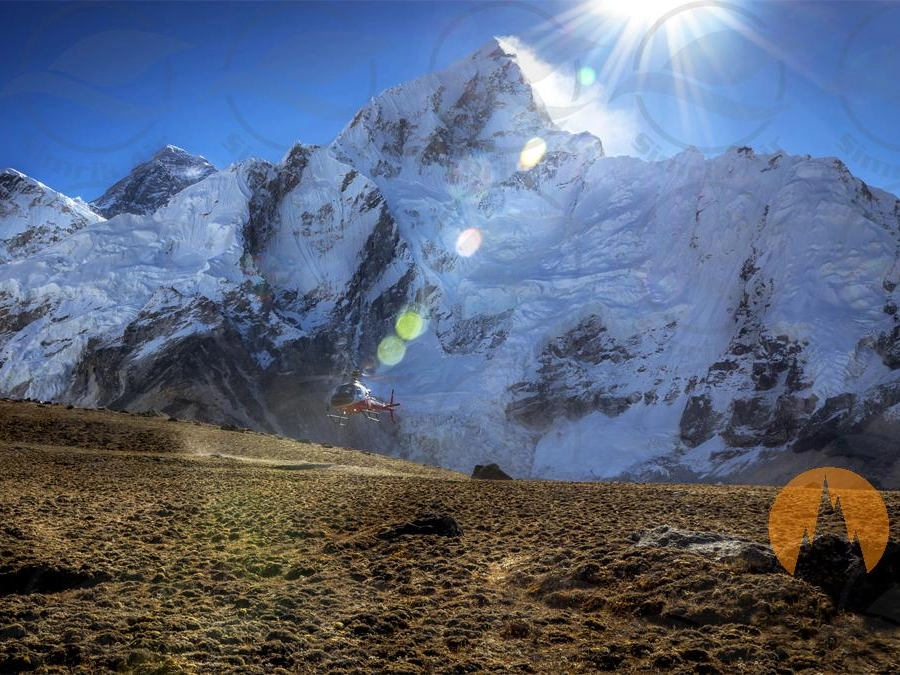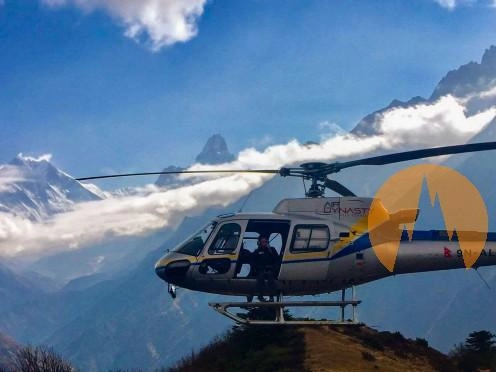
Combine the classic Everest Base Camp trek with a spectacular helicopter return for a perfect fusion of adventure and luxury.

The Everest Base Camp trek with helicopter return represents the perfect fusion of adventure and luxury, offering trekkers an extraordinary way to experience the world's most iconic mountain while adding a spectacular aerial finale to their journey. This innovative approach combines the traditional trekking experience with modern convenience, allowing adventurers to walk the legendary trails to Everest Base Camp before returning to Kathmandu in style aboard a helicopter, witnessing the magnificent Himalayas from a completely different perspective.
Traditional Everest Base Camp treks require two weeks or more, with roughly equal time spent ascending and descending the same route. The helicopter return option transforms this equation, reducing the overall trip duration while maintaining the full trekking experience to base camp. This means you still experience every challenging ascent, every cultural encounter, and every breathtaking viewpoint on the way up, but eliminate the repetitive descent, replacing it with an unforgettable aerial journey.
The helicopter return serves multiple purposes beyond simple time-saving. For trekkers with limited vacation time, it makes the Everest Base Camp dream achievable within a tighter schedule. For those who've accomplished their goal and prefer not to retrace their steps downward, it offers a fresh perspective. And for anyone seeking that special touch of luxury to cap off their Himalayan adventure, few experiences compare to soaring past Everest's summit at eye level, watching the Khumbu landscape unfold beneath you like a living map.
This option has grown increasingly popular among adventurers who want to maximize their limited time in Nepal, professionals who can't afford three weeks away from work, and travelers who recognize that the descent, while pleasant, doesn't offer the same sense of discovery and achievement as the ascent. The helicopter return transforms logistics into an adventure, converting travel time into an experience worth cherishing.
Your adventure starts in Kathmandu, where the ancient and modern collide in fascinating ways. After spending time exploring the capital's rich cultural heritage—from the sacred stupas to bustling bazaars—you'll prepare for the trek ahead. The pre-departure briefing with your guide covers essential details about altitude, pacing, and what to expect in the days ahead.
The flight from Kathmandu to Lukla provides your first taste of Himalayan aviation. This legendary journey takes you over terraced hillsides, rushing rivers, and eventually into the heart of the mountains. Lukla's Tenzing-Hillary Airport, famous for its short, dramatically sloped runway, delivers an adrenaline-charged introduction to the Khumbu region. As your plane touches down on this mountainside airstrip, you'll understand why mountain flying requires special skills and nerves of steel.
Stepping off the aircraft in Lukla, situated at 2,860 meters, marks the official beginning of your trekking journey. The town buzzes with activity—porters organizing loads, trekkers adjusting their packs, and lodge owners welcoming new guests. This energetic atmosphere reflects Lukla's role as the gateway to Everest, where thousands of dreams begin their transformation into reality each year.
The trek from Lukla follows the Dudh Koshi River valley, a route that has carried mountaineering legends and everyday adventurers alike toward Everest for decades. Each day brings dramatic landscape changes as you gain altitude. The lower valleys feature lush vegetation—rhododendron forests that burst into spectacular bloom during spring, pine trees releasing their distinctive scent, and terraced fields where Sherpa farmers cultivate crops using traditional methods.
Suspension bridges become regular features, their prayer flag decorations adding splashes of color against the mountain backdrop.These swaying structures span deep gorges where glacial rivers thunder below, their milky-blue waters colored by rock flour ground fine by glacial movement. Each bridge crossing provides photo opportunities and slight adrenaline spikes, particularly when yak trains approach from the opposite direction, requiring trekkers to press against the bridge sides to let these powerful animals pass.
As you ascend, the character of the landscape evolves dramatically. Thick forests give way to alpine shrublands, which eventually yield to stark, high-altitude terrain where only the hardiest plants survive. This transformation happens gradually enough that your body adjusts to the decreasing oxygen, yet dramatically enough that you notice profound changes in your surroundings. The air becomes crisper, thinner, and somehow cleaner, while the mountain views grow increasingly spectacular with each kilometer gained.
Namche Bazaar stands as the commercial and cultural heart of the Khumbu region, a remarkable amphitheater-shaped settlement carved into the mountainside at 3,440 meters. This town defies expectations—instead of the simple mountain village you might anticipate, Namche offers bakeries producing fresh croissants, shops selling high-end trekking gear, and restaurants with menus featuring everything from traditional dal bhat to pizza and pasta.
The town's prosperity reflects its strategic position on the Everest trail and the entrepreneurial spirit of its Sherpa inhabitants. For generations, Sherpas have facilitated trade between Tibet and Nepal, and today they extend that hospitality to trekkers and mountaineers from around the world. The Saturday market, where villagers from surrounding areas gather to trade goods, offers fascinating insights into local commerce and culture.
Spending two nights in Namche allows crucial acclimatization. The golden rule "climb high, sleep low" guides your rest day activities. Most trekkers hike to the Everest View Hotel, perched at 3,880 meters, where the terrace delivers stunning panoramas of Everest, Lhotse, and the distinctive pyramid of Ama Dablam. This acclimatization hike serves a dual purpose—helping your body adjust to altitude while providing some of the trek's most memorable views.
Alternative activities include visiting the villages of Khumjung and Khunde, where the Khumjung monastery supposedly houses a yeti scalp, adding mystique to your cultural exploration. The Sherpa Culture Museum provides comprehensive insights into the history, traditions, and mountaineering heritage of this remarkable people who call these high valleys home.
The trail from Namche to Tengboche involves descending to the Dudh Koshi River before climbing through beautiful forests to reach the monastery complex. This journey showcases the trek's variety—steep descents, challenging ascents, peaceful forest sections, and eventually the stunning mountain panorama that Tengboche commands.
Tengboche Monastery, situated at 3,867 meters, represents the largest and most significant Buddhist monastery in the Khumbu region. Its position offers one of the Himalayan region's most iconic views. From the monastery courtyard, Everest, Lhotse, Nuptse, and Ama Dablam create an amphitheater of snow-capped peaks that seems almost too spectacular to be real. Photographers wait hours for perfect light conditions, while trekkers simply stand in awe, absorbing the profound beauty.
If your timing aligns with prayer sessions, witnessing the monks perform their evening rituals adds spiritual depth to the physical challenge of trekking. The deep resonance of ceremonial horns, the rhythmic chanting, and the monastery's ornate interior decorations create an atmosphere that transcends religious boundaries. Even those without Buddhist beliefs find these ceremonies moving and memorable.
The monastery suffered destruction in the 1934 earthquake and a devastating fire in 1989, but was rebuilt with support from the international community, symbolizing the global connection to this region. Today it stands as both an active religious center and a cultural landmark, welcoming trekkers who respectfully observe its customs while appreciating its architectural and spiritual significance.
Continuing upward, the trail leads to Dingboche, a village situated at 4,410 meters amidst stunning scenery. Stone walls cross the landscape in intricate patterns, protecting terraced fields from harsh winds and creating a patchwork appearance unique to this region. These walls, built over generations without mortar, demonstrate the ingenuity required to farm at such extreme altitudes.
Dingboche serves as another crucial acclimatization stop. The altitude here affects everyone differently—some feel energetic, while others struggle with headaches and fatigue. This is your body's way of communicating its adjustment process. Proper acclimatization at Dingboche significantly improves your chances of reaching Everest Base Camp comfortably and safely.
The acclimatization day typically includes a hike to Nagarjun Hill or Chhukung, gaining additional altitude before returning to sleep at Dingboche's elevation. These side trips provide spectacular viewpoints—Nagarjun Hill offers 360-degree panoramas of Makalu, Lhotse, and Island Peak, among others. The effort required at this altitude leaves you breathless, but the views justify every labored step.
Evenings in Dingboche revolve around the lodge's dining room, where a central stove provides warmth and trekkers from around the world share stories, advice, and companionship. These communal experiences, where strangers become friends through shared challenges, represent one of trekking's greatest joys that luxury hotels can never replicate.
As you trek beyond Dingboche toward Lobuche, the landscape becomes increasingly stark and otherworldly. Vegetation disappears almost entirely, replaced by rock, ice, and moraine. The trail passes memorials to mountaineers who lost their lives on Everest—stone chortens adorned with photos and prayer flags that create sobering reminders of the mountains' inherent dangers.
These memorials serve important purposes beyond commemoration. They remind trekkers that while the trekking route to base camp is relatively safe when properly approached, the mountains command respect. They also honor the Sherpas and international climbers who contributed to Himalayan mountaineering history, sometimes making the ultimate sacrifice in pursuit of summit dreams.
Lobuche sits at 4,940 meters, where the thin air makes even simple tasks feel exhausting. The lodges here provide basic but functional accommodation—nothing fancy, but everything you need. Electricity is limited, running water scarce, and warmth precious. Yet the location is priceless, surrounded by some of Earth's highest peaks.
From Lobuche, it's a relatively short but challenging trek to Gorak Shep, the last permanent settlement at 5,164 meters before Everest Base Camp. The name means "dead ravens" in Sherpa language, reflecting the harsh environment where few living things survive. Gorak Shep sits on what was once a lakebed, now a flat, sandy area surrounded by towering peaks and glacial moraines.
While Everest Base Camp represents the trek's nominal destination, Kala Patthar provides superior views of Everest's summit. This black rock peak, rising to 5,545 meters, offers unobstructed panoramas that base camp's valley position cannot match. Most trekkers climb Kala Patthar either the afternoon of their base camp day or the following morning for sunrise.
The sunrise climb begins in darkness, trekkers using headlamps to navigate the steep, rocky trail. The altitude makes this relatively short climb feel like a marathon—every step requires multiple breaths, and rest breaks come frequently. But perseverance pays off spectacularly. As you approach the summit, the eastern horizon begins glowing, heralding the approaching sunrise.
When the first sunlight strikes Everest's summit, the mountain transforms before your eyes. The snow glows golden, then pink, then brilliant white as the sun climbs higher. You can see the South Col, the route climbers take toward the summit, and the massive cornices that crown the ridgelines. On exceptionally clear days, visibility extends for hundreds of kilometers in every direction.
From Kala Patthar, Everest dominates the view, but you're also surrounded by other giants—Nuptse's massive wall, Pumori's elegant pyramid, and the entire amphitheater of peaks that defines this region. The Khumbu Glacier spreads below, its surface crevassed and contorted by the immense forces of moving ice. Prayer flags left by previous trekkers snap in the constant wind, adding color and movement to the frozen landscape.
After descending from Kala Patthar, most trekkers make the pilgrimage to Everest Base Camp itself. The trail follows the Khumbu Glacier's lateral moraine—a rocky ridge created by glacial movement—for several kilometers. This section requires careful foot placement as the path winds up and down over uneven, sometimes unstable terrain.
Everest Base Camp sits at approximately 5,364 meters on the Khumbu Glacier, though its exact location shifts annually as the ice moves. During climbing season (typically April and May), base camp transforms into a small city of colorful tents housing hundreds of climbers and support staff. The atmosphere buzzes with activity—teams organizing equipment, acclimatizing for higher camps, and preparing for summit attempts.
Outside climbing season, the site sits nearly empty, marked mainly by prayer flags and the occasional memorial. Yet even without the tents and activity, standing at base camp delivers profound emotions. This is where mountaineering legends stood before attempting Everest. This is where dreams transform into action, where preparation meets opportunity, where human ambition confronts natural grandeur.
The massive Khumbu Icefall looms above base camp, its chaotic jumble of ice seracs and deep crevasses clearly demonstrating why this section ranks among mountaineering's most dangerous passages. Watching it through binoculars or telephoto lenses, you'll see the scale of the challenge that summit climbers face—each of those ice towers stands stories tall, and the ladders crossing crevasses look impossibly fragile from this distance.
After photos, celebration, and reflection, you'll return to Gorak Shep, processing the accomplishment. You've walked for days to reach this spot, gaining over 3,000 vertical meters from Lukla, crossing countless suspension bridges, climbing steep mountain trails, and pushing through altitude challenges. Now you've achieved the goal that motivated every difficult step.
Here's where your journey deviates dramatically from traditional treks. Instead of retracing your steps down the valley—a descent that typically requires 3-4 days—you'll board a helicopter for a spectacular aerial return to Kathmandu. This transformation from foot travel to flight adds an entirely new dimension to your Everest experience.
The helicopter departure typically occurs from Gorak Shep or sometimes Pheriche, depending on weather conditions and logistics. As the aircraft's rotors accelerate, the noise builds to a crescendo before you lift off, leaving the ground behind. Within seconds, you're climbing above the moraine that took you hours to traverse on foot, gaining a bird's-eye perspective on the route you've walked.
The flight path usually follows the valley you trekked through, but from this aerial vantage point, everything looks completely different. Villages that seemed significant when you walked through them appear as tiny clusters of buildings dwarfed by the surrounding peaks. Rivers that roared beneath suspension bridges look like silver threads winding through the landscape. The scale shift is dramatic and disorienting in the best possible way.
As the helicopter climbs, you'll pass close to some of the world's highest peaks. Ama Dablam, that distinctive pyramid that dominated so many of your photographs, appears at eye level, its technical climbing routes clearly visible on its steep faces. Lhotse's massive south face, one of the steepest mountain walls on Earth, showcases the extreme terrain that expedition climbers tackle.
The pilot, experienced in mountain flying, often circles key landmarks to provide optimal viewing and photography opportunities. If weather permits and the flight plan allows, you might get remarkably close views of Everest itself, seeing the summit from an angle impossible for ground-based trekkers. These aerial perspectives create photographs and memories distinctly different from those captured on the trail.
Beyond the spectacular views, the helicopter return offers several practical advantages that make it appealing to many trekkers. The most obvious benefit is time savings—what would require 3-4 days of downhill trekking takes just 1-2 hours by air (including a standard refueling stop). This time efficiency means you can complete the entire Everest Base Camp experience in 8-10 days rather than the traditional 12-14 days.
For professionals with limited vacation time, this compression makes a huge difference. Teachers might fit the trek into a school break. Business professionals might accomplish it within available leave. Parents might schedule it around family commitments. The helicopter return transforms Everest Base Camp from a three-week commitment into a realistic ten-day adventure.
Physical considerations also play a role. Descending thousands of vertical meters over multiple days puts enormous stress on knees and joints. Many trekkers find the downhill sections harder on their bodies than the uphill climbing. The helicopter return eliminates this wear and tear, allowing you to finish the trek at your peak of accomplishment rather than limping down tired trails.
There's also the freshness factor. By the time traditional trekkers descend, they're retracing familiar trails, seeing the same tea houses, and covering known ground. While there's value in that journey, the helicopter return replaces repetition with novelty—every moment of the flight offers new perspectives and experiences.
Organizing an Everest Base Camp trek with helicopter return requires careful planning and realistic expectations. Weather plays a crucial role in Himalayan helicopter operations. Flights require clear visibility and stable conditions, which aren't guaranteed even during peak trekking seasons. Building flexibility into your schedule is essential—if weather delays the helicopter, you need backup plans.
Most trekkers schedule the helicopter flight with 1-2 buffer days built into their itinerary. This buffer allows for weather delays without jeopardizing international flight connections. If conditions prevent flying on your scheduled day, you can wait another day or, in worst-case scenarios, trek down part or all of the route traditionally.
The helicopter typically accommodates 4-5 passengers plus the pilot, depending on the aircraft model and altitude considerations. Weight restrictions at high altitude mean less payload capacity than at sea level, so passenger numbers and luggage are carefully calculated. Most operators organize shared flights when possible, reducing per-person costs while maintaining the experience quality.
Regarding costs, the helicopter return represents a significant additional expense beyond standard trekking costs. However, when you consider what you're gaining—time savings, physical relief, spectacular views, and a unique experience—many trekkers find the investment worthwhile. The memories of flying past Everest at eye level, watching the Himalayas unfold beneath you, last far longer than the financial impact.
The Everest Base Camp trek with helicopter return follows the same seasonal patterns as traditional treks, with spring (March to May) and autumn (September to November) offering optimal conditions. However, the helicopter component adds an additional weather consideration—clear skies aren't just desirable for views but essential for flight safety.
Spring brings warmer temperatures, stable weather patterns, and rhododendron blooms that paint the lower valleys in spectacular colors. The climbing season on Everest peaks during April and May, meaning base camp buzzes with activity—expedition tents, helicopters shuttling supplies, and the tangible energy of summit preparations. If you want to witness mountaineering in action, spring timing is ideal.
Autumn provides the clearest skies of the year, with post-monsoon air scrubbed clean by weeks of rainfall. Mountain photography enthusiasts particularly favor autumn for its exceptional visibility and dramatic light. Temperatures are cooler than spring but still manageable with proper gear. The downside? Autumn is also the busiest season, with tea houses and trails seeing maximum traffic.
Winter (December to February) offers extreme cold but incredible solitude. Few trekkers brave winter conditions, meaning you'll have trails and tea houses largely to yourself. However, helicopter flights face additional challenges from cold temperatures affecting aircraft performance and more frequent poor weather windows. Only experienced winter trekkers should consider this season.
Monsoon (June to August) is generally avoided due to heavy rainfall at lower elevations, cloud cover obscuring mountain views, and unreliable flight conditions. However, the Everest region sits in a rain shadow, receiving less monsoon precipitation than other parts of Nepal. Adventurous trekkers willing to accept weather unpredictability can find some advantages—empty trails, lower costs, and blooming alpine flowers.
Don't let the helicopter return component fool you into thinking this is an easy trek. You'll still walk for 7-10 days gaining significant altitude, crossing challenging terrain, and pushing your physical limits. The only difference is you won't walk back down—but you must still walk up. Proper physical preparation remains absolutely essential.
Begin training at least 2-3 months before your trek, focusing on cardiovascular endurance and leg strength. Cardiovascular fitness determines how well your body handles sustained effort at altitude. Activities like running, cycling, swimming, or stair climbing build the aerobic capacity necessary for consecutive days of mountain trekking. Aim for 4-5 cardio sessions weekly, gradually increasing intensity and duration.
Leg strength matters enormously, particularly for the numerous steep ascents that characterize the route to Everest Base Camp. Squats, lunges, step-ups with weights, and calf raises prepare your muscles for the demands ahead. Don't neglect downhill training either—even though you'll fly down, you'll still descend daily from high points like Kala Patthar.
If possible, incorporate training hikes with elevation gain and a loaded backpack. Even if you live nowhere near mountains, hiking stairs or using a stair machine with a weighted pack simulates trekking conditions. Work up to carrying 8-10 kilograms for several hours—this approximates your daypack weight on the actual trek.
Core strength often gets overlooked but significantly impacts trekking performance. A strong core improves balance on uneven terrain, reduces fatigue during long hiking days, and helps prevent injury. Planks, rotational exercises, and stability work should complement your cardio and leg training.
Packing appropriately can make or break your trekking experience. The helicopter return doesn't change your packing list significantly—you still need the same gear for trekking to base camp. The only difference is you won't carry certain items back down, as they'll fly with you.
Layering forms the foundation of mountain clothing strategy. Base layers should wick moisture away from your skin—merino wool or synthetic materials work excellently, while cotton should be avoided entirely. Pack both lightweight and midweight base layers for varying temperature conditions throughout the day and across different altitudes.
Insulation layers trap warm air and provide the warmth necessary at high altitude. A fleece or synthetic insulated jacket serves as your midlayer, worn during rest breaks and in the evenings. A down jacket is non-negotiable for altitudes above 4,000 meters, where temperatures drop dramatically, especially if you're climbing Kala Patthar for sunrise.
Your outer shell layer must be waterproof and windproof. A quality rain jacket and pants protect against precipitation and wind, both of which can quickly lead to hypothermia at altitude. Ensure your rain gear is breathable—non-breathable shells cause overheating and internal condensation during strenuous sections.
Footwear deserves careful consideration. Waterproof hiking boots with good ankle support and thoroughly broken-in comfort are essential. Never attempt this trek in new boots—blisters at altitude are miserable. Bring camp shoes or sandals for wearing in tea houses, giving your feet relief each evening. Quality hiking socks, including liner socks and heavier outer socks, prevent blisters while keeping feet warm.
Don't forget crucial accessories: warm hat, sun hat, high-quality sunglasses with UV protection (essential at altitude where UV radiation is intense), sunscreen, lip balm with SPF, gloves (both liner gloves and insulated outer gloves), trekking poles (invaluable for reducing knee stress and improving balance), water bottles or hydration system, headlamp with extra batteries, and a sleeping bag rated for cold temperatures.
The helicopter return means you can potentially pack slightly less conservatively—if you're truly confident the flight will happen on schedule, you might pack fewer extra warm layers or backup items. However, most experienced trekkers recommend packing as if you'll trek down traditionally, ensuring you have necessary gear if weather delays the flight.
Altitude remains the single biggest challenge of this trek, and the helicopter return doesn't change that fact. You'll still climb to over 5,500 meters at Kala Patthar, exposing you to all the physiological challenges of high-altitude trekking. Understanding and respecting altitude is essential for both safety and enjoyment.
Acute Mountain Sickness (AMS) can affect anyone regardless of age, fitness level, or previous altitude experience. Common symptoms include headache, nausea, dizziness, and fatigue. More serious conditions—High Altitude Pulmonary Edema (HAPE) and High Altitude Cerebral Edema (HACE)—are potentially fatal and require immediate descent.
The key to preventing altitude sickness is gradual ascent. Your itinerary includes built-in acclimatization days at Namche Bazaar and Dingboche, allowing your body time to adjust. Following the "climb high, sleep low" principle—taking day hikes to higher elevations before returning to sleep at lower altitudes—accelerates acclimatization while minimizing risk.
Staying well-hydrated helps significantly with altitude adjustment. Aim to drink 3-4 liters of water daily, even if you don't feel particularly thirsty. The dry mountain air and increased respiratory rate at altitude cause rapid fluid loss. Adequate hydration helps prevent AMS and improves overall performance.
Listen to your body and communicate honestly with your guide about any symptoms. There's no shame in descending if altitude affects you—even world-class mountaineers sometimes need to retreat and try again. The helicopter return actually provides a safety advantage here—if you reach base camp but feel unwell, the quick helicopter descent to lower altitude can be medically beneficial compared to a multi-day walk down.
While the helicopter return saves time on the descent, you'll still experience the rich Sherpa culture that makes the Everest region so special during your ascent. The Khumbu's cultural heritage runs deep, reflecting centuries of Tibetan Buddhist tradition adapted to high-altitude mountain living.
Sherpa people originally migrated from Tibet around 500 years ago, settling in Nepal's high valleys where few others could survive. Their name derives from "Shar-pa," meaning "people from the east." Over generations, they developed remarkable physiological adaptations to altitude, making them invaluable partners for mountaineering expeditions.
Tengboche Monastery represents the cultural and spiritual heart of the Khumbu, but you'll encounter Buddhist traditions throughout your trek. Mani walls—long stone structures carved with Buddhist prayers and mantras—line the trails, and local custom dictates walking clockwise around them. Prayer wheels, spun by passing trekkers, send prayers skyward with each rotation. Colorful prayer flags strung across passes and peaks carry mantras into the wind.
Namche Bazaar's Saturday market offers insights into the trading traditions that sustained Sherpa communities before tourism. Even today, you'll see locals bargaining over yak cheese, potatoes, and handwoven textiles. The Sherpa Culture Museum provides comprehensive historical context, explaining how these resilient people have shaped Himalayan mountaineering.
Respect for local customs enhances your experience and supports the communities hosting you. Remove shoes before entering monasteries and homes. Ask permission before photographing people, religious sites, or ceremonies. Dress modestly, particularly when visiting religious sites. These simple courtesies acknowledge the privilege of traveling through a living culture, not just scenic landscapes.
The Everest region faces significant environmental challenges from increasing tourism, and every trekker bears responsibility for minimizing their impact. The helicopter return actually offers some environmental advantages—less time on trails means reduced waste generation and resource consumption in tea houses. However, helicopter flights do create carbon emissions that trekking doesn't.
Plastic waste represents one of the region's biggest problems. Bring refillable water bottles and purification methods (tablets, filters, or UV sterilizers) rather than buying plastic bottled water. Most tea houses now offer boiled water for refilling bottles—while this costs a bit more than tap water, it's far better environmentally than plastic bottles that must be carried out of the region.
Practice "Leave No Trace" principles throughout your trek. Pack out all trash that can't be properly disposed of locally, including candy wrappers, batteries, and toiletries. Many tea houses now have organized waste collection systems, but personal responsibility remains crucial. If you generate it, you're responsible for it.
Be conscious of water and energy usage in tea houses. Water sources become increasingly scarce at higher altitudes, and the energy required to heat water is expensive and often comes from burned wood or yak dung. Skip daily showers in favor of occasional ones, and when you do shower, be quick. Even biodegradable soaps impact the environment when used excessively.
Support local economies by purchasing local products and services rather than imported goods. Hire local guides and porters through reputable companies that pay fair wages and provide proper equipment. Buy handicrafts directly from artisans when possible. Eat local foods—dal bhat provides excellent trekking nutrition while supporting local agriculture.
The helicopter flight itself has environmental implications worth considering. Helicopters consume fuel and generate emissions, though modern aircraft are more efficient than older models. Some trekkers offset this impact through carbon offset programs, essentially paying to fund environmental projects that counterbalance flight emissions. Whether you choose to offset is a personal decision, but awareness of the impact demonstrates environmental consciousness.
The Everest Base Camp trek with helicopter return offers extraordinary photography opportunities, both from the trail and during the flight. Capturing these moments effectively requires some technical knowledge and practical preparation.
For trekking photography, a versatile zoom lens (something like 24-70mm or 18-135mm) handles most situations without requiring lens changes in dusty conditions. A lightweight telephoto (70-200mm or similar) allows you to photograph distant peaks and compress mountain scenes dramatically. Wide-angle lenses (16-35mm) capture expansive landscapes and work beautifully for interior shots in monasteries.
Altitude and cold affect camera batteries significantly—they drain faster in thin, cold air. Carry spare batteries and keep them warm in inside pockets when not actively shooting. Many photographers sleep with their cameras or at least batteries in their sleeping bags to prevent overnight cold from draining power.
The high-altitude light can fool your camera's metering system. Snow and ice reflect enormous amounts of light, causing underexposure if you shoot on automatic. Learn to use exposure compensation, typically adding +1 to +2 stops when photographing snowy scenes to ensure they appear white rather than gray.
For the helicopter flight, preparation is crucial since conditions change rapidly. Keep your camera ready with appropriate settings—fast shutter speed (1/500th or faster) to freeze motion despite helicopter vibration, slightly higher ISO to maintain fast shutter speeds, and continuous autofocus mode to track subjects as you fly past.
Request a window seat when booking your helicopter flight, and if possible, specify which side offers better views based on the flight path. Clean your window thoroughly before departure—even slight smudges become obvious in photos. Shoot through the window at an angle to minimize reflections, and use a rubber lens hood pressed against the glass if possible.
The helicopter moves quickly, so composition must be instinctive rather than carefully considered. Shoot in burst mode to capture multiple frames as you pass interesting subjects. You'll delete most of these later, but the keeper shots will be spectacular. Focus on larger compositional elements—isolated peaks, glacial patterns, valley shapes—rather than tiny details that won't show well from a moving aircraft.
Selecting the right trekking company dramatically impacts your Everest Base Camp experience, and the helicopter return component adds additional complexity requiring specialized expertise. Higher Path Treks & Expeditions brings over a decade of experience organizing Himalayan adventures, including extensive knowledge of helicopter operations and logistics that not all trekking companies possess.
Our reputation rests on three fundamental pillars: professional organization, expert guiding, and unwavering commitment to safety. While these might sound like standard marketing claims, they represent concrete operational practices that distinguish us from competitors who make similar promises but deliver inconsistent results.
Safety forms the absolute foundation of every expedition we organize. Our guides receive extensive training in high-altitude medicine, including recognition and treatment of altitude sickness. They carry comprehensive first aid supplies, maintain communication equipment for emergencies, and know the evacuation procedures if serious problems arise. For the helicopter return specifically, we work only with helicopter operators meeting strict safety standards, with experienced mountain pilots and well-maintained aircraft.
The helicopter component introduces logistical complexities that inexperienced operators sometimes mishandle. Weather delays, weight restrictions, refueling stops, and backup planning all require expertise. We've coordinated hundreds of helicopter returns, understanding the intricacies that make operations smooth versus chaotic. If weather delays your flight, we have contingency plans—additional nights booked at Gorak Shep or lower villages, alternative flight days scheduled, and realistic backup plans for walking out if necessary.
Our guide team includes Sherpas with Everest summits and extensive high-altitude experience. This isn't just impressive credentials—it means your guides possess intimate knowledge of the terrain, weather patterns, altitude effects, and practical mountain wisdom that books and training courses cannot teach. They know these trails not as routes on a map but as familiar paths walked hundreds of times in all conditions.
We maintain small group sizes to ensure personalized attention and flexibility. Large groups move slowly, require more complex logistics, and can't adapt easily to individual needs. Our smaller groups mean your guide can adjust pacing to your capabilities, answer questions thoroughly, and ensure nobody gets left behind or pushed beyond safe limits.
Transparency defines our business practices. Our pricing clearly specifies what's included and what costs extra—no hidden fees suddenly appearing after you've committed. The helicopter return cost is itemized separately, explained thoroughly, and accompanied by information about weather contingencies and alternatives. This honesty extends to our assessment of trek difficulty—we provide realistic descriptions so you can prepare appropriately rather than discovering mid-trek that you're in over your head.
Quality equipment and experienced staff represent investments we refuse to compromise on regardless of competitive price pressures. Your guide's training, the helicopter operator's safety record, the tea house selection, and emergency equipment all reflect our quality-first philosophy. While we offer competitive pricing, we never compromise on the factors determining whether your trek becomes a cherished memory or a regretful ordeal.
The Everest Base Camp trek with helicopter return represents an achievement that combines personal challenge with spectacular reward. You'll push your physical limits climbing to base camp, experience profound cultural immersion in Sherpa villages, stand at the foot of the world's highest mountain, and then witness the entire landscape from an aerial perspective few people experience.
Start planning early—booking 3-6 months in advance ensures availability during peak seasons and allows adequate preparation time. Secure necessary permits, arrange travel insurance that explicitly covers helicopter evacuation and high-altitude trekking, and begin your physical training program.
Be realistic about the challenge while remaining optimistic about your capabilities. This trek demands good fitness and mental determination, but thousands successfully complete it annually, returning home with transformative experiences. The helicopter return doesn't diminish the achievement—you've still climbed to Everest Base Camp on your own two feet, experiencing every challenging ascent, every cultural encounter, and every breathtaking viewpoint.
Consider the broader Nepal experience when planning your trip. Many trekkers arrive a few days early to explore Kathmandu's UNESCO World Heritage Sites—Durbar Square's ancient palaces, Swayambhunath's monkey-inhabited stupa, and Pashupatinath's sacred Hindu cremation ghats. These cultural experiences provide context for the Sherpa traditions you'll encounter in the mountains.
The journey to Everest Base Camp with helicopter return is more than a trek—it's a transformational adventure that tests your limits, expands your perspective, and connects you with one of Earth's most spectacular landscapes. Whether you're drawn by the physical challenge, the cultural immersion, the photographic opportunities, or simply the desire to stand at Everest's base, this experience delivers on every promise while adding the spectacular bonus of an aerial Himalayan tour.
Understanding what happens during the helicopter return helps manage expectations and maximize the experience. The morning of your flight typically begins early, with departure times often scheduled for when weather conditions are most stable—usually early to mid-morning before afternoon clouds develop.
Weather ultimately determines flight schedules in the mountains. Even when Gorak Shep shows clear skies, conditions along the flight path or at lower elevations might prevent departure. Pilots make conservative decisions prioritizing safety over schedule convenience. This weather dependency is why building buffer days into your itinerary is essential—flexibility prevents the stress of missed international connections.
Before boarding, you'll receive a safety briefing covering emergency procedures, weight distribution in the aircraft, and behavioral expectations during flight. Helicopters are sensitive to weight distribution, so assigned seating isn't about preference but safety. Follow crew instructions precisely regarding when to approach the aircraft, how to board, and where to sit.
The noise inside a helicopter is substantial, making conversation difficult without headsets. Some operators provide communication headsets allowing passengers to hear pilot commentary about landmarks below, while others use standard hearing protection. Regardless, expect the flight to be loud—this is normal helicopter operation, not cause for concern.
Most helicopters flying in the Everest region are single-engine aircraft like the AS350 B3e (often called the Eurocopter), specifically designed for high-altitude operations. These workhorses of Himalayan aviation have proven reliability records and capabilities that allow them to land at elevations that would be impossible for most aircraft.
The flight typically includes a refueling stop, usually at Lukla or Syangboche, where you might have 15-30 minutes to stretch legs, use facilities, and perhaps grab a quick snack. This stop serves practical purposes—refueling for the remaining journey—but also provides a brief moment to process the aerial perspectives you've witnessed.
Deciding between the traditional round-trip trek and the helicopter return version requires honest assessment of your priorities, physical condition, time constraints, and budget. Neither option is inherently superior—they serve different needs and preferences.
The traditional trek offers complete immersion. Walking both up and down means experiencing every section of trail, watching the landscape transform from both perspectives, and having more time to absorb the environment. Some trekkers find the descent meditative—less physically demanding than climbing, allowing mental space to process the journey. The slower pace provides additional opportunities for cultural interactions, photography, and simply being present in the landscape.
However, the traditional descent has drawbacks. Those extra 3-4 days of downhill walking stress knees and joints significantly. By the time you're descending, you're retracing familiar ground—the same tea houses, bridges, and viewpoints. While there's beauty in seeing these places again, the sense of discovery inevitably diminishes.
The helicopter return sacrifices some of that immersive quality for different advantages. Time efficiency is obvious—cutting 3-4 days from your trek duration makes the experience accessible to people with tight schedules. The physical benefit matters too—eliminating thousands of vertical meters of descent saves your knees considerable wear. And the aerial perspective offers genuinely new experiences rather than repetition of known territory.
Cost represents the most significant difference. The helicopter return adds substantial expense to your trek—typically several hundred dollars per person depending on group size and specific operator. For budget-conscious trekkers, this additional cost might be prohibitive. For others, the value proposition—time saved, physical relief, unique aerial experience—justifies the investment.
Neither choice is wrong. Traditional trekkers experience the complete journey in its original form, earning their achievement through both ascent and descent. Helicopter return trekkers accomplish the same upward journey while adding an aerial dimension that creates different but equally valid memories.
Beyond standard altitude concerns, the helicopter return introduces specific safety considerations worth understanding.Helicopter safety in the Himalayas has improved dramatically over recent decades, with better aircraft, more experienced pilots, and enhanced weather forecasting. However, mountain flying inherently involves risks that flat-land aviation doesn't face.
Weather changes rapidly in the mountains, sometimes faster than forecasts predict. Pilots continuously assess conditions and make real-time decisions about whether proceeding is safe. If your pilot decides conditions are unsuitable for flight, trust that judgment—it's based on experience and training in mountain flying that most of us lack. Disappointment at delay is understandable, but safety must take precedence.
The thin air at high altitude affects helicopter performance significantly. Air density decreases with elevation, reducing rotor efficiency and limiting cargo capacity. This is why passenger numbers and luggage weight are carefully calculated—these aren't arbitrary restrictions but safety requirements based on aircraft performance at specific elevations.
Altitude sickness remains a concern until you descend substantially. The rapid descent provided by helicopter can be medically beneficial if you're experiencing AMS symptoms, quickly returning you to thicker air. However, if you've developed HAPE or HACE—the serious, life-threatening altitude conditions—helicopter evacuation becomes not a luxury but a medical necessity. This is why travel insurance covering helicopter evacuation is essential.
Motion sickness affects some passengers during helicopter flights, particularly in turbulent conditions common in mountain areas. If you're prone to motion sickness, consider taking medication beforehand (after consulting your doctor). Looking at the horizon rather than reading or looking at screens helps, as does focusing on distant landmarks rather than nearby objects.
Tourism has transformed the Everest region economically while creating both opportunities and challenges for local communities. Understanding your role in this dynamic allows more conscious choices that benefit the region long-term rather than extracting value short-term.
The Sherpa communities of the Khumbu have adapted remarkably to tourism, developing hospitality infrastructure while maintaining cultural identity. Tea house owners, guides, porters, and service providers earn livelihoods directly from trekking tourism. When conducted responsibly, this economic relationship benefits everyone—trekkers experience Himalayan adventure while local communities gain sustainable income.
However, rapid tourism growth strains infrastructure and environment. Water sources struggle to meet demand during peak seasons. Waste management systems, while improving, remain inadequate for current trekking numbers. Wood consumption for heating and cooking contributes to deforestation at higher elevations where tree growth is extremely slow.
Your choices matter individually and cumulatively. Supporting local businesses rather than international chains keeps more economic benefit within communities. Hiring guides and porters through companies that pay fair wages and provide proper equipment ensures tourism benefits workers directly. Being conscious about resource consumption—water, firewood, electricity—reduces strain on limited supplies.
The helicopter return has mixed environmental implications. On one hand, fewer days in tea houses means less resource consumption and waste generation. On the other, helicopter flights consume fossil fuels and generate emissions that walking doesn't. Some operators and trekkers offset this through carbon credit programs, though offsetting's effectiveness remains debated.
Consider contributing to community projects or organizations working in the region. The Sagarmatha Pollution Control Committee works on waste management. The Himalayan Trust, founded by Sir Edmund Hillary, funds schools and health clinics. Even small donations make substantial differences in these remote communities with limited external support.
Every Everest Base Camp trek unfolds uniquely, shaped by weather, group dynamics, physical condition, and countless unpredictable factors. However, certain experiences unite most trekkers who complete this journey, creating shared stories despite individual circumstances.
Almost everyone remembers their first Everest glimpse—that moment when the world's highest peak reveals itself, often unexpectedly around a trail bend or through clearing clouds. The emotional impact surprises many people, bringing unexpected tears or overwhelming awe. This peak has dominated human imagination for generations, and suddenly you're seeing it with your own eyes.
The friendships formed on trail often last years beyond the trek itself. There's something about shared challenge, vulnerability at altitude, and communal tea house evenings that accelerates bonding. Strangers become friends within days, sharing food, encouragement, and the unique understanding of what this journey demands and provides.
Many trekkers describe the helicopter flight as surreal—contrasting dramatically with days of foot travel. Watching landscapes that took hours to cross pass beneath you in minutes creates disorienting perspective shifts. Some find this contrast jarring, others find it perfect closure—a final gift allowing you to see and appreciate everything you've walked through from an entirely new angle.
The return to Kathmandu often brings unexpected emotions. After days in the mountains' simplicity—where concerns shrink to next meal, next rest stop, next tea house—the capital's chaos feels overwhelming. Traffic noise, crowds, concrete buildings—all the urban elements that seemed normal before now feel foreign. This reverse culture shock passes quickly but highlights how profoundly the mountain experience affects you.
Many trekkers bookend their Everest Base Camp journey with additional Nepal experiences, creating comprehensive Himalayan adventures rather than single-focus trips. The helicopter return's time efficiency creates opportunities for these extensions without extending total trip duration excessively.
Kathmandu Valley contains seven UNESCO World Heritage Sites, each deserving exploration. Bhaktapur, a medieval city remarkably preserved despite earthquake damage, offers cobbled streets, ancient temples, and traditional crafts practiced using centuries-old techniques. Patan, another ancient city, features spectacular metalwork and woodcarving displayed in its Durbar Square and surrounding streets.
Chitwan National Park in southern Nepal provides completely different experiences—jungle safaris searching for rhinos, tigers, elephants, and countless bird species. The contrast between mountain trekking and jungle exploration creates fascinating variety within a single trip.
Pokhara, Nepal's adventure capital, sits beside beautiful Phewa Lake with Annapurna Range views. Many trekkers spend a few days here relaxing after Everest, perhaps taking short hikes, paragliding over the lake, or simply recovering in comfortable lakeside cafes.
For those seeking additional trekking, the Annapurna region offers alternatives from gentle walks to challenging high passes. The Annapurna Circuit or Annapurna Base Camp treks provide different perspectives on Himalayan landscapes and cultures.
Some trekkers extend into Tibet if time and budget allow, visiting Lhasa's Potala Palace and experiencing Tibetan Buddhist culture in its homeland. Others head to Bhutan, the isolated Himalayan kingdom known for its "Gross National Happiness" philosophy and pristine mountain landscapes.
The final week before your trek brings a mix of excitement and last-minute details requiring attention. This is when abstract planning transforms into concrete reality—you're actually going to trek to Everest Base Camp.
Recheck your gear systematically, laying everything out and comparing against your packing list. This is your last chance to purchase forgotten items or replace gear that seems inadequate. Break in any new equipment if possible, though by this point, everything should already be well-tested.
Physical preparation enters its final phase. Some athletes "taper" the week before major events, reducing training intensity to ensure freshness. This makes sense for your trek too—maintain activity to stay loose, but avoid intense workouts that might cause injury or deep fatigue right before departure.
Review your travel insurance policy carefully, confirming it covers high-altitude trekking and helicopter evacuation. Print copies of the policy document and emergency contact numbers, keeping these separate from digital versions in case electronic devices fail.
Organize important documents—passport, visas, permits, flight confirmations, hotel reservations, and emergency contacts—in accessible but secure locations. Many trekkers scan everything into cloud storage as backup, ensuring access even if physical documents are lost.
Inform your bank and credit card companies about your Nepal travel to prevent fraud alerts from blocking your cards when foreign transactions appear. Download offline maps of Kathmandu and trekking regions to your phone, providing navigation backup without requiring cellular connection.
Consider your mental preparation too. Visualize the journey ahead—the flight to Lukla, the trail to Namche, the climb to base camp, the helicopter return. This mental rehearsal helps manage anxiety while building positive anticipation. Remind yourself that nervousness is normal and healthy—it reflects appropriate respect for the challenge ahead.
The Everest Base Camp trek with helicopter return doesn't truly end when you touch down in Kathmandu or board your international flight home. The experience continues processing in your mind and heart for months or years afterward, revealing insights and impacts not immediately obvious.
Reverse culture shock affects many returning trekkers. The first world's abundance—grocery store aisles overflowing with choices, hot water on demand, reliable electricity—suddenly seems excessive rather than normal. This perspective shift usually fades as daily routine reasserts itself, but many trekkers report permanent changes in their appreciation for basic comforts and reduced complaints about minor inconveniences.
Physical recovery varies individually. Most people return home feeling strong and fit from weeks of daily hiking, though jet lag and altitude effects might mask this initially. Knees and joints particularly benefit from the helicopter return's reduced descent time, recovering faster than after traditional treks.
Many trekkers experience post-trek depression—a sense of loss or emptiness after such an intense, focused experience ends. Daily life, no matter how fulfilling, rarely provides the concentrated purpose and constant novelty of expedition life. This is normal and temporary, though understanding it helps manage the emotional adjustment.
The photos and videos you captured become increasingly precious over time. What seemed like excessive documentation during the trek—hundreds or thousands of images—now seems barely adequate to capture everything you experienced. Organizing these memories into albums or videos helps process the journey while creating artifacts for future reminiscence.
Many trekkers find themselves planning their next adventure before they've fully unpacked from Everest. Whether returning to Nepal for different treks, exploring other mountain ranges, or seeking completely different adventures, the confidence and capability proven on Everest opens doors to future possibilities.
The Everest Base Camp trek with helicopter return represents an extraordinary journey that combines traditional adventure with modern convenience, physical challenge with cultural immersion, and ground-level trekking with aerial spectacle. This unique combination creates experiences impossible through any other means—walking among the world's highest peaks before soaring past them at eye level.
Every element contributes to the whole—the anticipation building during preparation, the nervous excitement of Lukla's dramatic landing, the gradual acclimatization as you ascend, the cultural richness of Sherpa villages, the physical challenge of high-altitude trekking, the profound moment of standing at Everest Base Camp, the spectacular sunrise from Kala Patthar, and finally the aerial journey that reframes everything you've walked through from an entirely new perspective.
This trek suits many different types of adventurers. Time-constrained professionals can accomplish it within limited vacation windows thanks to the helicopter return. Photographers gain both ground and aerial perspectives for comprehensive documentation. Couples or groups can share the achievement together, bonding through shared challenge. Solo travelers find ready companionship on popular trails while enjoying the independence of personal journey.
The investment—financial, physical, and temporal—returns dividends far exceeding the cost. You'll return home with capabilities you didn't know you possessed, perspectives shifted by standing in one of Earth's most extraordinary places, and memories that last lifetimes. The photographs on your walls and stories you tell will transport you back to those mountains for decades.
Higher Path Treks & Expeditions stands ready to transform your Everest Base Camp dream into reality. Our experience organizing hundreds of successful treks, our commitment to safety and quality, our expert Sherpa guides, and our knowledge of helicopter operations combine to ensure your journey unfolds as smoothly as mountain adventures can.
The Himalayas call to something fundamental in human nature—the desire to explore, to challenge ourselves, to witness beauty beyond ordinary experience, to stand in places few people reach. Everest Base Camp represents one of the ultimate expressions of this call, and the helicopter return adds dimensions of luxury and efficiency that make it accessible to more people without diminishing the achievement.
Your Himalayan adventure awaits. The trails are ready, the mountains stand eternal, and the experience of a lifetime is within reach. All that remains is taking that first step—contacting us, beginning preparations, and committing to the journey. Everything else flows from that initial decision to transform dreams into reality.
Start planning today, and soon you'll be walking through rhododendron forests, crossing suspension bridges above glacial rivers, gaining altitude toward the highest point on Earth, standing at Everest Base Camp with accomplishment swelling in your chest, and ultimately soaring through Himalayan skies, watching the landscape unfold beneath you from a perspective reserved for eagles and dreamers. This is your story waiting to be written, your adventure ready to unfold, your Everest experience calling you forward.
Top Blogs About Trekking in the Everest Region:
Uncover the best blogs about trekking in the Everest region, featuring expert advice, detailed itineraries, personal experiences, and essential tips for adventurers looking to explore the Himalayas.
Photography Guide: Capturing the Himalayas Without Expensive Gear
Everest Luxury Trek: An Unforgettable Himalayan Experience
Nepal Peak Climbing 2026: Routes, Tips, and Top Summits
Solo Trekking to Everest Base Camp: Is It Possible?
Top 10 Highlights of the Everest Base Camp Trek
Successfully Trekking to Everest Base Camp and Kala Patthar
Why Famous Trekkers Choose Everest Base Camp?
Autumn Season to Everest Base Camp Trek
The Best Hiking Adventures: Famous Peak Climbs in 2025
Top Himalayan Peaks for Beginner Climbers: A Comprehensive Guide
Everest Three Peaks: A Beginner’s Guide to the Ultimate Himalayan Challenge
Is Peak Climbing in Nepal Easy for Beginners?
Must-Know Facts About Everest Base Camp Trekking
Why Gokyo Ri is a Must-Visit for Everest Trek Lovers
The Roof of the World: Peak Climbing Journeys through Nepal’s High Country
What to Expect on an Island Peak Climbing Expedition
Mera Peak Climbing Guide for Beginners: Tips, Difficulty & Preparation
Four Peaks, One Journey: Mera, Island, Lobuche & Amphu Lapcha Expedition
Top Best Expedition Packages in Nepal 2025
Which is Easier: Mera Peak or Island Peak?
Why Choose Island Peak Climbing with Everest Base Camp Trek for Beginners
Best Trekking Peaks in Everest Region for Beginners
Experience Mountain View in Nepal
Essentials for Everest Base Camp
Notes
Alternative Transportation Option
In case of flight cancellation, an alternative overland route is available:
This option is commonly used during bad weather or peak trekking seasons when flights are disrupted.
Optional Helicopter Upgrade
Kathmandu – Lukla – Kathmandu Helicopter Service
For greater comfort, flexibility, and to avoid possible flight delays, direct helicopter flights between Kathmandu and Lukla are available.
Helicopter flights are faster, more comfortable, and operate more reliably during unstable weather conditions compared to regular domestic flights.
Travel Recommendation
We strongly recommend keeping a few extra buffer days in your travel itinerary before international flights, especially during the busy spring and autumn trekking seasons, as weather-related delays in the Everest region are common.
 Accommodation Hotel
  Meals Welcome Dinner
  Max. altitude 1,400m / 4,593ft. Accommodation Lodge Meals Breakfast, Lunch, Dinner Max. altitude 1,060m / 3,478ft. Accommodation Lodge Meals Breakfast, Lunch, Dinner Max. altitude 2,610m / 8,563ft. Accommodation Lodge Meals Breakfast, Lunch, Dinner Max. altitude 3,440m / 11,286ft. Accommodation Lodge Meals Breakfast, Lunch, Dinner Max. altitude 3,570m / 11,713ft. Accommodation Lodge Meals Breakfast, Lunch, Dinner Max. altitude 3,800m / 12,467ft. Accommodation Lodge Meals Breakfast, Lunch, Dinner Max. altitude 3,930m / 12,894ft. Accommodation Lodge Meals Breakfast, Lunch, Dinner Max. altitude 4,410m / 14,469ft. Accommodation Lodge Meals Breakfast, Lunch, Dinner Max. altitude 4,410m / 14,469ft. Accommodation Lodge Meals Breakfast, Lunch, Dinner Max. altitude 4,940m / 16,207ft. Accommodation Lodge Meals Breakfast, Lunch, Dinner Max. altitude 5,164m / 16,942ft. Accommodation Lodge Meals Breakfast, Lunch, Dinner Max. altitude 4,240m / 13,911ft. Accommodation Lodge Meals Breakfast, Lunch, Dinner Max. altitude 2,860m / 9,383ft. Accommodation Hotel Meals Breakfast, Dinner Max. altitude 1,400m / 4,593ft. Accommodation NA Meals Breakfast Max. altitude 1,400m / 4,593ft.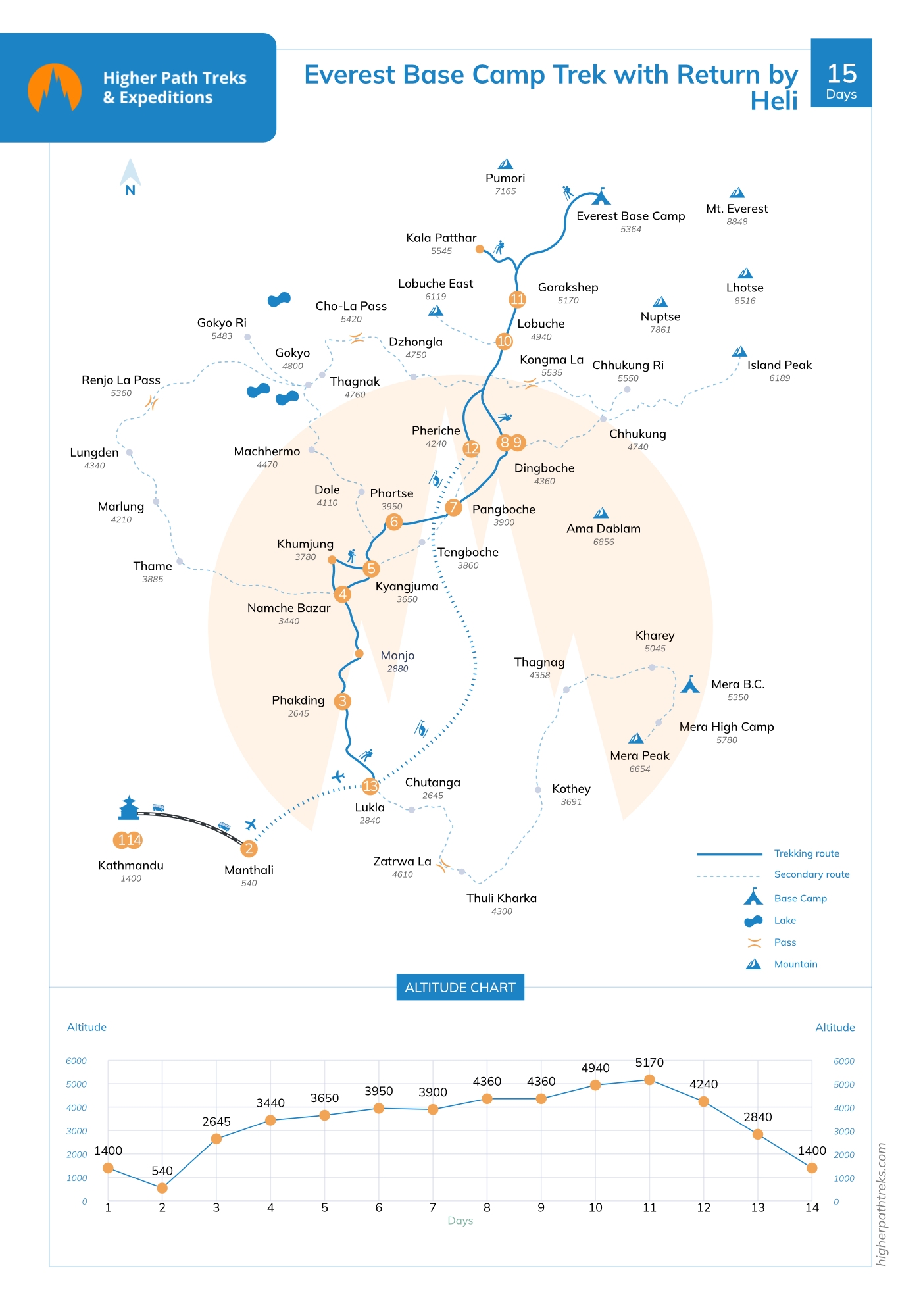
Your Start Date is the day you land in Nepal, and your End Date is when you fly home.
If the set Everest Base Camp Trek with Return by Heli group dates don’t suit your schedule, we can offer alternative dates upon request.
A fabulous experience! Karma Sherpa did a great job with every aspect of the trip. He is an excellent guide and a genuinely nice person. Everything went very smoothly and the experience exceeded my expectations. Nepal is a gorgeous place for trekking, all the people were very friendly and, while some of the tea houses were a bit rustic, they were safe and the food was tasty and plentiful. I recommend Higher Path Treks without hesitation.
An unforgettable journey with Higher Path Treks & Expeditions, expertly led by Karma. The Everest Base Camp trek was challenging yet deeply rewarding, and the helicopter return added a breathtaking final perspective of the Himalayas. Everything was well organized, safe, and personal from start to finish. Karma’s leadership and care made the whole experience feel both professional and truly authentic.
The Everest Base Camp Trek with return by helicopter offers an alternative way to experience the iconic trek while adding a touch of luxury and convenience. After trekking to Everest Base Camp, instead of retracing your steps back to Lukla, you board a helicopter for a scenic flight back to lukla and then to kathmandu or directly from Gorak Shep, near Everest Base Camp.
The trek typically follows the traditional route from Lukla, passing through Namche Bazaar, Pangboche, Dingboche, Lobuche, and Gorak Shep. After reaching Everest Base Camp, instead of returning on foot, trekkers take a helicopter either directly from Gorak Shep or from a suitable location nearby, depending on weather conditions and helicopter availability.
The main advantages include saving time and energy on the return journey, especially after completing the challenging trek to Everest Base Camp. The helicopter ride also offers breathtaking aerial views of the Himalayas, providing a unique perspective of the region's towering peaks and glaciers.
While the helicopter option adds comfort and convenience, it is important to note that trekking to Everest Base Camp still requires physical fitness and acclimatization to high altitudes. The helicopter ride itself is subject to weather conditions and helicopter availability, which can affect scheduling.
Altitude sickness remains a concern during the trek portion of the journey. The itinerary includes acclimatization days to help mitigate risks, and trekkers are advised to stay hydrated, maintain a steady pace, and heed their guide's advice. The helicopter option alleviates some of the physical strain of the return journey.
Highlights include trekking through picturesque Sherpa villages, visiting Buddhist monasteries like Dingboche Monastery, standing at Everest Base Camp, and experiencing the thrill of a helicopter ride amidst the towering Himalayan peaks. This option combines adventure with luxury, offering a memorable journey through the heart of the Everest region.
The same permits are required as for the standard Everest Base Camp Trek: the Sagarmatha National Park entry permit and the TIMS (Trekkers' Information Management System) card. These permits are arranged by your trekking agency and are necessary to enter the Everest region.
Packing essentials are similar to the standard trek and should include sturdy trekking boots, warm clothing layers (including a down jacket), a sleeping bag suitable for cold temperatures, sunscreen, sunglasses with UV protection, a first aid kit, personal medications, and toiletries. A headlamp or flashlight with extra batteries is also recommended.
While it's possible to arrange a helicopter return independently, joining a guided tour with a reputable trekking agency is recommended for safety, logistical support, and to ensure a smooth coordination of the helicopter transfer. Experienced guides and porters enhance the overall trekking experience and provide assistance in emergencies.
| No of people | Price per person |
|---|---|
| 1 - 1 | $2,765 |
| 2 - 5 | $2,600 |
| 6 - 10 | $2,580 |
| 11 - 20 | $2,565 |
| No of people | Price per person |
|---|---|
| 1 - 1 | $1,835 |
| 2 - 5 | $1,690 |
| 6 - 10 | $1,670 |
| 11 - 20 | $1,650 |