
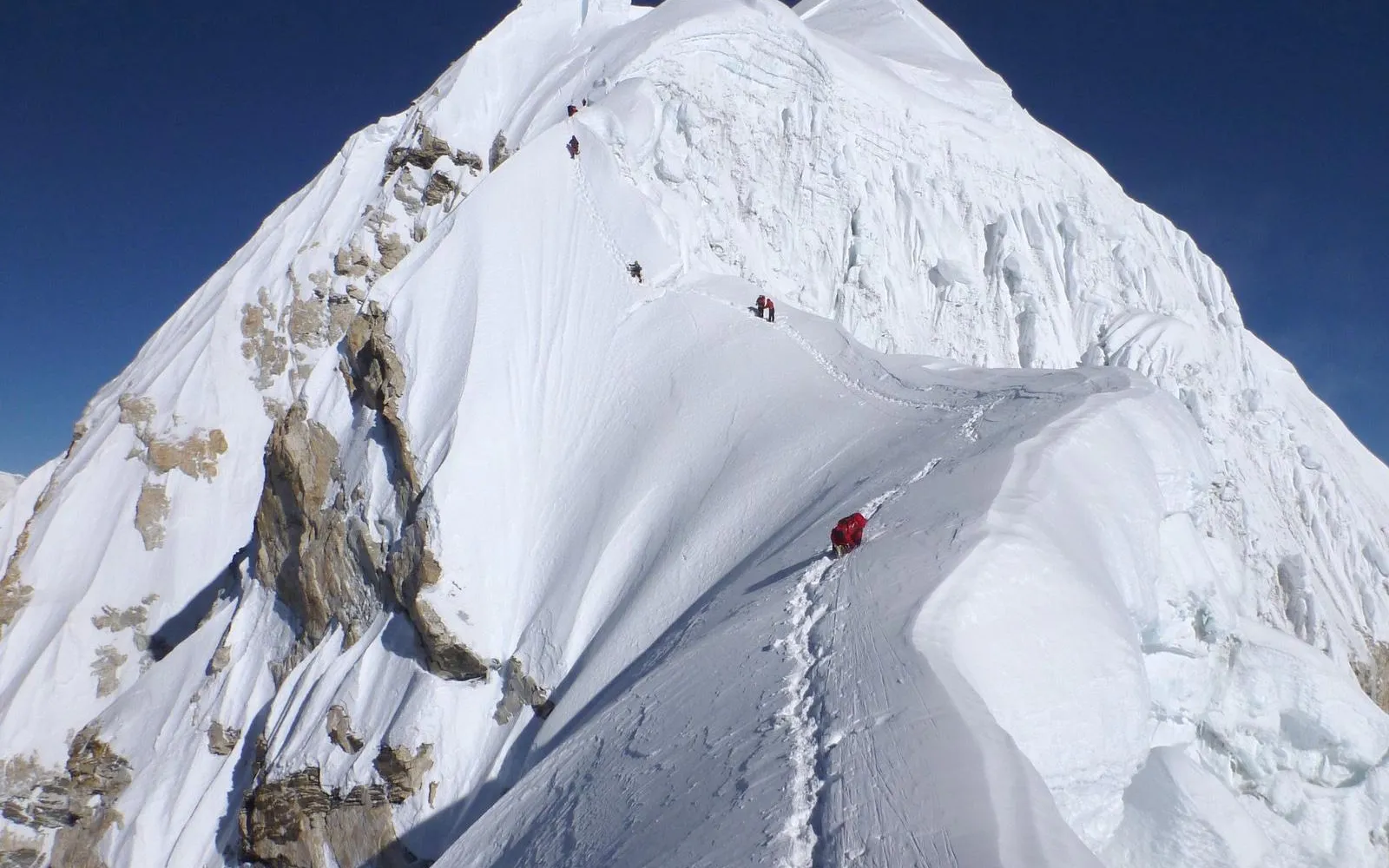
Nepal sits at the heart of the Himalayas, home to some of the world’s highest and most technically demanding mountains. Among them are legendary giants such as Annapurna I, Kangchenjunga, Makalu, and Dhaulagiri I. These peaks are not only defined by altitude but by extreme weather, avalanche risk, and technical climbing difficulty.
Other notorious summits include Manaslu, the demanding south face routes of Annapurna, Nuptse, Ama Dablam, Pumori, and Baruntse. Together, these mountains represent the ultimate test of endurance and survival.
Key highlights:
Higher Path Treks & Expeditions regularly studies these routes to support safe expedition planning and informed climber preparation.
Nepal’s Himalayas are often described as the most beautiful mountains on Earth, yet they also hide some of the deadliest climbing conditions. Peaks like Annapurna I and Kangchenjunga are admired for their dramatic scenery, but they are equally feared for unpredictable avalanches and unstable terrain.
For climbers, these mountains are not just destinations—they are life-altering challenges. The same ridgelines that attract elite mountaineers also demand perfect timing, flawless judgment, and immense physical resilience. Even experienced climbers often describe these routes as a constant negotiation with nature’s limits.
Key highlights:
Higher Path Treks & Expeditions emphasizes respecting both the beauty and the risks when approaching Himalayan expeditions.
The danger of these Himalayan giants is not caused by a single factor but a combination of extreme altitude, unstable geology, and unpredictable weather. On peaks like Makalu and Dhaulagiri I, climbers face steep ice walls, hidden crevasses, and frequent avalanche cycles.
Another major risk is the “death zone” above 8,000 meters, where oxygen levels are insufficient for long-term survival. On mountains like Manaslu, even small mistakes can become fatal due to exhaustion, hypoxia, and limited rescue options.
Key highlights:
Higher Path Treks & Expeditions advises climbers to prioritize acclimatization, route planning, and weather forecasting as essential survival tools.
A mountain becomes “dangerous” not only because of its height but also due to its death rate, technical difficulty, and environmental unpredictability. For example, Annapurna I has historically had one of the highest fatality-to-summit ratios among 8,000-meter peaks, mainly due to avalanches and unstable snow conditions.
Similarly, peaks like Ama Dablam and Nuptse are technically demanding despite being lower in altitude. Steep ridges, exposed traverses, and ice-fall zones make rescue operations extremely difficult, increasing overall expedition risk.
Key factors defining danger:
Higher Path Treks & Expeditions highlights that understanding these factors is essential for climbers aiming to attempt Himalayan expeditions safely and responsibly.
Annapurna I is widely regarded as one of the most dangerous mountains on Earth, primarily due to its extremely unstable snow structure and frequent avalanches. Unlike many other 8,000-meter peaks, its southern and northern faces are heavily loaded with seracs and hanging glaciers that can collapse without warning. This unpredictability makes even established routes hazardous for experienced climbers.
Historically, Annapurna I has one of the highest fatality-to-summit ratios among all Himalayan giants. Climbers often face extreme exposure combined with long, committing routes where retreat becomes just as dangerous as the ascent. Even modern expeditions still treat this peak with exceptional caution.
Key dangers:
Higher Path Treks & Expeditions recognizes Annapurna I as a peak that demands elite-level experience, precision timing, and strict safety protocols.
Makalu is often compared to a perfect pyramid of rock and ice, rising sharply with steep faces on all sides. This geometry makes it one of the most technically demanding 8,000-meter peaks in the world. Climbers must navigate knife-edge ridges, steep ice sections, and exposed climbing routes where a single mistake can be fatal.
The weather on Makalu is another critical challenge. Sudden storms, strong jet-stream winds, and extreme cold conditions can trap climbers at high altitude for days. Combined with its remote location, rescue operations are extremely limited, making self-sufficiency essential for survival.
Key dangers:
Higher Path Treks & Expeditions emphasizes Makalu as a peak suited only for highly experienced alpinists with advanced technical skills.
Dhaulagiri I is known for its massive snow walls and heavily glaciated slopes that hide constant avalanche threats. The mountain’s western flanks, in particular, are notorious for unstable snowpack conditions that can collapse without warning, especially after snowfall or temperature shifts.
Another major challenge is its isolation and difficult approach routes. Climbers often spend long periods in remote wilderness before even reaching the main climbing camps. This increases physical fatigue and reduces margin for error during summit attempts.
Key dangers:
Higher Path Treks & Expeditions highlights Dhaulagiri I as a peak requiring strong expedition logistics and precise avalanche risk assessment.
Kangchenjunga is the third-highest mountain in the world and one of the most remote and least climbed 8,000-meter peaks. Its isolation makes access extremely difficult, requiring long approaches through rugged terrain before even reaching base camp. This remoteness significantly increases expedition complexity and risk.
Weather conditions on Kangchenjunga are notoriously severe, with sudden storms, heavy snowfall, and strong winds that can trap climbers for extended periods. Combined with limited rescue infrastructure, climbers must rely almost entirely on their own endurance and decision-making.
Key dangers:
Higher Path Treks & Expeditions considers Kangchenjunga a true endurance test where preparation, timing, and self-reliance determine survival.
Manaslu is often labeled as one of the “more achievable” 8,000-meter peaks, but this reputation can be dangerously misleading. While the route is considered less technically demanding compared to giants like K2 or Annapurna I, the mountain’s real danger lies in its avalanche-prone slopes and rapidly changing weather conditions. Many climbers underestimate it, which increases accident rates.
The standard route still passes through complex glacier systems, crevasse fields, and steep snow sections where conditions can deteriorate quickly. The combination of high altitude and complacency has led to numerous incidents, especially during poor weather windows or overcrowded climbing seasons.
Key dangers:
Higher Path Treks & Expeditions emphasizes that Manaslu requires the same discipline and preparation as any other 8,000-meter peak.
The South Face of Annapurna I is one of the most intimidating and technically demanding climbing walls in the Himalayas. It features near-vertical ice cliffs, unstable snow bands, and long exposed sections that require extreme precision and endurance. This face is far more dangerous than standard routes due to its direct exposure to serac fall and avalanche channels.
Climbers attempting this route must navigate continuous technical challenges while operating in one of the harshest environments on Earth. The wall-like structure offers little margin for error, and retreat options are extremely limited once the ascent begins.
Key dangers:
Higher Path Treks & Expeditions identifies the Annapurna South Face as a route reserved only for elite technical alpinists.
Nuptse stands right beside Everest, yet it is often overshadowed by its famous neighbor. Despite its lower altitude, Nuptse is extremely dangerous due to its steep, heavily glaciated faces and unstable snow formations. The mountain’s north ridge is particularly treacherous, with frequent icefalls and cornice collapses.
One of Nuptse’s hidden dangers is its proximity to Everest expeditions. Climbers often underestimate it while acclimatizing or during technical training, but its terrain demands full expedition-level seriousness. Sudden weather changes and avalanche-prone slopes make it a silent but deadly peak.
Key dangers:
Higher Path Treks & Expeditions treats Nuptse as a highly technical Himalayan peak requiring expert-level mountaineering skills and respect for its hidden risks.
Ama Dablam is one of the most visually stunning mountains in the Himalayas, often admired for its sharp pyramid shape and dramatic skyline. However, beneath its beauty lies a highly technical and exposed climbing environment. The ridges are narrow, steep, and frequently exposed to high winds, making every step a calculated risk.
Unlike purely high-altitude giants, Ama Dablam’s danger comes from its technical climbing sections combined with altitude exposure. Fixed ropes, icy ridges, and unpredictable weather conditions demand precision and experience. Even small errors can lead to severe consequences due to the mountain’s steep fall lines.
Key dangers:
Higher Path Treks & Expeditions considers Ama Dablam a technical masterpiece that requires advanced alpine skills and disciplined execution.
Pumori is often called “Everest’s Killer Neighbor” due to its proximity to heavily trafficked Everest routes and its dangerous avalanche zones. The mountain’s southwest face is particularly notorious, as it funnels snow and ice debris into common climbing paths.
Despite being lower than many 8,000-meter peaks, Pumori is extremely deceptive. Its steep ice walls, frequent avalanches, and unstable snowpack make it one of the most dangerous training peaks in the Everest region.
Key dangers:
Higher Path Treks & Expeditions advises climbers to treat Pumori with the same respect as higher Himalayan peaks.
Baruntse is less famous compared to other Himalayan giants, but it is one of the most technically demanding peaks in eastern Nepal. Its remote location between Everest and Makalu regions makes access difficult and logistics complex. Climbers must navigate glaciers, crevasses, and steep snow slopes before reaching the summit push.
The mountain’s isolation also means limited rescue options and minimal support infrastructure. Weather conditions can shift rapidly, and climbers often face extended periods of self-sufficiency in high-altitude environments.
Key dangers:
Higher Path Treks & Expeditions highlights Baruntse as a serious technical challenge for experienced Himalayan climbers.
The Himalayas of Nepal are not only defined by peaks and routes but also by the human stories of survival, loss, and resilience. Mountains like Annapurna I and Kangchenjunga have witnessed both legendary ascents and heartbreaking tragedies, reminding climbers of the thin line between success and disaster.
Rescue missions in regions such as Dhaulagiri I or Manaslu often face extreme limitations due to altitude, weather, and terrain. Many climbers rely solely on their own judgment when conditions turn critical, and survival often depends on timing and luck as much as skill.
Key realities:
Higher Path Treks & Expeditions emphasizes that every Himalayan expedition carries a human story—of courage, preparation, and respect for the mountains.
High-altitude climbing in Nepal demands far more than physical strength; it requires precise preparation, reliable equipment, and disciplined acclimatization. On peaks like Manaslu or Makalu, climbers must carefully manage oxygen levels, hydration, and energy to survive in the “death zone” above 8,000 meters.
Expedition planning is equally critical. Weather forecasting, route fixing, and proper camp rotation can significantly reduce risks. Without structured logistics and experienced leadership, even skilled climbers can quickly find themselves in life-threatening situations.
Key essentials:
Higher Path Treks & Expeditions ensures every expedition is supported with structured planning and safety-focused logistics.
Sherpas are the backbone of Himalayan mountaineering, providing unmatched expertise in navigating some of the world’s most dangerous terrain. On peaks such as Annapurna I and Kangchenjunga, Sherpas play a critical role in route fixing, load carrying, and high-altitude decision-making.
Their deep knowledge of weather patterns, terrain behavior, and survival techniques often determines the success or failure of an expedition. Despite their importance, Sherpas face some of the highest risks in the climbing industry due to repeated exposure to dangerous routes.
Key contributions:
Higher Path Treks & Expeditions deeply acknowledges Sherpas as essential partners in Himalayan exploration and survival.
Seasonal timing in the Himalayas can determine the difference between success and disaster. The best climbing windows are typically pre-monsoon (spring) and post-monsoon (autumn), when weather conditions are relatively stable on peaks like Dhaulagiri I and Ama Dablam.
In contrast, the monsoon and deep winter seasons bring extreme risks, including heavy snowfall, avalanches, and hurricane-force winds. During these periods, even lower-altitude peaks like Pumori become highly unpredictable and dangerous.
Key seasonal insights:
Higher Path Treks & Expeditions carefully plans all expeditions around optimal seasonal conditions for maximum safety.
The Himalayas of Nepal are not just mountains—they are powerful natural forces that demand respect, preparation, and humility. Peaks like Annapurna I and Kangchenjunga remind climbers that nature always remains in control, no matter how advanced human technology becomes.
Every expedition, whether on Manaslu or Ama Dablam, is a lesson in preparation, patience, and respect. Success in the Himalayas is not only about reaching the summit but also returning safely with experience and understanding.
Key reflections:
Higher Path Treks & Expeditions believes that true mountaineering success lies in safe journeys, responsible climbing, and deep respect for the Himalayas.
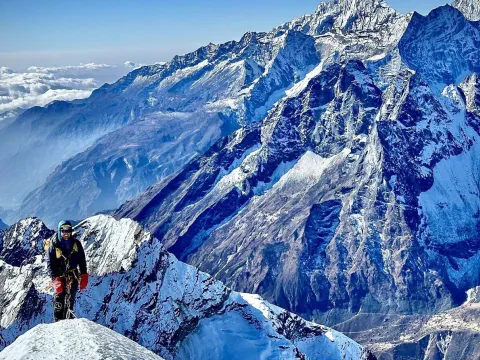
<p>Nepal is renowned for its towering mountains and offers some of the best peak climbing opportunities in the world. The country is home to numerous trekking peaks, ranging from moderate climbs for beginners to more challenging ascents for experienced mountaineers. Some of the best peak climbing options in Nepal include popular peaks like Island Peak, Mera Peak, Yala Peak, and Lobuche East, which are famous for their accessibility, stunning panoramic views, and relatively straightforward climbing routes. </p>
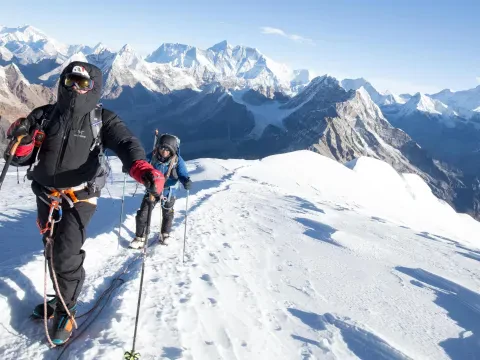
The best time for peak climbing in Nepal generally falls within two major seasons: spring (March to May) and autumn (September to November). These periods provide the most stable weather conditions, clear skies, and optimal temperatures for climbing.
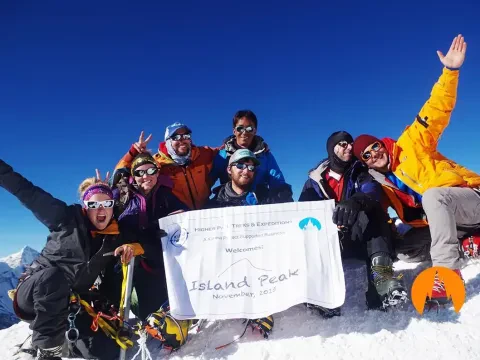
<p>Nepal’s towering Himalayas have long been a magnet for adventurers and mountaineers worldwide. Beyond the iconic summits like Everest and Annapurna, Nepal offers a rich selection of trekking peaks that provide the perfect blend of adventure, challenge, and breathtaking natural beauty</p>