The Gokyo Cho La Pass and Lobuche Peak Climbing expedition is an exhilarating adventure that combines some of the most stunning landscapes of the Everest region with the thrill of summit climbing. This trek and climb are perfect for those seeking a more challenging and rewarding adventure that includes high-altitude trekking, crossing challenging passes, and scaling one of the iconic trekking peaks in Nepal.
The journey begins with a flight from Manthali to Lukla, followed by a trek through the lush valleys and villages of the Khumbu region. The route passes through iconic spots such as Lukla, Phakding, Namche Bazaar, Khumjung and Dole before reaching the Gokyo Valley, known for its serene turquoise lakes and stunning views of Mount Everest, Makalu, Cho Oyu, and other Himalayan peaks. From Gokyo, trekkers ascend the Cho La Pass (5,420 meters), one of the most challenging high passes in the Everest region, offering panoramic views of the surrounding peaks.
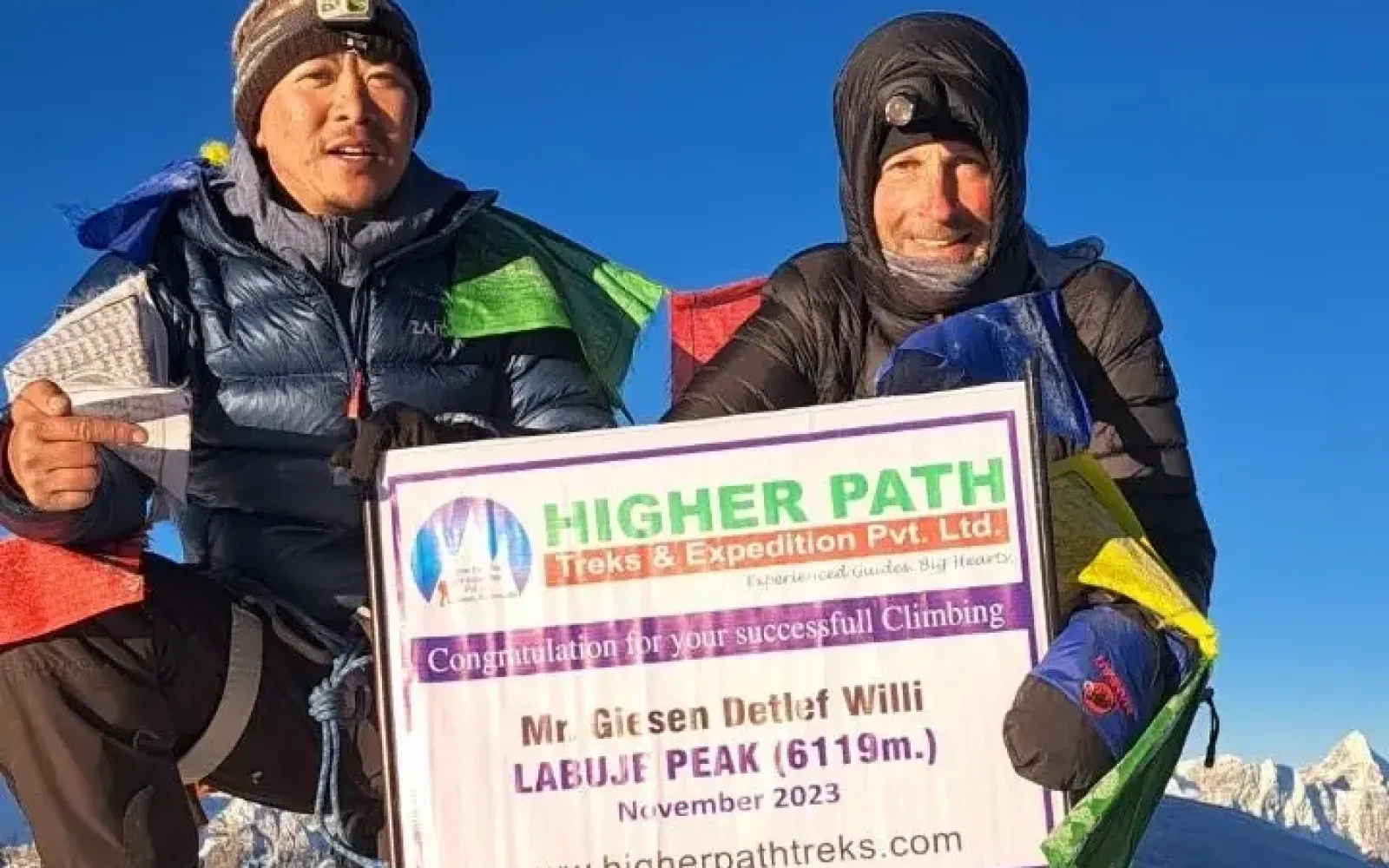
After crossing the Cho La Pass, trekkers continue towards Dzongla and begin preparations for the climb to Lobuche East Peak (6,119 meters). Reaching the summit of Lobuche Peak is a highlight for many trekkers, as it offers breathtaking views of Everest, Lhotse, Makalu, Nuptse, Ama Dablam and other surrounding peaks. The combination of trekking through high-altitude terrain, crossing challenging passes, and summit climbing makes this expedition one of the most thrilling and diverse adventures in Nepal.
At Higher Path Treks & Expeditions, we provide expert guidance, personalized itineraries, and logistical support for trekkers looking to take on the Gokyo Cho La Pass and Lobuche Peak Climbing adventure. Our experienced guides and porters ensure your safety, comfort, and success, making this expedition not only possible but enjoyable for climbers of varying experience levels.
Gokyo Cho La Pass & Lobuche Peak Climbing is graded as a moderate to challenging adventure. It is more demanding than a normal Everest trek. This adventure is designed for fit and experienced trekkers looking for a more challenging Himalayan adventure. Trekkers who want to learn basic mountaineering skills. Trekkers who want to combine the beautiful Gokyo Lakes and Gokyo Ri. Climbers who want to attempt the 6,000 meter Himalayan Peak in the Everest region.
This trip is best suited to people with good endurance, a strong sense of adventure and the ability to cope with long days at high altitude.
The Gokyo Cho La Pass trek is one of the most stunning and exhilarating routes in the Everest region, offering trekkers a combination of high-altitude trekking and breathtaking Himalayan views. The trek takes you through the beautiful Gokyo Valley, known for its pristine turquoise lakes and spectacular views of some of the world’s highest peaks, including Mount Everest, Lhotse, Makalu and Cho Oyu. The Gokyo Lakes are a series of five glacial lakes, nestled amidst snow-capped mountains, providing an unforgettable setting that will leave trekkers in awe.
The highlight of this section of the trek is crossing the Cho La Pass itself, which sits at an altitude of 5,440 meters (17,848 feet). It is one of the most challenging and technical passes in the Everest region, requiring careful navigation through rocky terrain and often icy or snowy conditions. The pass connects the Gokyo Valley with the Everest Base Camp area and offers spectacular views of the surrounding peaks. Although challenging, crossing Cho La is a rewarding experience, as it provides panoramic views of the Khumbu region. The trek also includes important acclimatization stop in Namche Bazaar ensuring that you’re fully prepared for the high-altitude passes and climbs that lie ahead.
Lobuche East Peak Climbing is a thrilling and challenging adventure that allows trekkers and climbers to summit one of the most iconic trekking peaks in Nepal. Located in the Everest region, Lobuche East Peak offers climbers the opportunity to experience mountaineering in a high-altitude environment. The ascent to the peak requires a combination of trekking and technical climbing skills, making it ideal for those with prior mountaineering experience or who are seeking to gain such experience under expert guidance.
The climb to Lobuche East Peak begins with trekking through beautiful villages such as Lukla, Namche and Lobuche. The climb itself is non-technical, but it does require the use of crampons, ice axes, and ropes from crampon point to summit. The peak offers stunning views of Mount Everest, Lhotse, Makalu, Nuptse, Pumori, Ama Dablam and numerous peaks, making it one of the most rewarding experiences for any mountaineer or adventurer. The final push to the summit is challenging but incredibly rewarding, and the views from the top are unmatched—offering some of the clearest and most panoramic views of the world’s highest peaks.
Climbing Lobuche East Peak is not just about the summit, though—it’s about the entire journey. The trek leading up to the peak takes climbers through rugged and remote terrain, past ice-blue glaciers, and across high-altitude landscapes. This is a journey that combines the beauty of the Everest region with the excitement of mountaineering, making it a must-do for anyone looking to challenge themselves and experience the thrill of Himalayan climbing.
Upon your arrival in Kathmandu, you will be welcomed by our representative, where you'll have a briefing about the trek and the climb ahead. The following day, you’ll take an early flight to Lukla, the gateway to the Everest region, and begin your trek to Phakding, passing through scenic Sherpa villages and lush forests. From Phakding, the trek continues towards Namche Bazaar, the main trading hub in the Khumbu region. You'll spend a day here for acclimatization, ensuring you adjust to the altitude before continuing your journey. From Namche, you will gradually ascend to Dole and Machhermo, where you will enjoy stunning views of the surrounding mountains and glaciers.
As you continue towards Gokyo, you’ll pass through two small lakes and hike up to Gokyo Ri, where the panoramic views of Everest, Makalu, Cho Oyu, and other peaks will leave you in awe. The trek then takes you across the Cho La Pass, one of the most challenging high-altitude passes in the region, before reaching Dzongla and continuing to Lobuche and Gorakshep. From here, you will take a side trip to Everest Base Camp, immersing yourself in the world of mountaineering before heading back to Gorakshep. The next day, you will hike to Kala Patthar, one of the best viewpoints for Everest, and return to Lobuche for the night.
The following days are dedicated to preparing for the climb of Lobuche Peak. From Lobuche, you will trek to Lobuche High Camp, where you will acclimatize and prepare for the summit. On the summit day, you will make your way to the top of Lobuche East Peak (6,119 meters), where you will be rewarded with breathtaking views of Mount Everest, Lhotse, Nuptse, and other nearby peaks. Afterward, you will return to Lobuche and begin your descent, trekking through Pangboche Village, Namche Bazaar, and back to Lukla. Finally, you will fly back to Manthali and drive to Kathmandu for your departure. This journey is a perfect mix of challenging trekking, high-altitude pass crossing, and climbing, providing a comprehensive Everest experience.
The Gokyo Cho La Pass and Lobuche Peak Climbing route takes trekkers through some of the most iconic and breathtaking places in the Everest region. One of the first significant spots is Lukla, the entry point to the Everest region, where the adventure begins with a scenic flight from Manthali. From Lukla, trekkers will head towards Phakding, a small village that serves as a gentle introduction to the Everest trekking trail. As the trek progresses, the next highlight is Namche Bazaar, a vibrant town known as the gateway to the Khumbu region. Namche Bazaar is not only a commercial hub but also a vital stop for acclimatization due to its altitude of 3,440 meters. Dole is a scenic settlement. Gokyo us famous for its turquoise glacial lakes and its spectacular mountain scenery. Lobuche surrounded by Himalayan peaks is small settlement at 4,940 meters. Gorakshep is the last settlement near Everest Base Camp.
The best time to undertake the Gokyo Cho La Pass and Lobuche Peak Climbing expedition is during the pre-monsoon (spring) season, which typically runs from March to May, and the post-monsoon (autumn) season, from September to November. During these months, the weather is generally clear, and the skies are crisp, providing excellent visibility for the stunning panoramic views of the mountains. Temperatures are also more moderate during these times, making the trek and climb more manageable.
The spring and autumn seasons also provide the best conditions for acclimatization, with stable weather that reduces the risks associated with high-altitude trekking and climbing. However, it is important to note that the winter months (December to February) can be extremely cold, and the monsoon season (June to August) brings heavy rain, both of which can pose challenges to safety and accessibility in the higher altitudes. Therefore, planning your trek during the best seasons ensures not only favorable weather conditions but also a more enjoyable and safe experience.
The Gokyo Cho La Pass and Lobuche Peak Climbing is a challenging and physically demanding journey that requires a good level of fitness, prior trekking experience, and, ideally, some mountaineering knowledge. The trek involves high-altitude trekking, including crossing the Cho La Pass (5,440 meters), which is steep and technical, particularly during winter or early spring when snow and ice are prevalent. The pass requires trekkers to navigate challenging terrain, often with the assistance of ropes and crampons.
Climbing Lobuche Peak is non-technical for those who are accustomed to mountaineering, but it is still a significant challenge. The summit climb requires good physical conditioning, as it includes a long ascent at high altitudes with thin air, which can make breathing difficult. Those looking to climb Lobuche Peak should have experience with basic rock climbing or be prepared to undergo a bit of training before the trip. Proper acclimatization, as well as mental and physical preparedness, is key to completing this trek successfully. Higher Path Treks & Expeditions ensures that all climbers are adequately prepared and supported throughout the journey.
The Gokyo Cho La Pass & Lobuche peak climbing expedition is considered a moderate to challenging adventure. Good physical fitness is recommended for this adventure, as it involves long days of walking, steep ascents and descents, high altitude terrain, icy and glacier section, and peak climbing section.
We recommend starting your training at least 6-10 weeks before departure. Regular hiking, running, cycling, walking, stair climbing are excellent ways to improve your cardiovascular fitness, endurance and leg strength.
For lobuche peak climbing basic mountaineering skills such as using crampons, an ice axe, harness, ascender and descender, fixed rope are required. With a well planned training, proper acclimatization
To undertake the Gokyo Cho La Pass and Lobuche Peak Climbing adventure, trekkers must secure several essential permits. The main permits required for the trek and climbing are:
Our team will assist you with acquiring all the necessary permits to ensure a hassle-free experience. Additionally, our agency also arranges for the necessary climbing gear and support services, so you don’t need to worry about the logistics.
Accommodation during the Gokyo Cho La Pass and Lobuche Peak Climbing journey ranges from basic teahouses to more comfortable lodges in larger villages like Phakding, Namche Bazaar, and Gokyo. These teahouses provide simple but comfortable rooms with basic amenities such as beds, blankets, and shared bathroom facilities. The higher you go, the more basic the accommodations become, but they still offer a warm place to sleep and hot meals to keep you fueled for the next day's adventure.
For the Lobuche Peak climb, trekkers will stay in high camps near the base of the peak, where they will prepare for the summit. These camps are typically equipped with tents, shared spaces for cooking, and sleeping arrangements designed for mountaineers. While the accommodations are simple, the focus of the expedition is on the climb itself, and the views and sense of accomplishment more than make up for the simplicity of the stay.
Choosing Higher Path Treks & Expeditions for your Gokyo Cho La Pass and Lobuche Peak Climbing ensures a safe, enjoyable, and successful adventure. Our team of experienced guides and mountaineering experts are local to the region, with in-depth knowledge of the terrain, weather, and logistics. We prioritize your safety, providing expert acclimatization schedules, emergency response plans, and high-quality gear for the climb.
Our personalized service means we pay attention to your specific needs, ensuring your trek and climb are tailored to your fitness level and interests. We handle all the logistics, including permits, accommodations, and transportation, so you can focus on enjoying the adventure. Additionally, our commitment to sustainable and responsible tourism means that your trip will positively impact the local communities and environment, making your journey not only memorable but also ethical.
The Gokyo Cho La Pass and Lobuche Peak Climbing expedition is a once-in-a-lifetime opportunity for adventure enthusiasts, offering a perfect blend of trekking and mountaineering in one of the most beautiful regions on Earth. With Higher Path Treks & Expeditions, you can rest assured that you will receive the best possible support, guidance, and services, making your journey to the Everest region not only a challenge but a truly unforgettable experience.
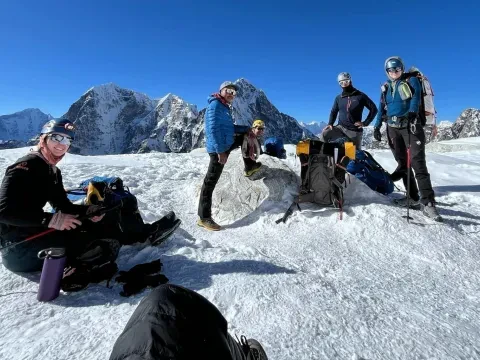
Lobuche East Peak Climbing is one of the most exciting and rewarding mountaineering challenges in Nepal, and 2026/2027 packages are carefully designed to cater to trekkers and climbers of different experience levels. Our Lobuche East Peak Climbing packages provide a comprehensive and fully supported trekking and climbing experience in the Everest region.
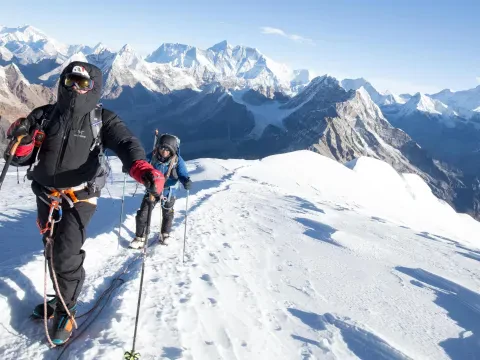
The best time for peak climbing in Nepal generally falls within two major seasons: spring (March to May) and autumn (September to November). These periods provide the most stable weather conditions, clear skies, and optimal temperatures for climbing.
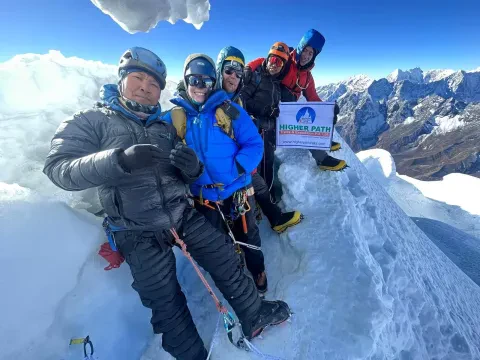
<p>Nepal is a paradise for mountaineers, offering some of the world’s most spectacular peaks for climbing enthusiasts. From the towering giants of the Himalayas to the more accessible trekking peaks, Nepal attracts thousands of climbers every year.</p>
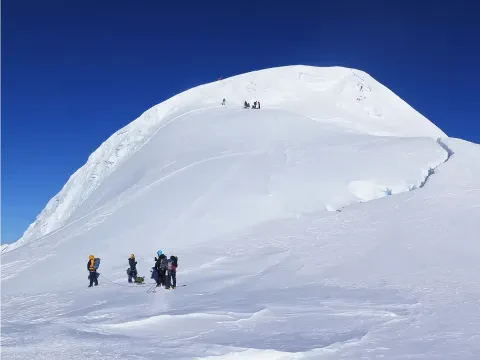
<p>When it comes to trekking peaks in Nepal, Mera Peak (6,476m) and Island Peak (6,189m) are two of the most popular choices for climbers seeking high-altitude adventures. Both peaks offer thrilling challenges, breathtaking scenery</p>