
The question what is the 2 PM rule in Everest often appears when people begin researching high-altitude climbing or even serious Himalayan trekking. This rule is not a myth, marketing phrase, or casual guideline. It exists because people ignored it — and paid with their lives.
The 2 PM rule in Everest defines a strict turnaround time for summit attempts. If climbers fail to reach the summit by 2:00 PM, they must descend immediately, regardless of distance remaining. This article explains the real meaning of the rule, why it exists, how it saves lives, and how its logic applies beyond Everest to other Himalayan routes.
The 2 PM rule in Everest is a fixed turnaround rule used during summit day on Mount Everest. It exists to protect climbers from late descents, oxygen depletion, weather collapse, and fatal decision-making at extreme altitude.
On Everest, climbers usually leave Camp IV between 9 PM and midnight. The plan assumes a summit arrival between 6 AM and noon. When climbers reach the summit too late, descent happens in darkness, exhaustion, and worsening weather.
Veteran Sherpas and expedition leaders created the rule after witnessing repeated late-day fatalities. Many climbers reached the summit late afternoon and never returned safely.
The rule came from experience, not theory:
Ignoring time limits proved deadly, so strict cutoffs became standard.
At 8,848 meters, the human body functions at survival limits. Every extra hour increases risk exponentially.
By 2 PM:
The rule forces climbers to choose survival over ego.
The 2 PM rule in Everest acts as a decision-making guardrail when judgment becomes unreliable. Hypoxia affects reasoning long before physical collapse occurs.
Climbers often feel “close enough” near the summit. That mindset kills. The rule removes emotional decision-making from the equation.
Statistics show most Everest deaths happen after summiting, not during ascent. Descending demands more coordination, balance, and alertness.
The rule ensures:
Summiting late trades glory for danger.
Summit fever overrides logic. Climbers who ignore turnaround times often believe they can “push a little more.”
The 2 PM rule removes debate. It turns survival into a fixed protocol rather than a personal judgment call.
Oxygen logistics depend heavily on timing. Each climber carries a limited supply, calculated down to hours.
Most climbers use:
Late summit times increase oxygen burn and leave nothing for emergencies. Running out of oxygen above 8,000 meters leads to rapid collapse.
Crowded summit days already create delays. Late climbers compound congestion during descent.
Consequences include:
Time discipline prevents chaos.
No. While famous on Everest, the logic applies across high-altitude mountaineering.
Expedition leaders enforce similar cutoff times on:
The altitude changes, but the principle remains the same.
Trekkers don’t summit Everest, but the philosophy still applies. Always leave enough time and energy to return safely.
This mindset matters on routes like:
Late starts increase altitude risk even on trekking routes.
History provides painful answers. Many Everest tragedies share one detail: late summit times.
Ignoring the rule doesn’t guarantee death, but it multiplies risk dramatically.
Climbers invest years and money into Everest. That investment creates pressure to succeed at any cost.
The 2 PM rule exists to override that pressure and prioritize survival.
Even non-technical treks benefit from time awareness.
Consider these treks:
Starting early and turning back when necessary prevents accidents even at trekking altitude.
If you plan any Himalayan adventure, understanding rules like the 2 PM rule in Everest matters more than strength or ambition.
Email: [email protected]
Call: +9779827709861
Website: https://www.higherpathtreks.com/
The 2 PM rule in Everest exists because mountains do not forgive late decisions. The summit never moves, but daylight, oxygen, and strength disappear fast. This rule protects climbers from their own ambition and replaces emotion with discipline.
Whether you climb Everest or trek to base camps, the lesson stays the same: reaching the goal means nothing if you don’t return safely. Respect time, respect altitude, and the mountains will let you walk away with your life — and your story.
<p>Spokesperson of the Ministry of Health Dr. Jageshwor Gautam said that the tourist would have to stay at the hotel until the PCR test report is received. He said it would take at least six days for the report to come. “If the test is negative, they can go out. If it is positive, they have to stay in the hospital.” The cost of PCR have to be paid by the tourists themselves. The Ministry of Health and Population has stated that this rule will come into force from August 17.<br></p>
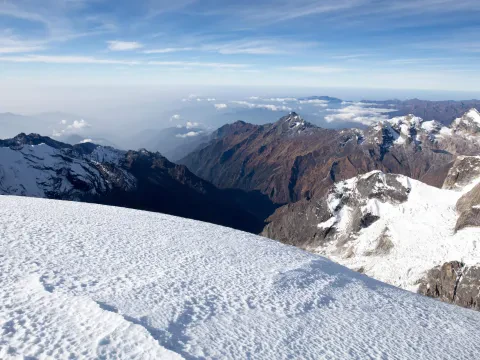
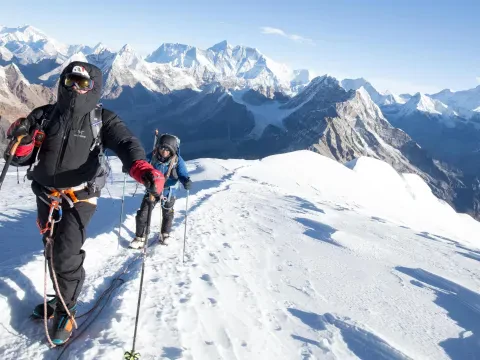
<p>Mera peak is great panorama outstanding view point of 6470m peak in Everest region. Marvelous view of mountains such as: Kyashar- 6770m,Cho Oyu- 8153m,Khangtega- 6685m,Ama Dablam- 6856m,Nuptse- 7861m,Lhotse- 8501m,Baruntse- 7168m,Everest- 8848m,Makalu- 8475m,Kanchaenjunga- 8586m.</p>
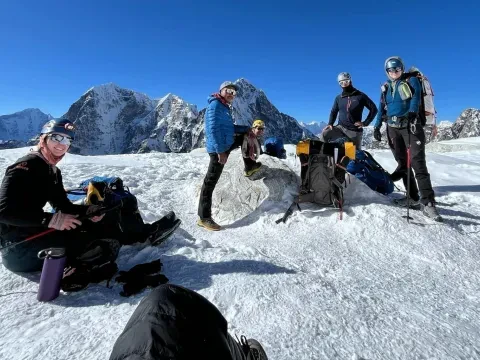
Lobuche East Peak Climbing is one of the most exciting and rewarding mountaineering challenges in Nepal, and 2026/2027 packages are carefully designed to cater to trekkers and climbers of different experience levels. Our Lobuche East Peak Climbing packages provide a comprehensive and fully supported trekking and climbing experience in the Everest region.
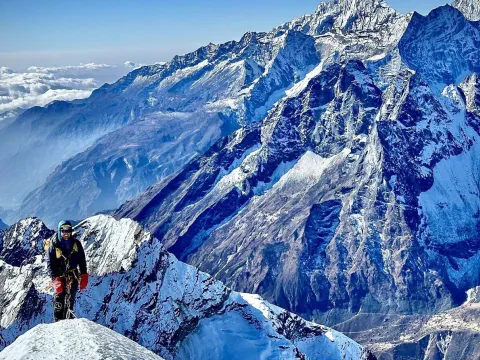
<p>Nepal is renowned for its towering mountains and offers some of the best peak climbing opportunities in the world. The country is home to numerous trekking peaks, ranging from moderate climbs for beginners to more challenging ascents for experienced mountaineers. Some of the best peak climbing options in Nepal include popular peaks like Island Peak, Mera Peak, Yala Peak, and Lobuche East, which are famous for their accessibility, stunning panoramic views, and relatively straightforward climbing routes. </p>
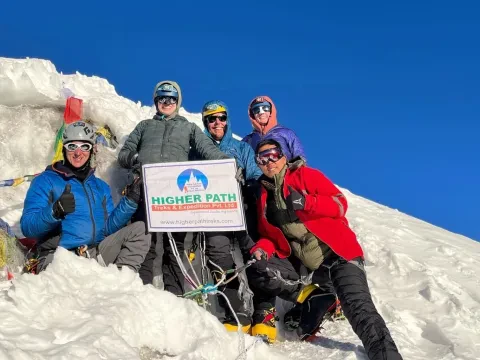
<p>The Everest Region, famous for its towering peaks and breathtaking landscapes, is often associated with challenging mountaineering expeditions. However, there are several trekking peaks in this area that cater to beginners or those who are relatively new to mountaineering. </p>
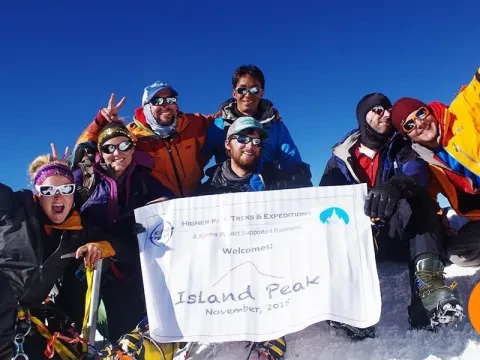
<p>Island Peak (Imja Tse) climbing combined with the Everest Base Camp trek is one of the best experiences for beginners looking to venture into high-altitude mountaineering. This expedition is an ideal choice for climbers who want to experience the thrill of climbing a Himalayan peak while also enjoying one of the world’s most iconic treks, the Everest Base Camp Trek.</p>
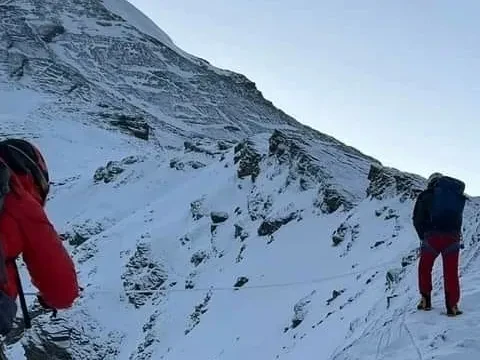
<p>The Annapurna region is one of Nepal’s most accessible and diverse areas for trekkers and climbers, making it an ideal location for beginners who are looking to combine trekking with their first peak-climbing experience. </p>
The best time for peak climbing in Nepal generally falls within two major seasons: spring (March to May) and autumn (September to November). These periods provide the most stable weather conditions, clear skies, and optimal temperatures for climbing.
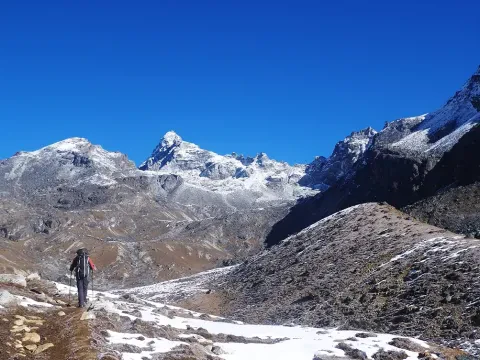
<p>Trekking to Everest Base Camp (EBC) is a dream for adventurers worldwide, and many wonder if it’s possible to do it solo. Solo trekking to EBC is indeed possible, though it comes with unique challenges and responsibilities. Unlike guided treks, solo trekking requires self-reliance, careful planning, and a deep understanding of the route, weather, and altitude conditions.</p>